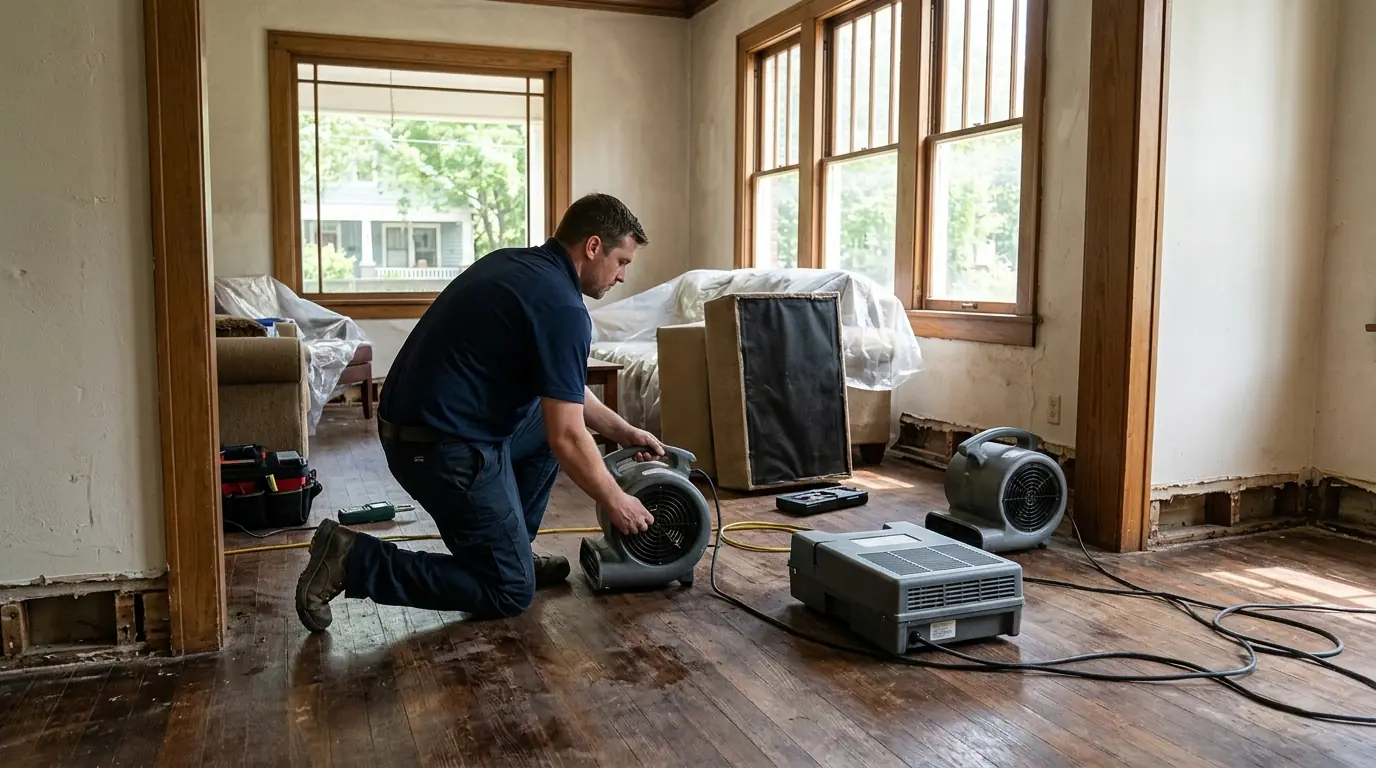
Fire recovery guide
Why smoke smell comes back after cleaning
If the smell comes back on the first warm, humid day, something was missed. Smoke odor lives in residue, and residue hides in places surface cleaning never reaches.
- Written by
- Maxine Colburn
- Role
- Restoration Guides Editor
- Updated
- September 2026
Short answer
Smoke smell comes back after cleaning because residue remains in porous materials, like drywall paper, wood framing, insulation, ductwork and fabric, and releases odor again when heat or humidity rises. Lasting removal means finding and cleaning the residue, treating what remains with fogging, hydroxyl or ozone, and sealing charred wood before it is covered.
By Maxine Colburn, Restoration Guides EditorUpdated
Odor is residue, not air
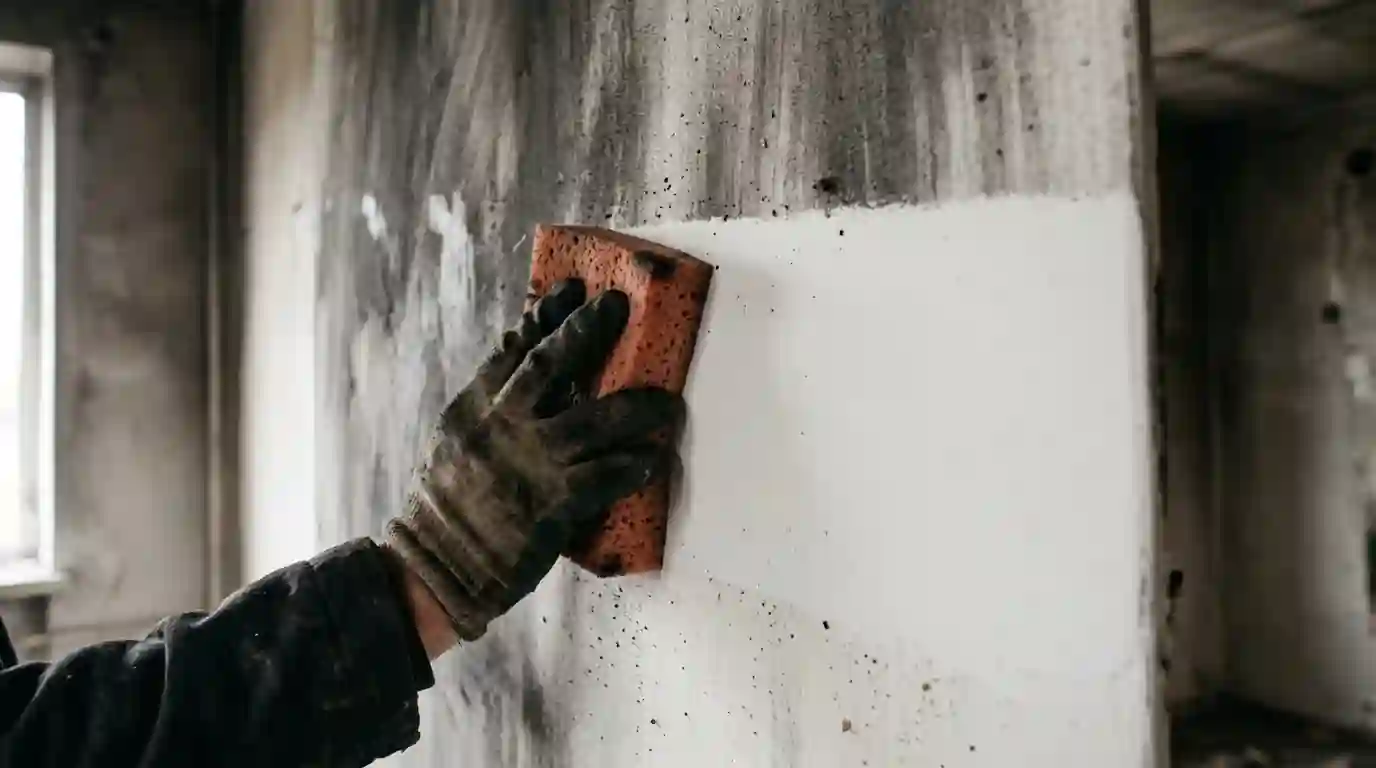
Smoke is made of tiny particles and gases that settle into and bond with surfaces. Airing out a house clears the smoke still floating, but not what has already landed. That residue gives off odor slowly for months, and faster whenever it gets warm or damp.
This is why air fresheners, candles and plug-ins only seem to work for a day or two. They cover the smell while the source keeps producing it.
Where smoke residue hides
After a fire, these are the places that most often keep the smell going:
- Inside wall cavities and behind switch plates and outlets
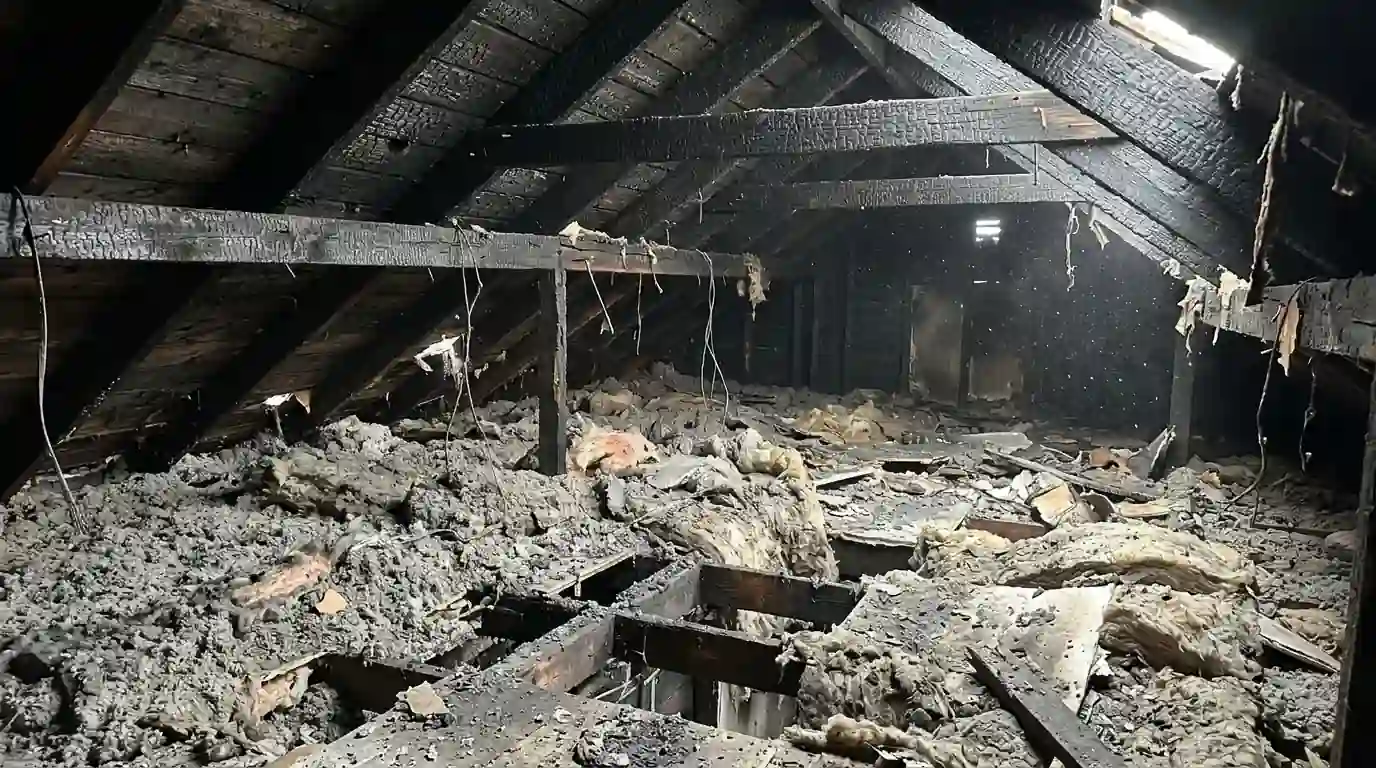
- Attic insulation and the underside of the roof deck
- Ductwork, the air handler and the return vents
- Carpet pad, upholstery, mattresses, curtains and closets full of clothes
- Charred or smoke-stained framing that was covered without sealing
- Cabinet interiors, drawers and the back of the range hood
Why heat and humidity bring it back
Porous materials absorb odor molecules and release them when conditions change. On a warm, humid afternoon, wood, drywall and fabric give up some of what they absorbed, and the smell returns as if it had never left.
Atlanta summers make this especially noticeable. A house that seemed fine in March can smell smoky again in July if the residue was never removed.
What actually removes it
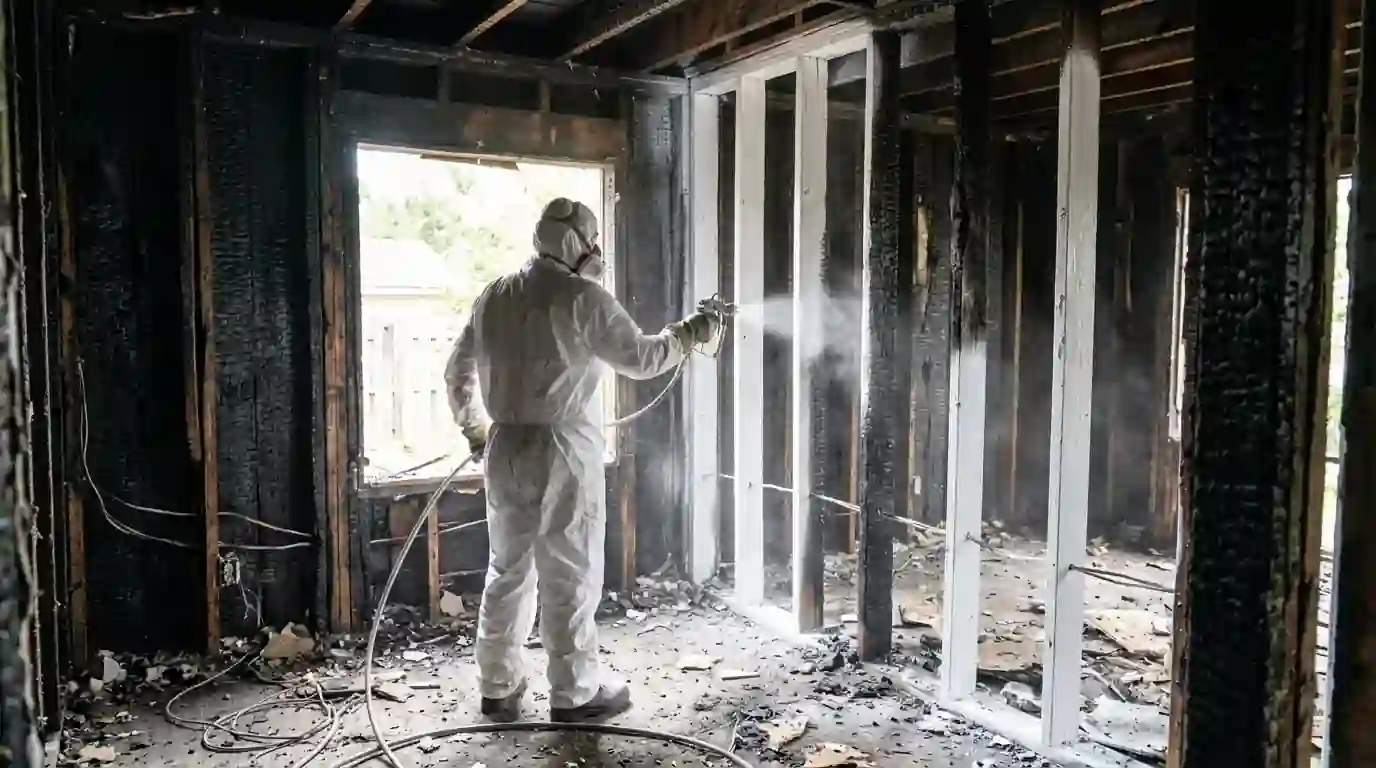
Lasting odor removal follows an order. First, clean the residue from every surface that can be cleaned, including cabinet interiors, ducts and light fixtures. Second, treat what remains with thermal fogging, hydroxyl generators or ozone, chosen for how heavy the odor is and whether the house is occupied. Third, seal charred framing and smoke-stained surfaces with an odor-blocking primer before insulation and drywall go back.
Skipping any step usually means the smell comes back. The smoke odor removal page compares the treatment methods in detail.
Signs the job was not finished
If any of these show up after cleaning, the source is still in the house:
- The smell returns when the HVAC or the oven runs
- Odor is strongest in one closet, room or corner
- A yellow film reappears on white surfaces
- Clothing smells smoky after a week in a closet
FAQ
Common questions
It can last for months or longer in porous materials, especially in warm, humid weather.
Only with an odor-blocking primer after the residue is cleaned. Regular paint lets it bleed through.
Ozone is harmful to breathe and must only run in an empty house, which is then aired out. It also does not replace cleaning.
Clothing and closet walls absorb smoke. Both usually need cleaning or treatment.
After a covered fire, odor removal is commonly part of the claim.
Talk to a person now
Smoke smell still hanging on?
Call and we'll find where it is coming from.
Answered 24/7, holidays included.