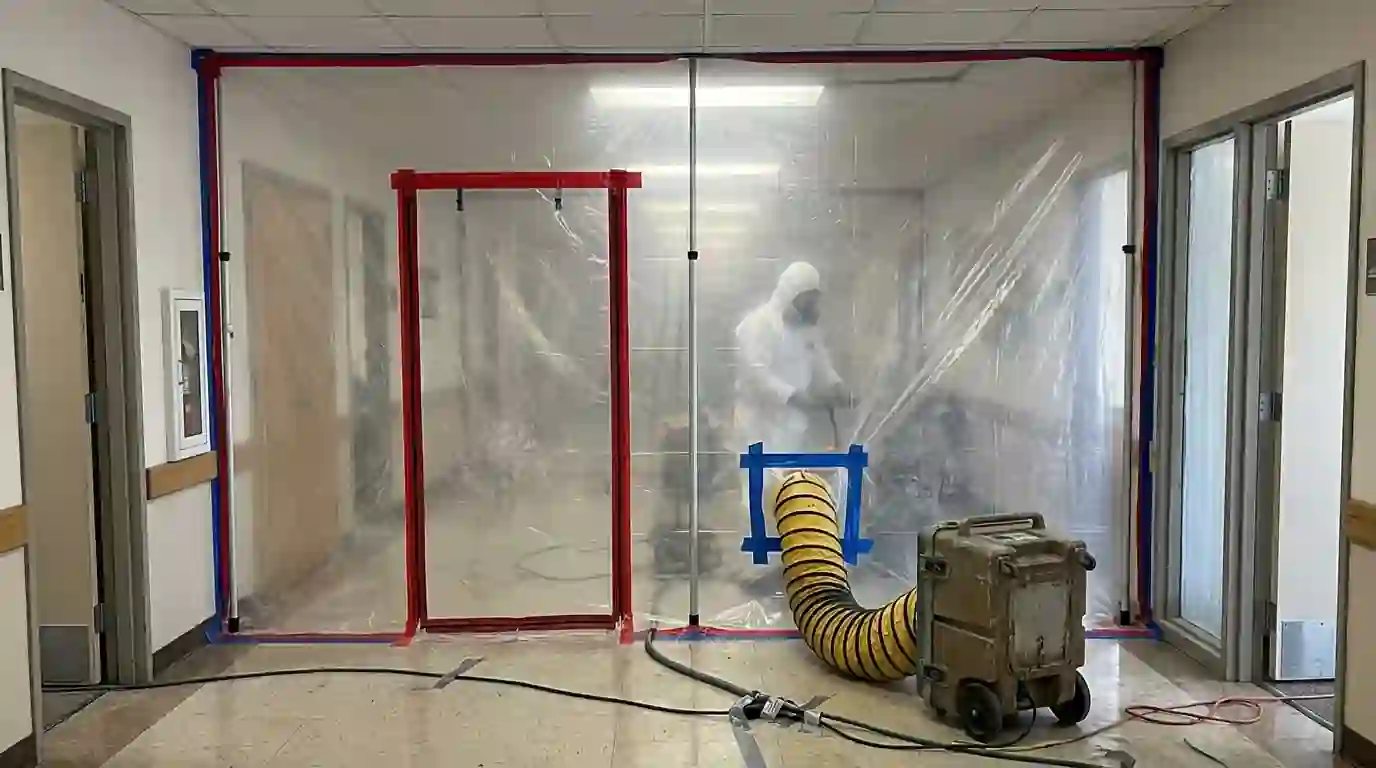
Meters, thermal imaging and a written map
Moisture inspection and leak mapping in Atlanta
Water you cannot see does the most damage. We measure walls, floors and ceilings with meters and a thermal camera, mark what is wet and tell you where it is coming from, before anyone cuts a hole.
Updated September 2026
- Phones
- Answered 24/7
- Job type
- Mold, air and contents
- Service office
- Biscayne Dr NW, Atlanta
Short answer
A moisture inspection in Atlanta uses pin and pinless meters and a thermal camera to map which walls, floors and ceilings are wet and how far the water traveled. It answers two questions: whether something is leaking now, and whether a past leak or dry-out is actually finished.
The job
What a moisture inspection can and cannot tell you
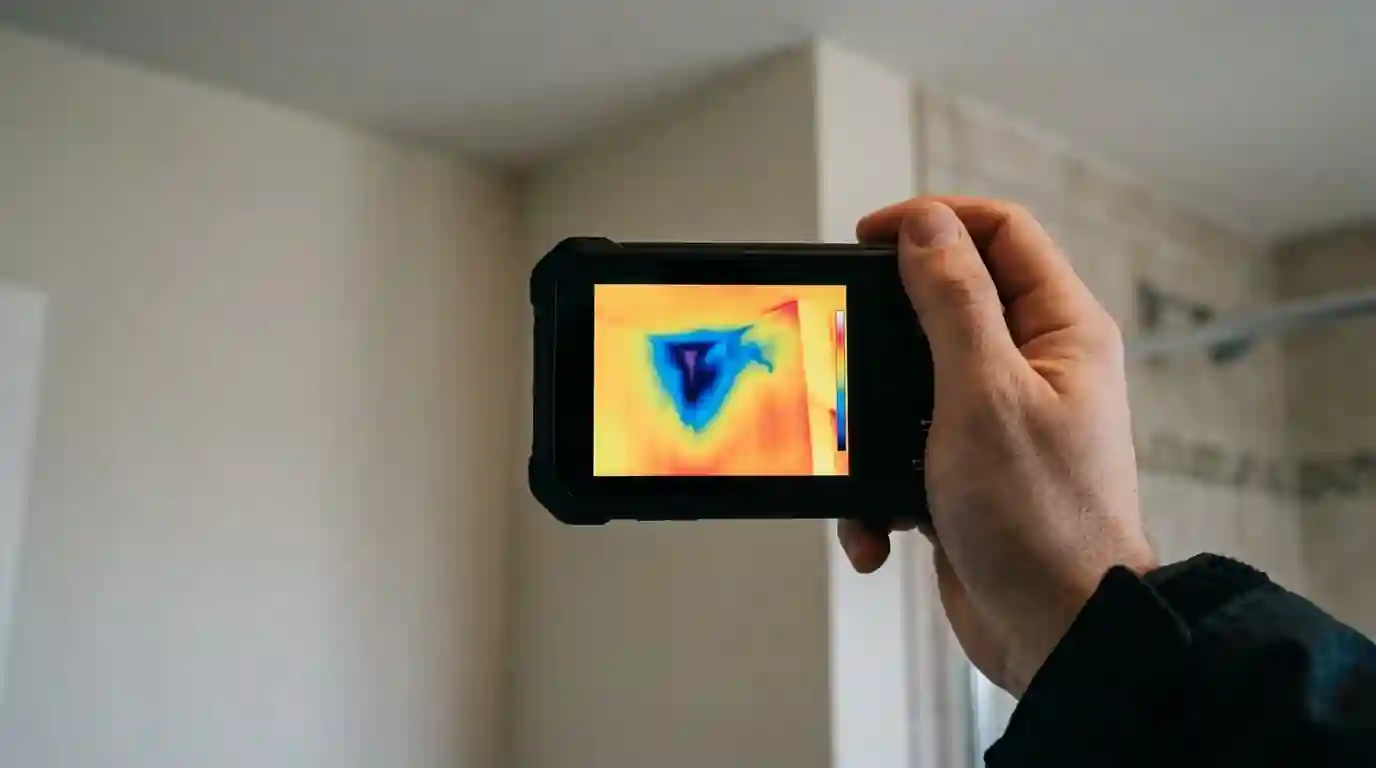
A thermal camera shows temperature, not water. Wet drywall reads cooler because it is evaporating, so the camera tells us where to look. The meter confirms it. Pin meters read the moisture inside wood and drywall, and pinless meters scan wider areas without leaving holes.
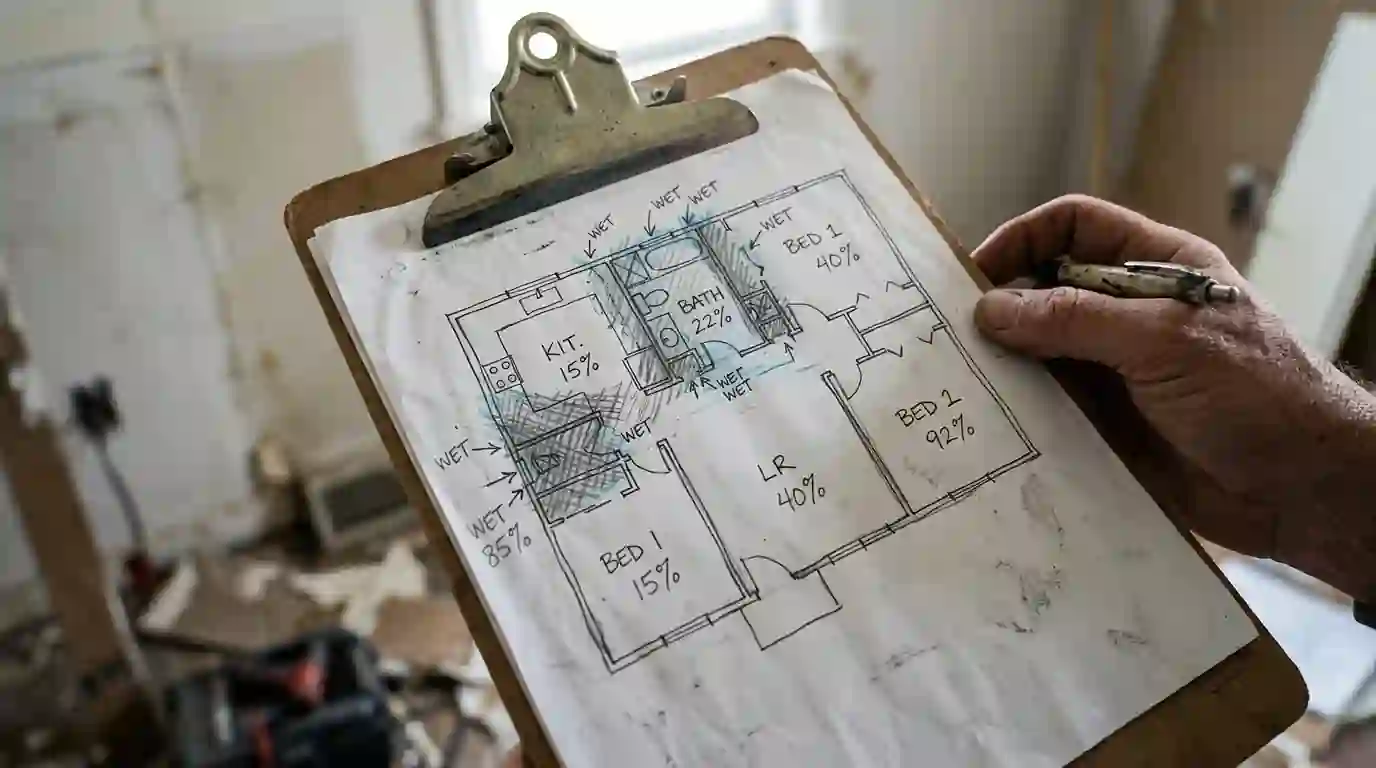
Together they give a moisture map: which materials are wet, how wet, and where the wet edge stops. That map is what separates a small repair from tearing out a whole wall. It also tells you whether a dry-out someone else did was actually finished, which matters before you close walls or refinish floors.
What an inspection is not: a mold test. If we find conditions for mold we will say so, and air or surface sampling is a separate decision.
What is included
What the inspection includes
Every visit covers the same ground, whatever prompted the call.
- A walk-through of the symptom and the rooms around it
- Thermal imaging of walls, ceilings and floors in the affected area
- Pin and pinless meter readings at the suspect spots
- Comparison readings from dry areas of the same materials
- Attic or crawl space checks where the layout allows
- Photos of each reading and its location
- A marked map of wet and dry areas
- A plain written summary of the likely source and the next step
Common case
Hidden leak mapping
When a stain shows up or a room smells musty and nobody knows why, we work outward from the symptom. Readings along the floor, the baseboard line and the ceiling show where moisture is highest, which usually points straight at the source.
Common finds include a shower pan leaking into the wall behind it, an AC drain line overflowing in the attic, a slow supply line behind a vanity and water getting in at a window. You get the map, photos of the readings and a plain answer about what should happen next.
Common case
Post-drying verification
After a water loss, drying equipment should stay until materials reach dry standard, meaning readings close to the same materials in a room that never got wet. We take those comparison readings and record them room by room.
This matters most before drywall goes back up, before hardwood is sanded and before an insurance file is closed. Framing that was closed up wet tends to come back as a smell or a stain months later, when the fix costs far more.
Common case
Pre-purchase moisture checks
Buyers and sellers ask us to check houses with a leak history, a finished basement or a crawl space that smells. We read the areas most likely to hold water and note anything that tests wet or shows old staining.
This is a narrower job than a full home inspection and does not replace one. It answers one question in detail: is anything in this house wet right now, and where. If something is, you know before closing rather than after.
After you call
How a moisture inspection runs
- 01
Hear the symptom
You tell us what you noticed and when. That sets where we start.
- 02
Scan with the camera
Thermal imaging narrows the search to the cool, suspect areas.
- 03
Confirm with meters
Pin and pinless readings confirm what is wet and how wet.
- 04
Trace the source
We follow the readings back toward the plumbing, roof, window or drain behind them.
- 05
Write it up
You get the map, the photos and a short summary of what to do next.
In Atlanta
Why Atlanta houses hide moisture
Atlanta gets about 50 inches of rain in a normal year, and the red clay around Decatur swells, holds water and drains slowly. Crawl spaces over that clay can stay damp for days after a storm, and the moisture works up into the floor framing long before anything shows inside. That is why a musty smell after a wet stretch is worth checking, even when every wall and ceiling looks fine.
Cost
What affects the price of a moisture inspection
Inspection pricing depends mostly on the size of the area and the reason for the visit.
Size of the area
One bathroom wall is quicker than a full floor or a whole house.
Access
Crawl spaces and attics take longer to read safely than open rooms.
Purpose of the visit
Tracing an unknown leak takes more time than confirming a finished dry-out.
Documentation
A detailed map for an insurance file or a sale takes longer to prepare.
Follow-up testing
Mold sampling or lab work, if needed, is priced separately.
Your options
Which testing method fits your situation
Each tool answers a different question, and a good inspection uses more than one.
| Method | What it shows | Best for | Limits |
|---|---|---|---|
| Thermal camera | Temperature differences across a surface | Finding where to look, fast | Cannot confirm water on its own |
| Pinless meter | Relative moisture below the surface | Scanning drywall, tile and flooring without holes | Reads only a shallow depth |
| Pin meter | Moisture content inside wood and drywall | Confirming readings and tracking drying | Leaves small holes |
| Hygrometer | Humidity and dew point in the air | Crawl spaces, attics and closed rooms | Says nothing about materials |
| Air or surface sampling | Mold spores or growth | When mold is suspected | A separate step, usually lab-based |
FAQ
Questions people ask about moisture inspection and thermal imaging
No. It finds water. If we find conditions for mold, we tell you, and testing is a separate step.
Mostly no. Thermal imaging and pinless meters leave no marks; pin meters leave tiny holes, usually in baseboards.
Ask for final readings compared with the same material in a dry room. If nobody recorded them, a verification visit will.
Yes, the drying and repairs. A plumber or roofer fixes the source itself.
It is worth it for houses with a leak history, a finished basement or a smelly crawl space. It does not replace a home inspection.
Talk to a person now
Smell something damp but cannot find the water?
Call and tell us what you've noticed. We'll set up a visit and find out what is wet.
Answered 24/7, holidays included.