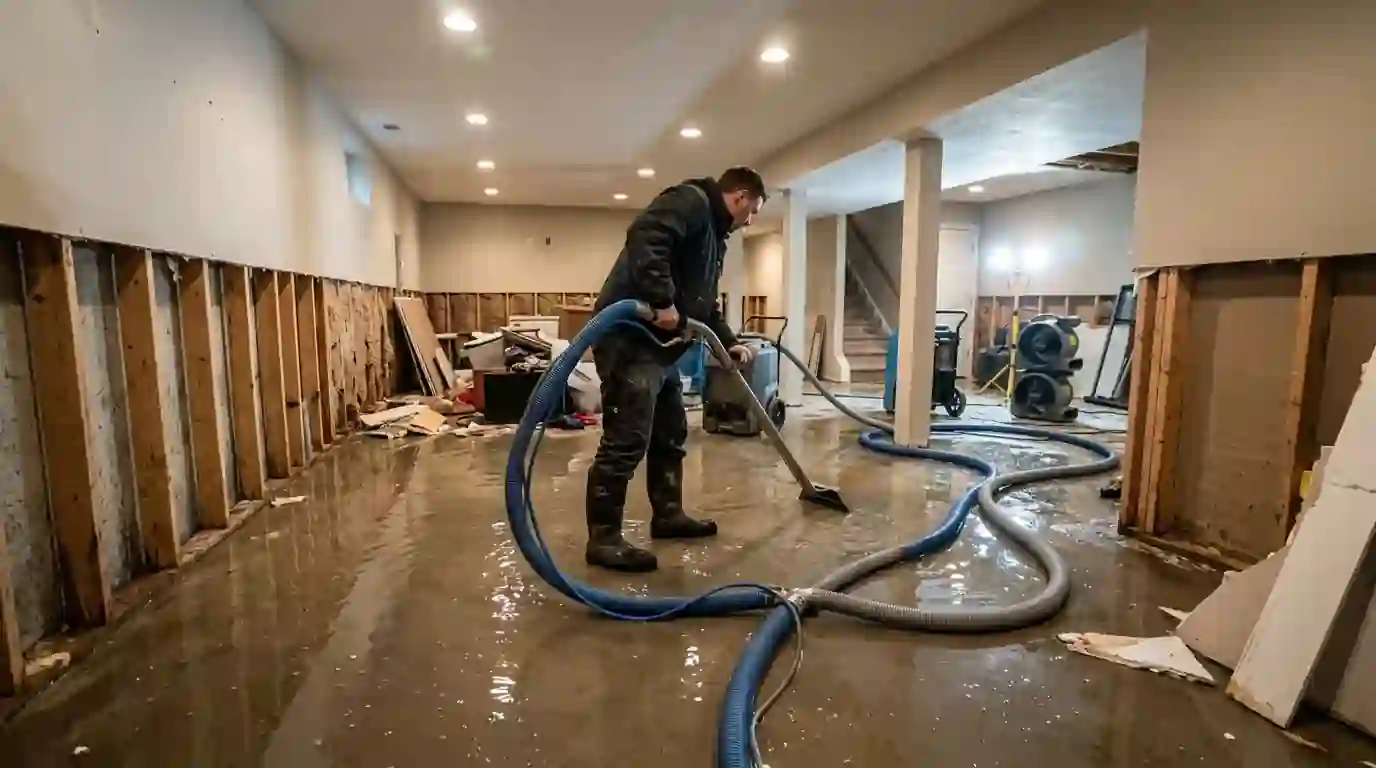
Truck-mounted and portable extraction
Emergency water extraction in Atlanta
Every hour standing water sits, it soaks deeper into floors and walls. We pull it out of carpet, pad, hard floors and basements with extraction equipment far stronger than a shop vac, so drying can start on the same visit.
Updated September 2026
- Phones
- Answered 24/7
- Job type
- Water emergencies
- Service office
- Biscayne Dr NW, Atlanta
Short answer
Water extraction in Atlanta removes standing water from floors, carpet and pad within the first hours, before it soaks into subfloors and wicks up walls. We use truck-mounted units where hoses can reach and portable extractors in high-rises and tight spaces, then set drying equipment on the same visit.
The job
Why extraction comes before everything else
Removing water as liquid is far faster than drying it out as vapor. A good extraction pass can pull most of the water out of carpet and pad, which cuts days off the drying and saves materials that would otherwise have to go.
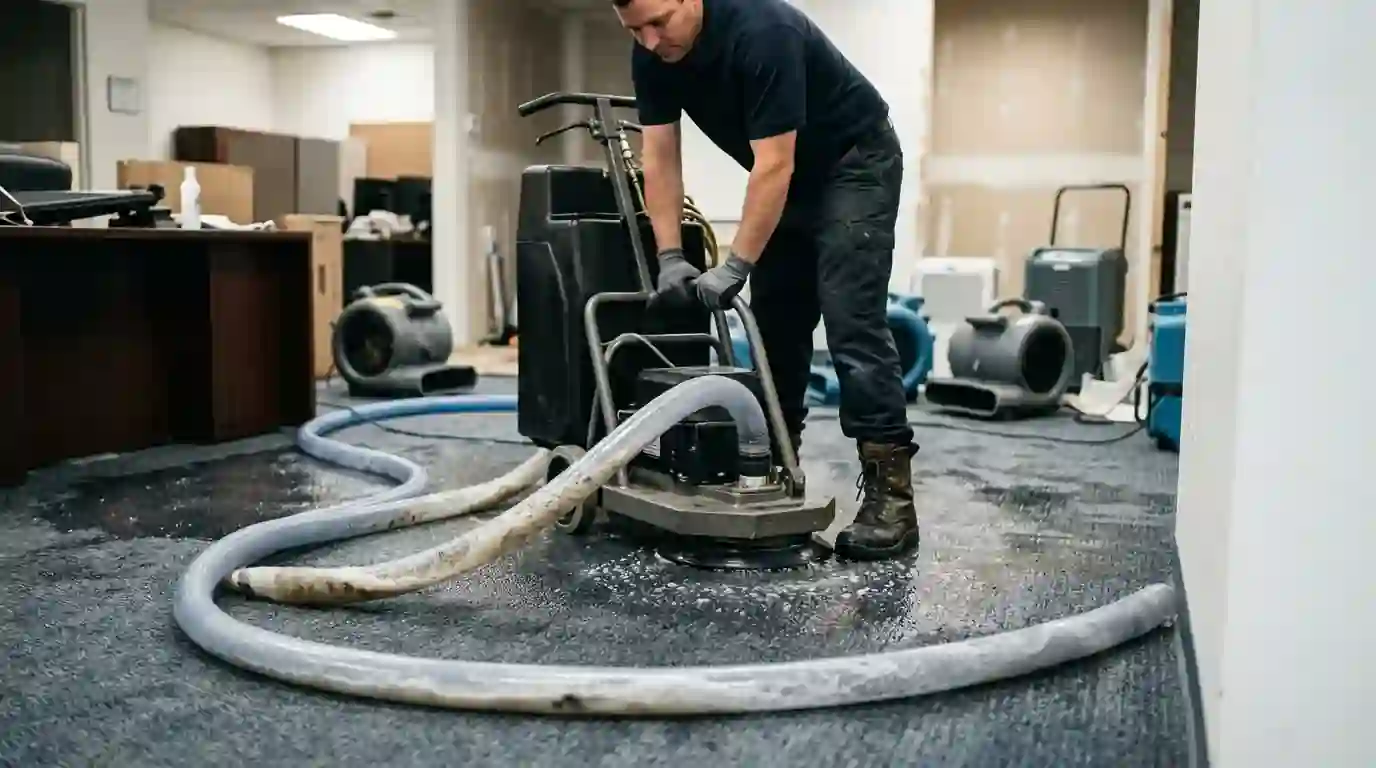
Household wet vacs cannot match the suction of professional extractors, especially on carpet. Weighted extraction tools that press the carpet down while vacuuming pull water out of the pad underneath, which is where most of it hides.
After you call
How water extraction runs
- 01
Stop the source
Water off and power checked in wet areas.
- 02
Pick the equipment
Truck-mount, portable or pump, depending on the space.
- 03
Extract
Floors, carpet and pad extracted in repeated passes.
- 04
Lift and remove
Pad and soaked materials removed where needed.
- 05
Start drying
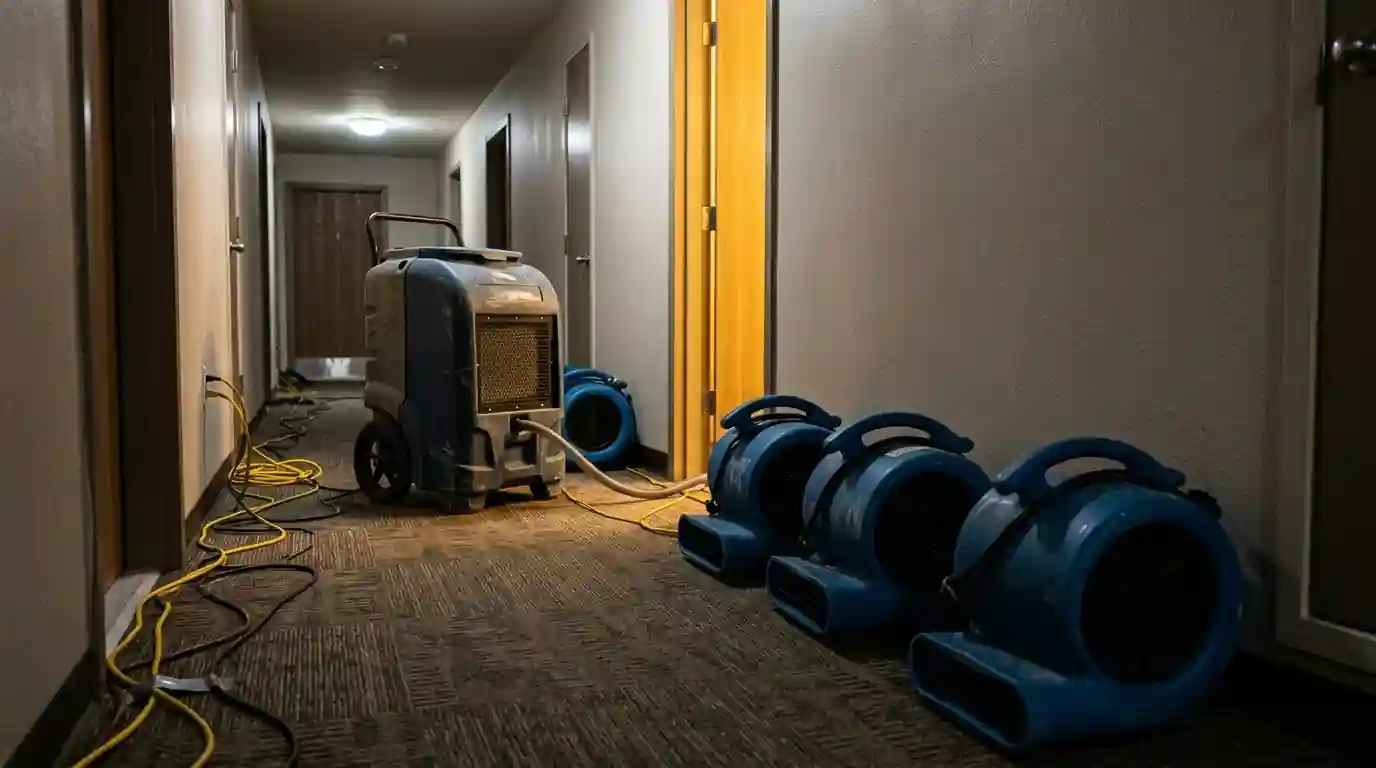
Air movers and dehumidifiers set on the same visit.
Common case
Truck-mounted extraction
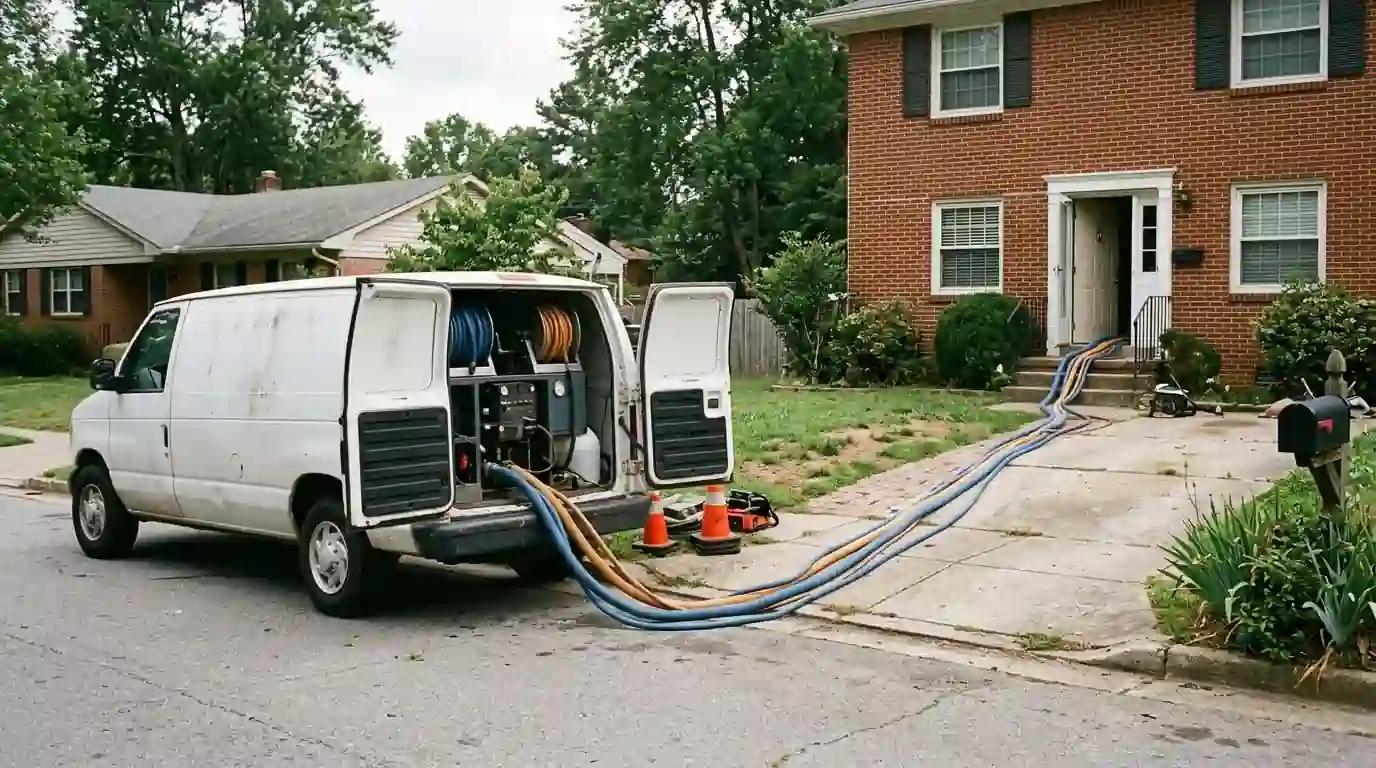
Truck-mounted units sit outside and run long hoses into the house. They have the strongest suction and large tanks, which makes them the right tool for big losses, flooded basements and whole floors of wet carpet.
The trade-off is reach. Hoses have to run from the driveway, so they work best in houses and low-rise buildings. We protect door frames and floors along the hose path and keep doors closed as much as possible to hold the humidity down. In bigger jobs, one truck unit can clear several rooms before the drying equipment is set.
Common case
Portable extraction in high-rises
In condo towers and office buildings, hoses cannot reach from the street. Portable extractors come up the elevator and plug into the unit, with enough suction for carpet and hard floors.
We work floor by floor, emptying tanks into the unit's drains or tubs, and coordinate elevator use and loading dock access with building management. When the water came from a unit above, the units below are extracted on the same visit, the same approach we use for condo leaks.
Common case
Carpet and pad extraction
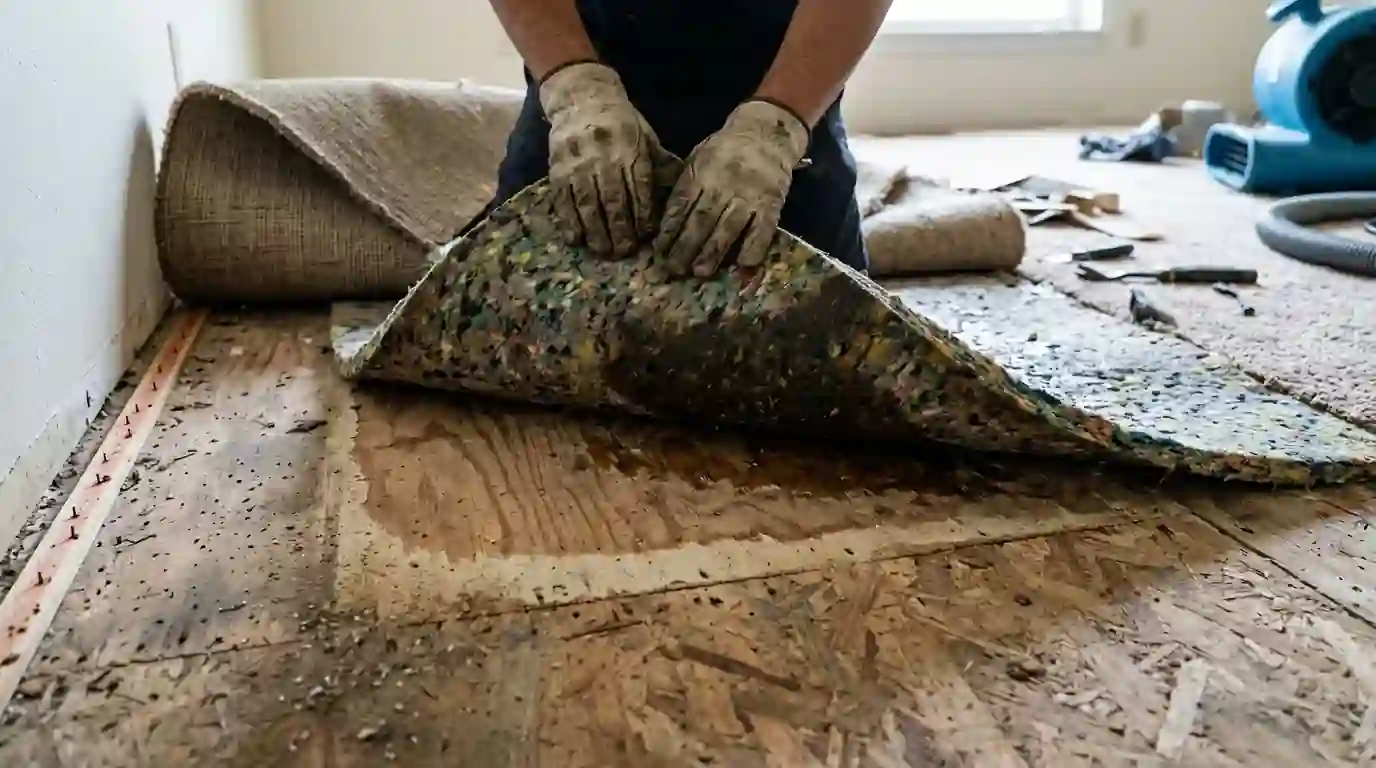
Most of the water in a wet carpeted room is in the pad, not the carpet. Wand passes pull surface water; weighted tools and repeated passes pull from the pad, and the difference shows in the tank.
If the water was clean and the pad is pulled out dry enough, the carpet can be floated and dried in place. If the water was contaminated, both carpet and pad come out after extraction. Either way, extraction first makes the rest of the job lighter.
In Atlanta
Extraction calls across Atlanta
When a big event hits, extraction is the first thing everyone needs. During Helene, first-floor units at Peachtree Park Apartments in Buckhead flooded, and in the December 2022 freeze Gwinnett County police asked residents to stop calling 911 about burst pipes because the lines were overwhelmed. On days like those, the order of work matters: water out first, then drying, then everything else.
Standing water in the house? Call now and we'll get it out before it soaks in any further.
Call (943) 315-6150Your options
Which extraction method fits
| Method | Best for | Strength | Limits |
|---|---|---|---|
| Truck-mounted | Large losses, basements, whole floors | Strongest suction, big tanks | Hoses must reach from outside |
| Portable extractor | High-rises, tight spaces, single rooms | Good suction, goes anywhere | Smaller tanks, more emptying |
| Weighted extraction tool | Carpet and pad | Pulls water out of the pad | Needs a strong extractor behind it |
| Submersible pump | Deep standing water | Moves large volumes fast | Leaves a film that still needs extraction |
Cost
What moves the cost of water extraction
Volume and access set the extraction cost.
Volume of water
Deeper and wider water takes more time and passes.
Floor coverings
Carpet and pad take more extraction than hard floors.
Access
High-rises and long hose runs add time.
Water category
Contaminated water adds cleanup and disposal.
Drying after
Extraction is usually billed together with drying.
HomeAdvisor puts most water damage jobs, extraction plus drying, between $1,364 and $6,301 in 2025. We price yours once we see the water.
FAQ
Questions people ask about water extraction
For a small spill on tile, yes. For wet carpet or more than a puddle, a shop vac leaves most of the water in the pad.
As soon as possible, ideally within hours. Every hour lets it soak deeper.
No. It removes liquid water; drying equipment removes what soaked in.
Yes, with portable extractors brought up by elevator.
If the water event is covered, extraction is usually part of it.
Talk to a person now
Standing water in the house?
Call now and we'll get it out.
Answered 24/7, holidays included.