Restaurants, warehouses and multi-tenant buildings
Commercial fire damage restoration in Atlanta
A fire at a business stops revenue as well as damaging the building. We secure the site, remove water, clean soot from surfaces, equipment and ventilation, and plan the work so the parts that can reopen, reopen first.
Updated September 2026
- Phones
- Answered 24/7
- Job type
- Commercial and multi-unit
- Service office
- Biscayne Dr NW, Atlanta
Short answer
Commercial fire damage restoration in Atlanta starts once the fire marshal releases the building: securing it, extracting firefighting water within the first day or two, then cleaning soot and smoke from structure, equipment and ventilation. We plan the work around what must reopen first and document everything for owners, tenants and insurers.
The job
What a commercial fire leaves behind
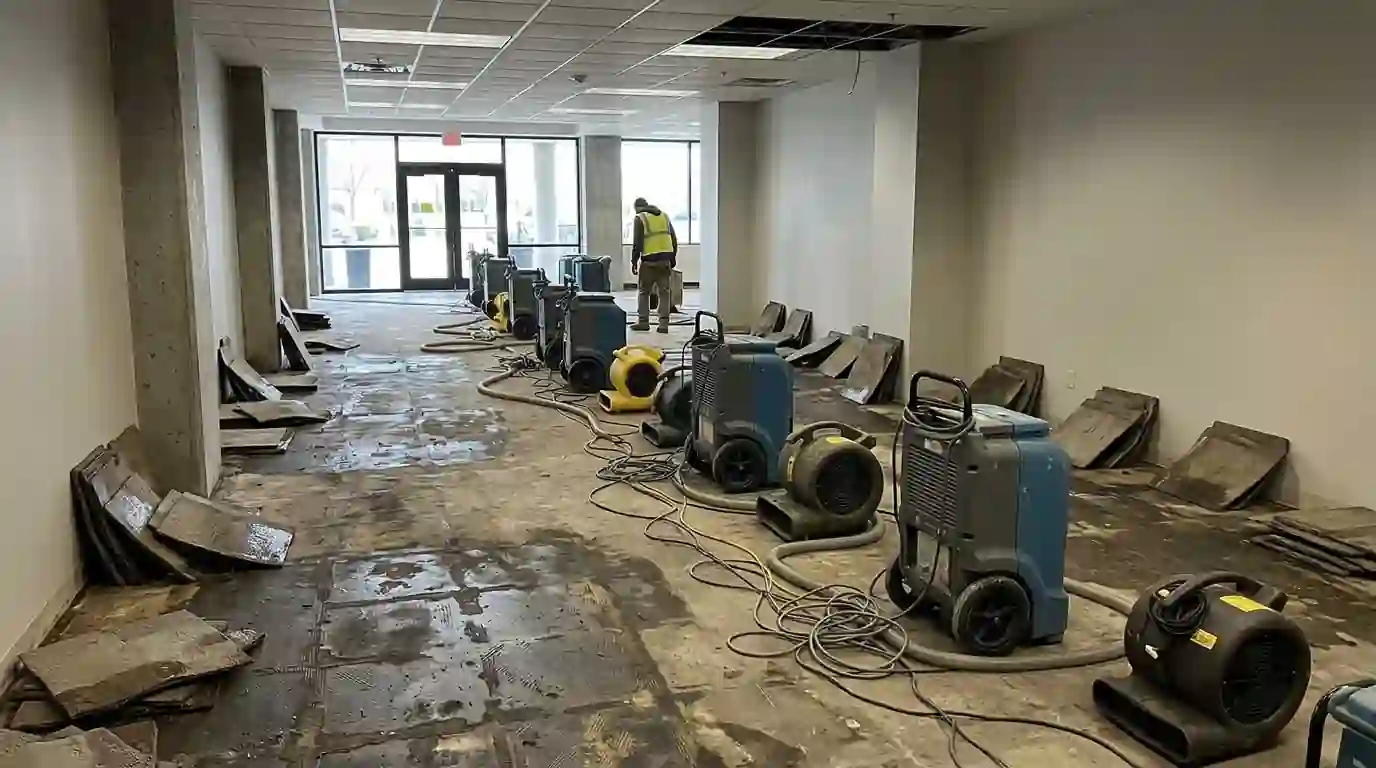
Commercial fires spread smoke through shared ventilation, drop ceilings and open floor plates, so damage reaches far past the burned area. Sprinklers and hoses add water, and the building often stays closed until the fire marshal releases it.
The cleanup order is the same as in a house: secure, water out, soot off, charred material removed, then rebuild. What changes is the scale and the coordination: tenants, inventory, equipment, inspections and the pressure to reopen. We plan the job with the owner and manager from the first walk-through.
After you call
How a commercial fire job runs
- 01
Secure the site
Board-up, fencing and utilities checked.
- 02
Water out
Firefighting and sprinkler water extracted.
- 03
Clean structure and systems
Soot cleaned from structure, surfaces and ducts.
- 04
Sort inventory
Salvageable, to-be-tested and lost items documented.
- 05
Reopen and rebuild
Areas released in stages, then repairs.
Common case
Restaurant kitchen fires
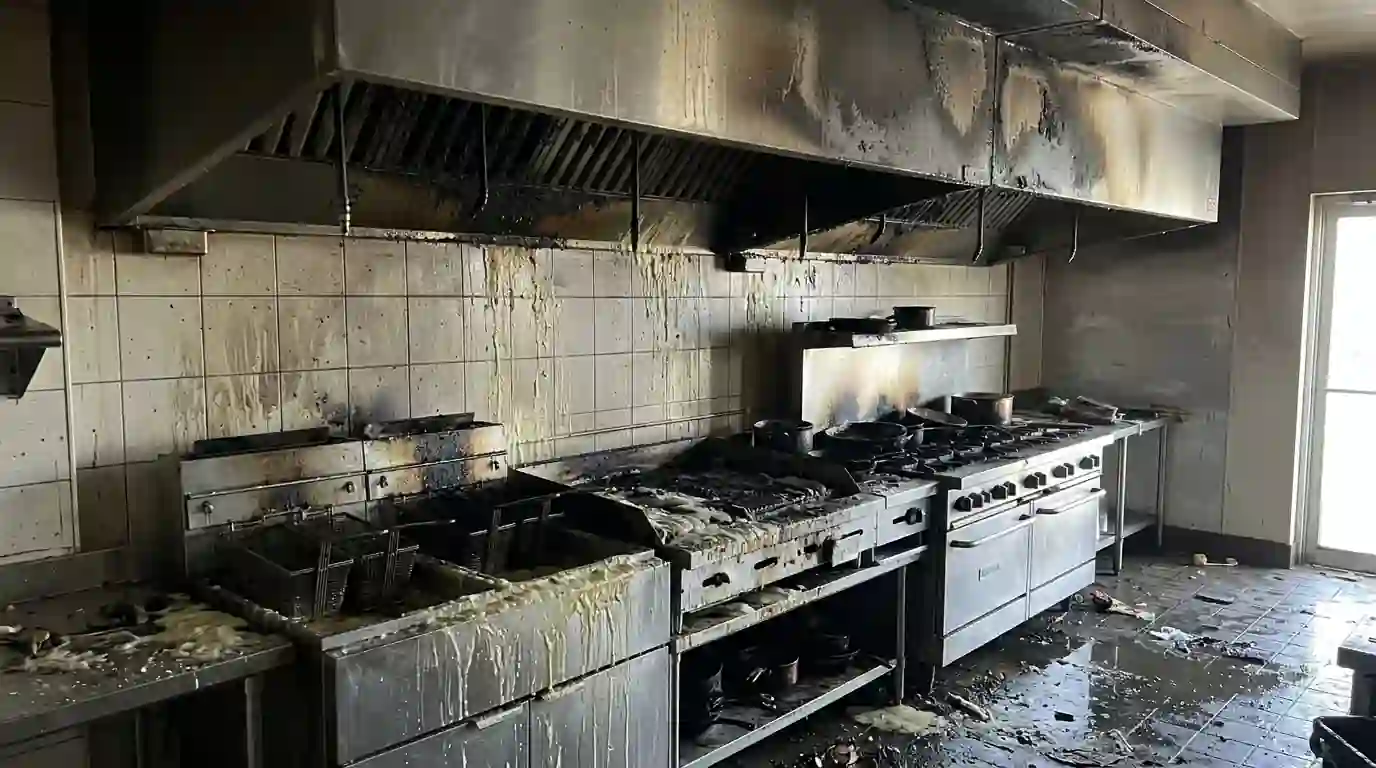
Restaurant fires usually start on the cooking line and involve grease, which leaves heavy, sticky residue in the hood, the ductwork and the dining room. The suppression system adds wet chemical residue on top.
We clean the line, hood and dining areas, handle the food and supplies that must be discarded and work toward the inspection the kitchen needs before reopening. Hood duct cleaning and the suppression recharge go to the specialists, and we coordinate the sequence with them. Seating areas and restrooms far from the kitchen often need only cleaning and odor treatment, so they can be finished early.
Common case
Warehouse and shop fires
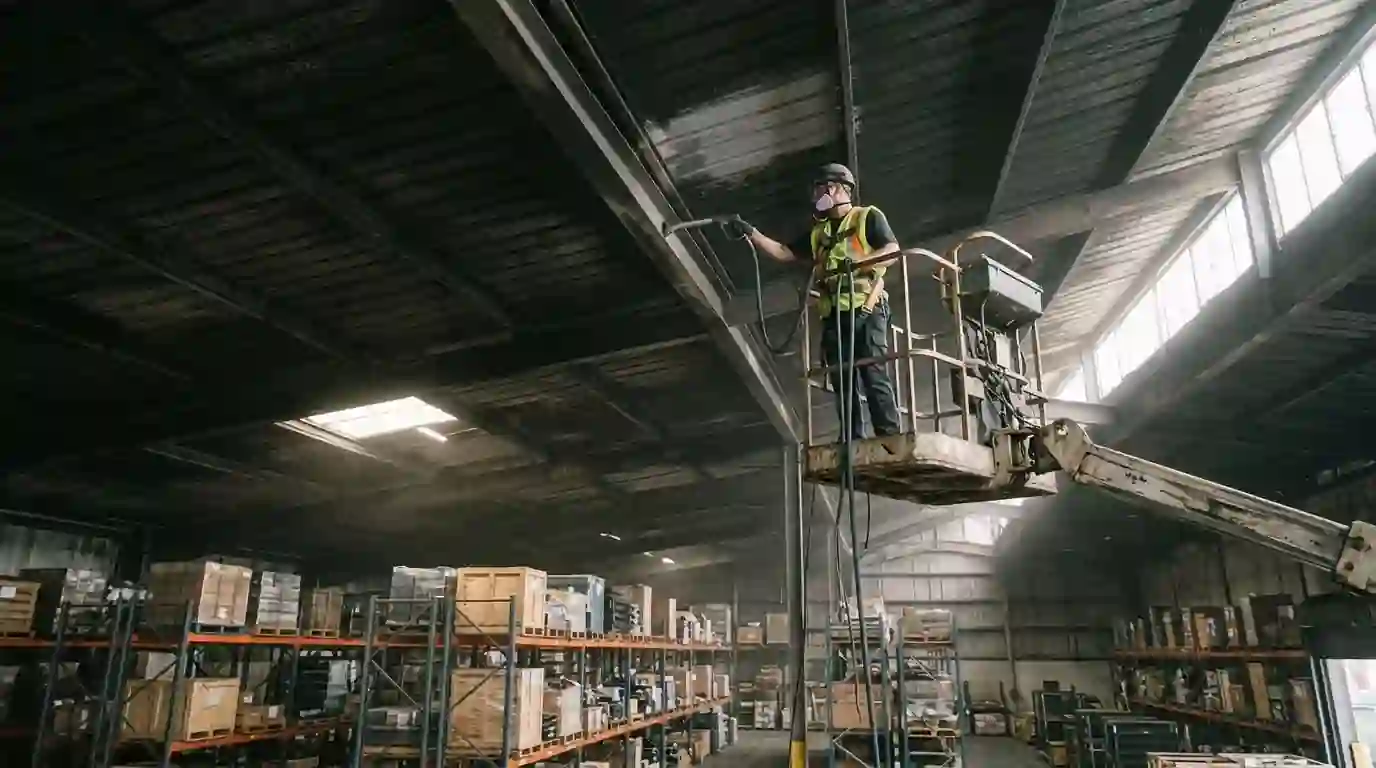
Warehouses and shops have high ceilings, steel structure and a lot of inventory. Smoke rises to the roof deck and settles on racking and stock across the building.
We clean the structure from the top down, working from lifts, and separate inventory into what can be cleaned, what needs testing and what is lost, with a list for your claim. Equipment gets cleaned before it runs again, since soot in motors and electronics causes failures later. Loading docks and offices are often cleaned first so shipping can restart while the floor is still being worked.
Common case
Smoke in shared ventilation
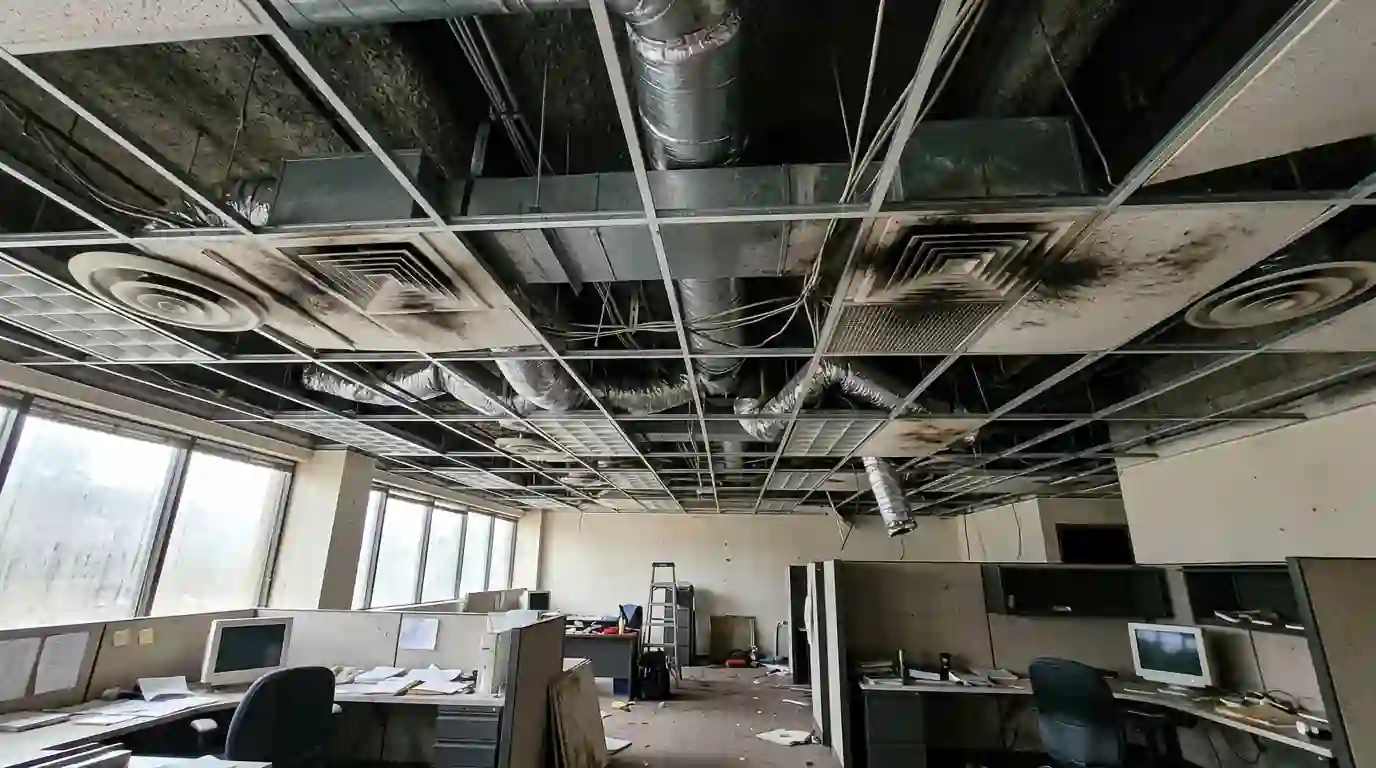
In offices and multi-tenant buildings, the HVAC system carries smoke from one suite to others. Tenants far from the fire can end up with soot on surfaces and a smoke smell in carpet and ceiling tiles.
We document each suite separately, clean the ductwork and air handlers and treat odor throughout. Ceiling tiles that absorbed smoke are usually replaced. Management gets a single plan and a schedule that lets unaffected tenants keep working, and the shared systems are cleaned before any suite is handed back, so clean spaces are not re-contaminated.
Timeline
How long a commercial fire restoration takes
Securing the site and removing water happen in the first days. Cleaning takes days to weeks depending on the size of the building and how far the smoke traveled.
Rebuilding depends on the structural damage, permits and inspections. We stage the work so areas can reopen as they are cleared.
In Atlanta
Lightning and commercial roofs in Georgia
Georgia ranked fourth in the nation for lightning insurance claims in 2025, about 4,000 of them, with an average claim above $22,000. Commercial buildings with flat roofs, rooftop HVAC units and tall signs offer exactly the high points lightning finds, and a strike can start a roof fire that smolders above a drop ceiling before anyone inside notices. After any strike, we check the roof deck and the space above the ceiling tiles.
What is included
What commercial fire restoration includes
- Board-up, fencing and securing the site
- Extraction of firefighting and sprinkler water
- Soot cleaning of structure, surfaces and fixtures
- Cleaning of HVAC ductwork and air handlers
- Inventory sorting and documentation for the claim
- Odor treatment through the affected areas
- Coordination with specialists, inspectors and the insurer
- A reopening plan and a rebuild scope
Cost
What moves the cost of commercial fire restoration
Building size, contents and downtime drive commercial fire jobs.
Area affected
Smoke through a whole floor plate is far larger than one suite.
Structure height
High ceilings and roof decks need lifts.
Inventory and equipment
Sorting and cleaning stock adds time.
Ventilation
Ductwork and air handlers need cleaning.
Schedule
After-hours and staged work keep parts of the business open.
FAQ
Questions people ask about commercial fire damage restoration
After the fire marshal releases it and it is safe to enter.
Often. We stage the cleaning so unaffected areas can reopen first.
Yes. We sort, document and clean what can be saved and list what cannot for your claim.
Yes. Each party gets photos, readings and a scope.
Hood duct cleaning goes to a hood specialist; we clean the kitchen and building around it.
Talk to a person now
Fire at your business?
Call once the building is released. We'll secure it and plan the path to reopening.
Answered 24/7, holidays included.