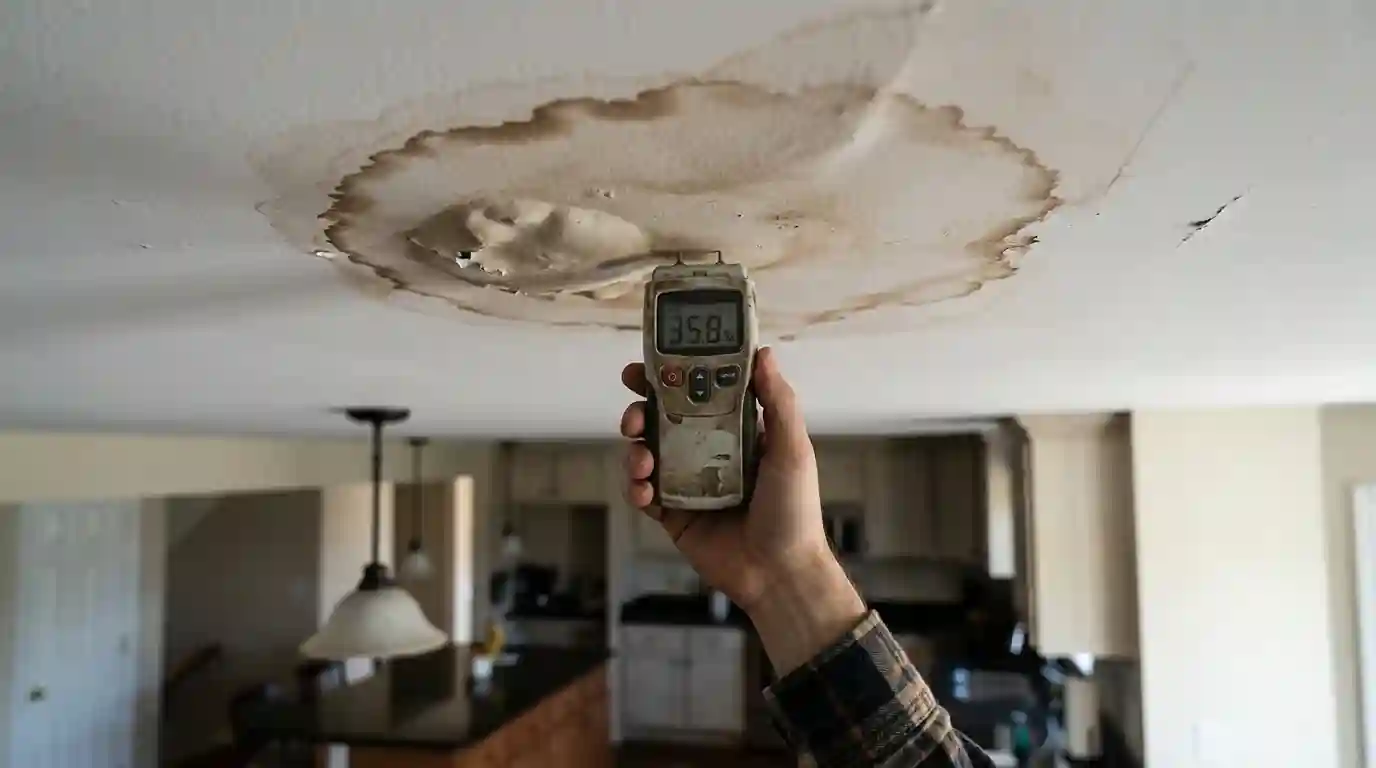
Stains, bubbles and sagging drywall
Ceiling water damage repair in Atlanta
A ceiling stain is water that has already crossed a floor or an attic to reach you. We trace it back to the source, dry what is above the ceiling and repair the drywall so the stain does not come back through the paint.
Updated September 2026
- Phones
- Answered 24/7
- Job type
- Leaks by source
- Service office
- Biscayne Dr NW, Atlanta
Short answer
Ceiling water damage in Atlanta usually comes from a roof leak, an upstairs bathroom, a pipe or an AC overflow, and a sagging or bubbling ceiling should be drained and opened within hours, before it falls. We find the source, dry the ceiling cavity and insulation, then repair or replace the drywall and seal the stain before painting.
The job
What a ceiling stain is telling you
Water above a ceiling spreads along joists and insulation before it shows through, so the stain is usually not directly under the leak. A brown ring that grows means water is still arriving; a stain that stays the same may be old, but the drywall above can still be wet.
The fix has three parts: stop the source, dry the cavity above and repair the ceiling. Painting over a wet stain traps the moisture, and the stain bleeds back through. We read the drywall and joists, open the ceiling only where needed and close it once the numbers are right.
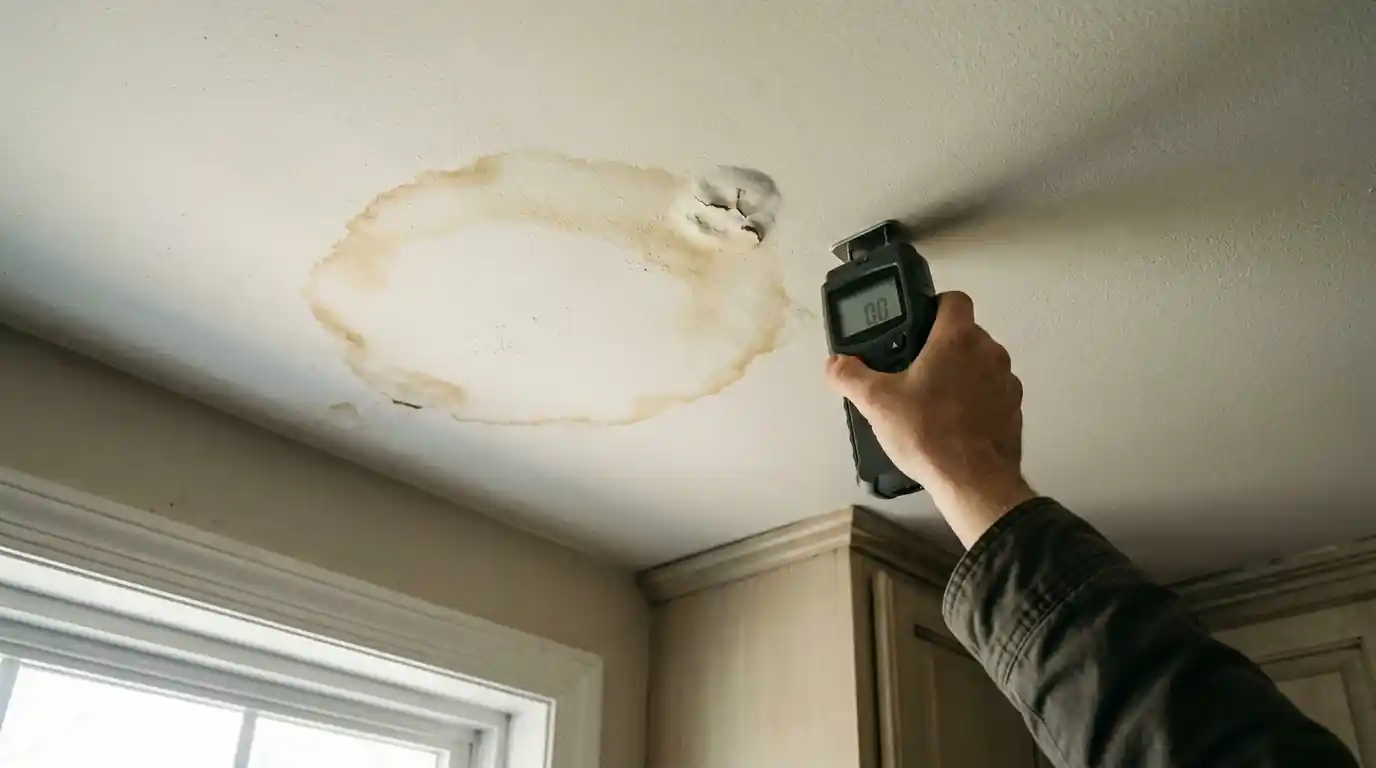
Signs to look for
Signs your ceiling is holding water
A growing stain
A stain that gets bigger means water is still coming in.
Bubbling paint
Paint bubbles hold water; the drywall behind is soaked.
A sag or bulge
A sagging ceiling can fall. Keep clear and call.
Drips from light fixtures
Water through a fixture is an electrical hazard; turn off that circuit.
A musty smell overhead
Damp insulation above a ceiling smells earthy.
After you call
How a ceiling water damage repair runs
- 01
Make it safe
Clear the area, drain any bulge and shut off wet circuits.
- 02
Trace the source
Readings and inspection find where the water enters.
- 03
Open and remove
Wet drywall and insulation removed back to sound material.
- 04
Dry the cavity
Joists and insulation dried with readings.
- 05
Repair and finish
New drywall, matched texture, sealed and painted.
Common case
Sagging ceiling bubbles
A bubble in the ceiling paint or a sag in the drywall is holding water. It can let go without warning, bringing wet drywall and insulation down with it.
Keep people out from under it and put a bucket below. We make a small, controlled opening to drain it, then remove the soaked drywall back to sound material, pull wet insulation and dry the joists. The ceiling is replaced and textured to match once the cavity reads dry. Do not push a sagging ceiling back up; the paper can tear and drop everything at once.
Common case
Leaks from the unit or bathroom above
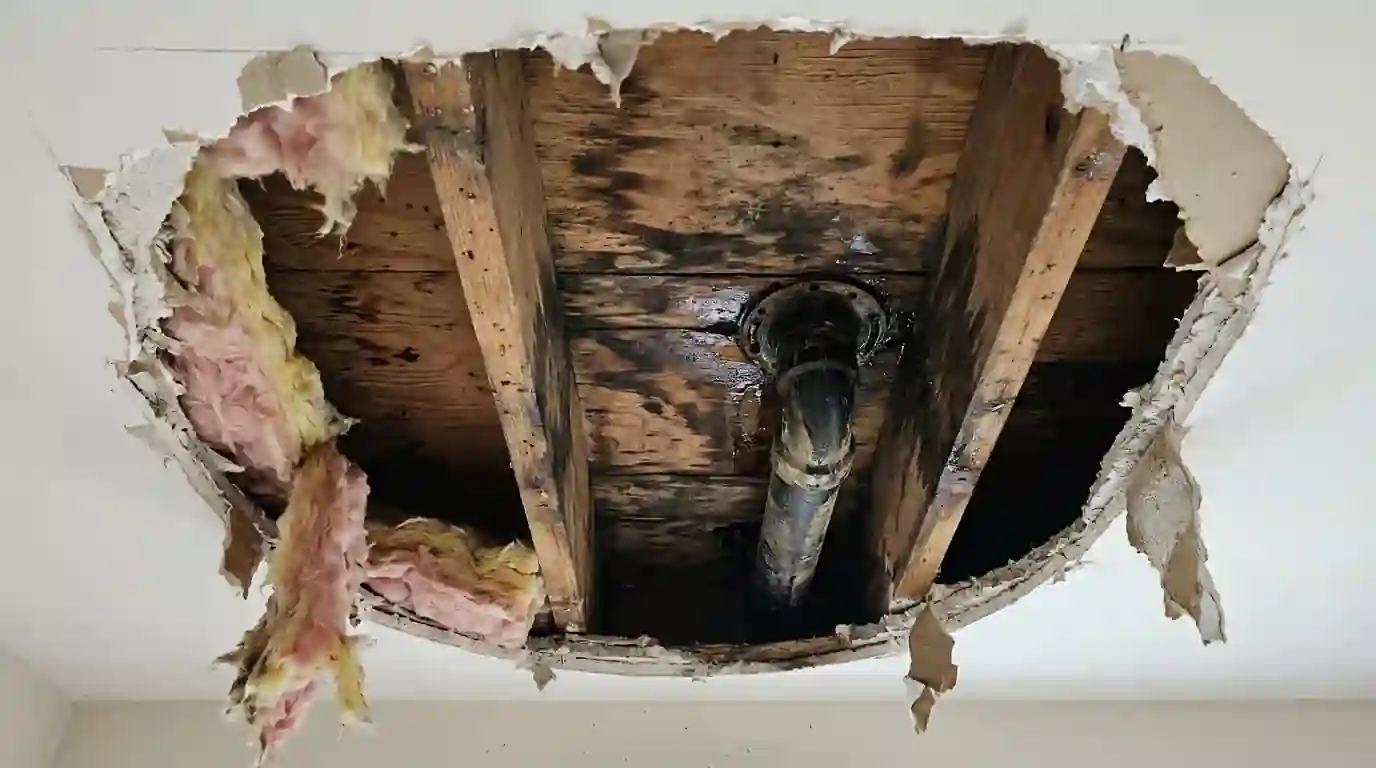
Upstairs bathrooms are the most common source of ceiling leaks: a toilet wax ring, a shower pan, a tub drain or a supply line. In condos, the source is often the unit above.
We trace the leak, read the ceiling and walls around it and coordinate with the plumber, the owner upstairs or building management. Once the source is fixed, the ceiling is dried or replaced. In buildings, each unit gets its own record, as with any leak between units.
Common case
Ceiling stains after storms
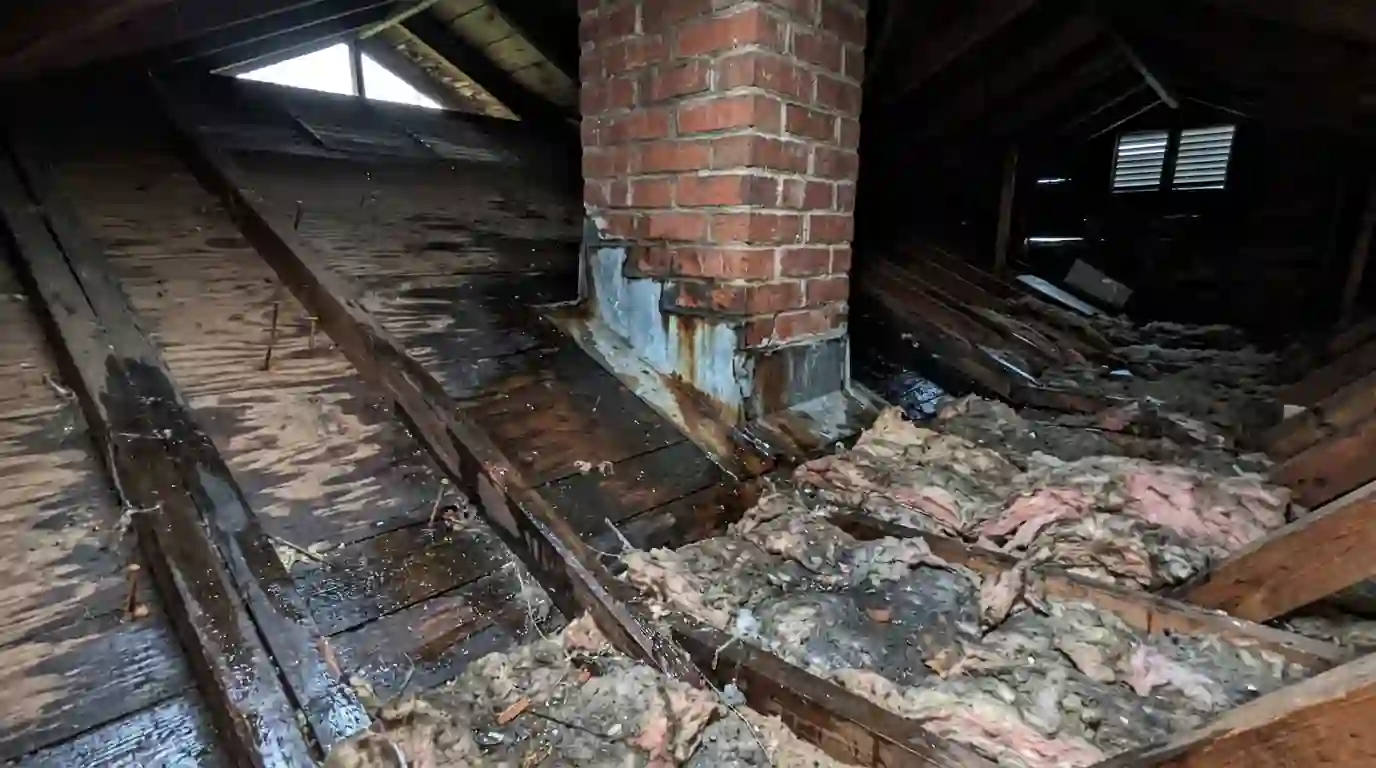
Stains that appear after heavy rain usually trace back to the roof: flashing around chimneys and vents, valleys, damaged shingles or clogged gutters backing up under the roof edge.
We check the attic above the stain for wet insulation and decking and dry it while your roofer fixes the leak. Stains on dry, sound drywall are sealed with a stain-blocking primer and repainted; soft or sagging drywall is replaced. A stain that grows after the next storm means the roof leak is not fixed yet, so we mark the stain edge to track it.
Timeline
How long ceiling repairs take
Draining and opening a sagging ceiling happens right away. Drying the cavity and insulation usually takes a few days.
Replacement drywall, texture and paint follow once the readings are normal, usually over a couple of visits.
In Atlanta
Ceiling leaks in Atlanta homes
Atlanta ceilings take water from both seasons. In humid summers, attic air handlers overflow, as an Atlanta building-science consultant found with his own condo's clogged condensate line. In hard freezes, pipes split in homes that were never designed for long cold, which Georgia's Insurance Commissioner pointed out after the 2022 freeze. We trace every stain to its source before patching, because the same ceiling can stain for different reasons in July and January.
Cost
What moves the cost of ceiling water damage repair
The size of the wet area and what is above it set the price.
Area of damage
A small stain costs less than a sagging section.
Insulation above
Wet insulation is removed and replaced.
Source
Bathroom and roof leaks need other trades too.
Texture and paint
Matching texture and repainting the whole ceiling add time.
Access
Tall ceilings and stairwells need staging.
HomeAdvisor puts most water damage jobs between $1,364 and $6,301 in 2025. We price yours after we trace the leak and see what is above the ceiling.
FAQ
Questions people ask about ceiling water damage
Only after the source is fixed and the drywall is dry, using a stain-blocking primer.
Yes. It can fall with water and insulation. Keep clear and call.
Water runs along joists and insulation before it shows through.
Those go to a roofer or plumber; we handle the ceiling, insulation and drying.
Sudden leaks are commonly covered; long-term leaks and roof wear often are not.
Talk to a person now
Stain or sag in the ceiling?
Call now. We'll make it safe, find the source and repair the ceiling.
Answered 24/7, holidays included.