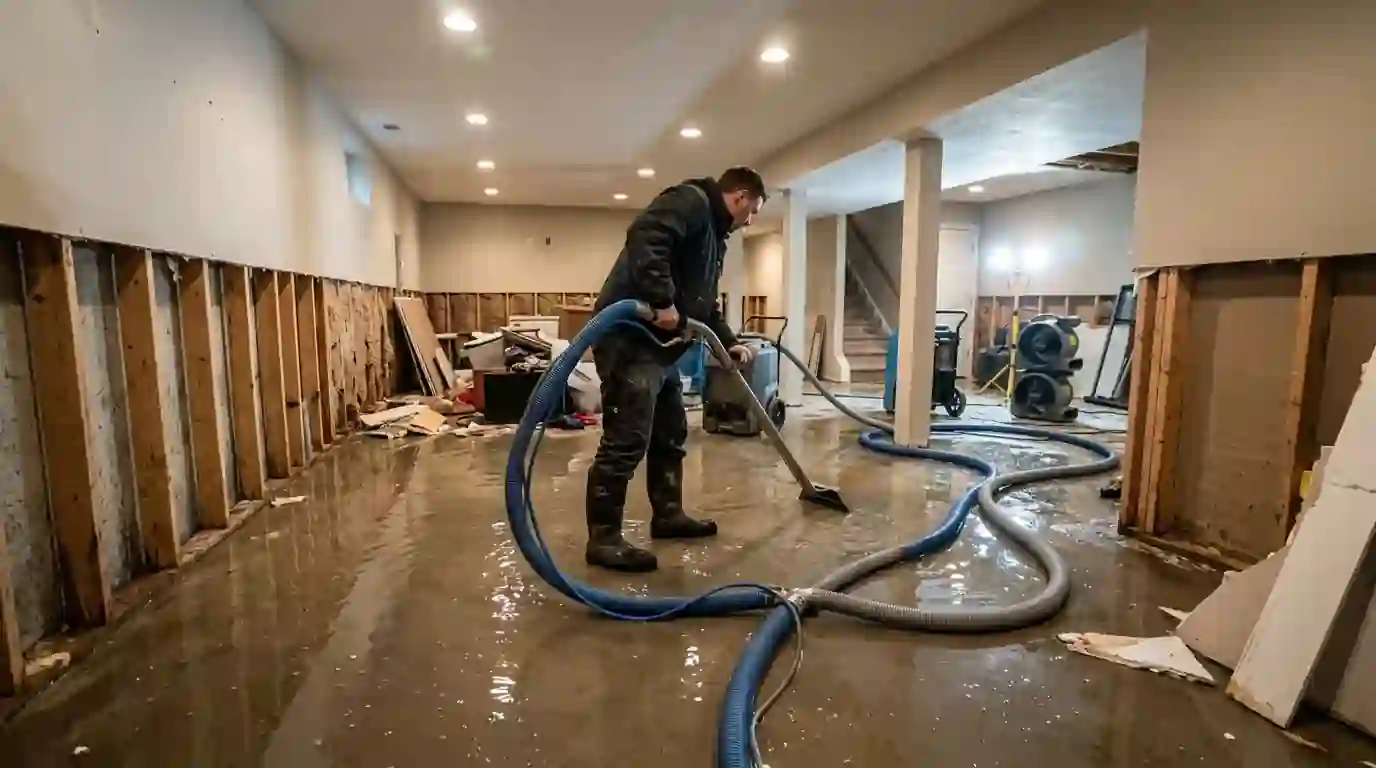
Creek overflow and storm runoff
Flood damage restoration in Atlanta
Floodwater from outside is black water, whatever it looks like. It carries soil, sewage and chemicals, so the job is pump-out, removal of everything porous it touched, cleaning and sanitizing, then drying and rebuilding.
Updated September 2026
- Phones
- Answered 24/7
- Job type
- Water emergencies
- Service office
- Biscayne Dr NW, Atlanta
Short answer
Flood damage restoration in Atlanta treats creek and storm floodwater as black water, so everything porous it touched, like carpet, pad, insulation and drywall to above the water line, comes out. We pump out the water, remove contaminated materials, clean and sanitize surfaces and dry the structure with daily readings before rebuilding.
The job
Why floodwater is handled differently
Water from a broken pipe starts clean. Water that crossed a yard or rose out of a creek has picked up soil, lawn chemicals, fuel and sewage along the way. Restorers classify it as the most contaminated category, and the cleanup follows that.
That means removal first. Materials that soaked it up are cut out above the water line and bagged. Hard surfaces are cleaned and sanitized. Only then does drying start, because drying contaminated materials in place just leaves the contamination behind.
After you call
How flood restoration runs
- 01
Wait for safe entry
Water down, power off, structure checked.
- 02
Pump and muck out
Water and mud removed.
- 03
Cut and remove
Porous materials cut above the wicking line and bagged.
- 04
Clean and sanitize
Every surface below the line cleaned and treated.
- 05
Dry and rebuild
Drying to standard, then repairs.
Common case
Creek overflow flooding
When a creek leaves its banks, water rises into yards, crawl spaces, basements and first floors, often overnight. It brings mud and debris and leaves a silt line on everything it touched.
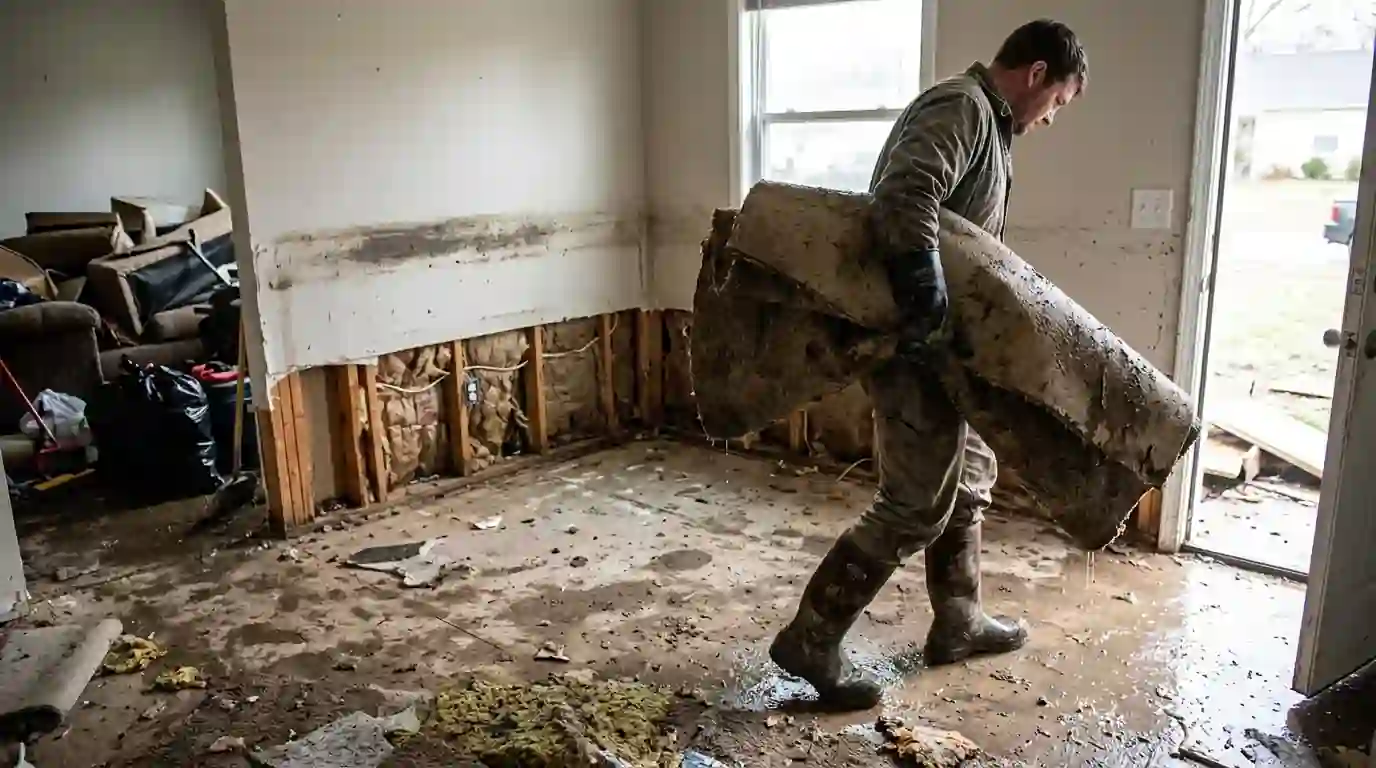
We start as soon as the water drops and it is safe to enter: pump-out, mud removal, cutting drywall a foot or more above the silt line and removing floor coverings. Every surface below the line is cleaned and sanitized before drying. Photos of the silt line matter for flood insurance claims.
Common case
Storm runoff through doors and garages
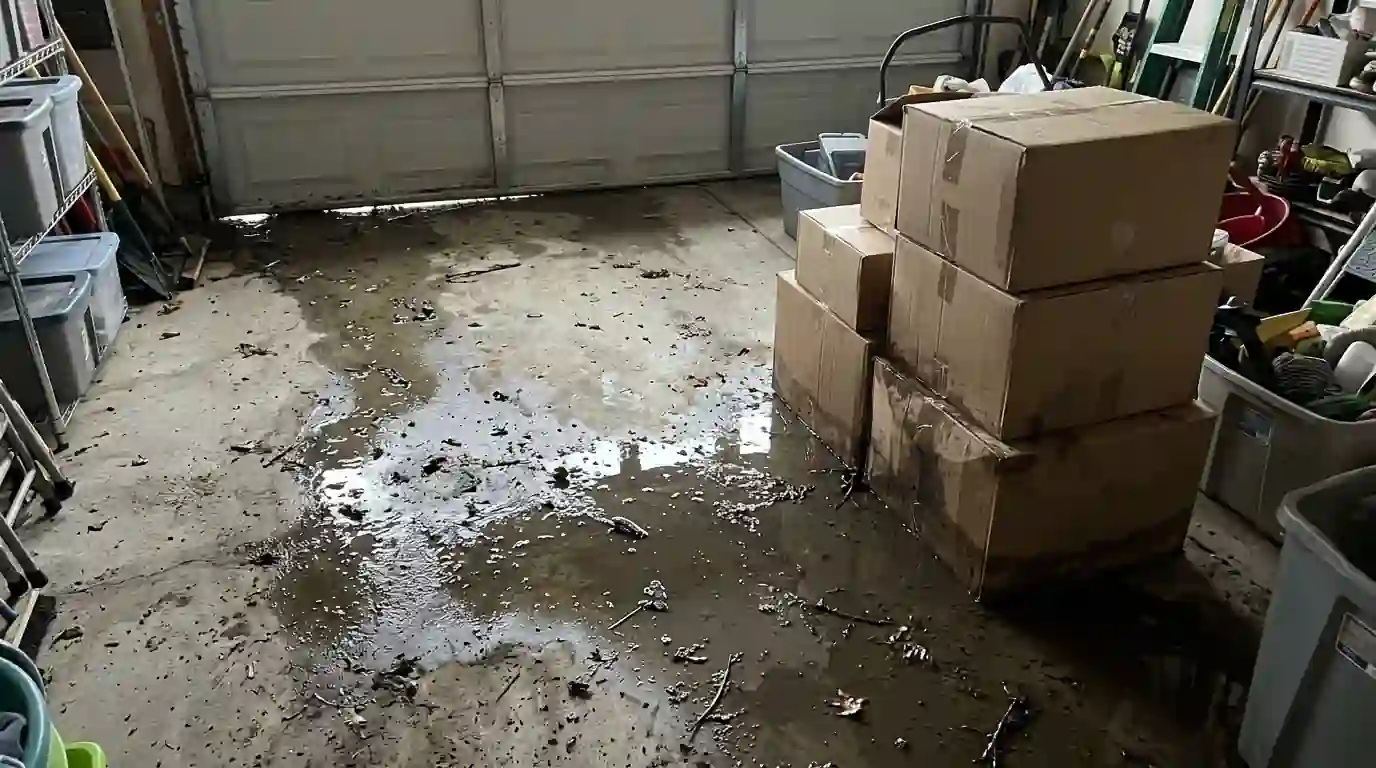
Heavy rain on a sloped lot can send sheets of water under doors, through garage entries and down window wells without any creek nearby. It is still outside water and is treated the same way.
We clean and remove what it touched, dry the structure and look at how it got in. Regrading, a drain across the driveway or better door thresholds often solve it, and we can tell you which one fits what we saw. Garages that flood repeatedly usually need their contents moved up onto shelving too.
Common case
Flood-soaked insulation and drywall
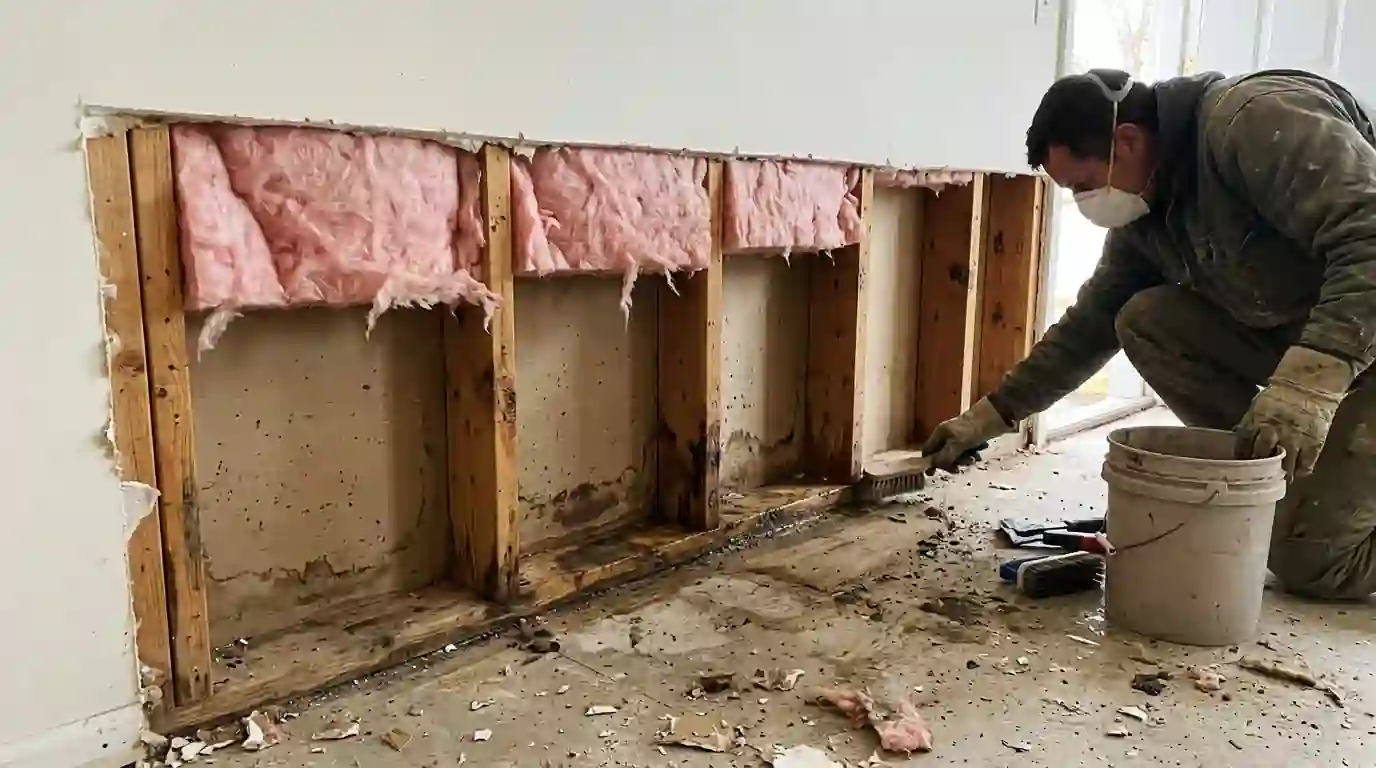
Insulation behind flooded drywall acts like a sponge full of contaminated water and cannot be cleaned. Drywall wicks floodwater well above the visible water line.
Our cut line goes above the highest wicking reading, not just above the mud line. Insulation comes out to the same height, cavities are cleaned and treated, and the framing dries before new insulation and drywall go in. Outlets and wiring below the water line are checked by an electrician before the power goes back on, because floodwater leaves residue inside boxes and devices.
Timeline
How long flood restoration takes
Pump-out and removal usually take the first day or two. Cleaning and drying follow for several days, longer where water reached a crawl space or sat for a long time.
Rebuilding waits until everything reads dry and your flood claim scope is set.
In Atlanta
Where Atlanta floods from outside
Creek flooding is a real risk inside the city and out. During Helene, Nancy Creek and Peachtree Creek spilled over their banks and closed roads in Buckhead. In the 2009 flood, the Yellow River in Gwinnett County ran between 100-year and 200-year flows, and Chattahoochee backwater pushed the same Peachtree Creek past its 500-year level. Homes near those streams need a flood plan, and flood coverage, well before the next big storm.
Floodwater in the house? Stay out of standing water near electrical and call us as soon as it starts to drop.
Call (943) 315-6150Cost
What moves the cost of flood restoration
Contamination and the height of the water set most of the bill.
Water height
Higher water means more drywall, insulation and contents.
Mud and debris
Silt removal adds labor before cleaning.
Time before entry
Days of standing water mean deeper damage.
Crawl space or basement
Below-grade areas add pump-out and drying time.
Rebuild
Replacing finishes to above the flood line adds cost.
Fixr puts typical water damage restoration between $1,200 and $5,000 nationally; contaminated flood jobs with full removal run well above that. We price yours after we see it.
FAQ
Questions people ask about flood damage restoration
Yes. It carries sewage, chemicals and debris, and it can hide electrical hazards. Wear boots and gloves and stay out of standing water near power.
Usually not. Outside flooding generally needs a separate flood policy.
Drywall wicks floodwater above the visible line, so we cut above the highest wet reading.
Hard furniture sometimes can be cleaned and sanitized. Upholstered pieces and mattresses usually cannot.
Once the house is cleaned, dry and safe, which depends on how much had to come out.
Talk to a person now
Floodwater got into the house?
Call as soon as it is safe. We'll pump it out and start the cleanup.
Answered 24/7, holidays included.