Joists, subfloor and roof sheathing
Mold removal for Atlanta crawl spaces and attics
Mold under the house or in the attic is a moisture problem first. We remove the growth from joists and sheathing, then deal with what kept the wood damp, so the job does not have to be repeated next summer.
Updated September 2026
- Phones
- Answered 24/7
- Job type
- Mold, air and contents
- Service office
- Biscayne Dr NW, Atlanta
Short answer
Crawl space and attic mold in Atlanta almost always follows moisture: a damp crawl space over clay soil, a bath fan venting into the attic or a slow roof leak. Removal means cleaning the growth off joists and sheathing, treating the wood and fixing the moisture source; skip the last step and the mold returns.
The job
What is different about mold in these two spaces
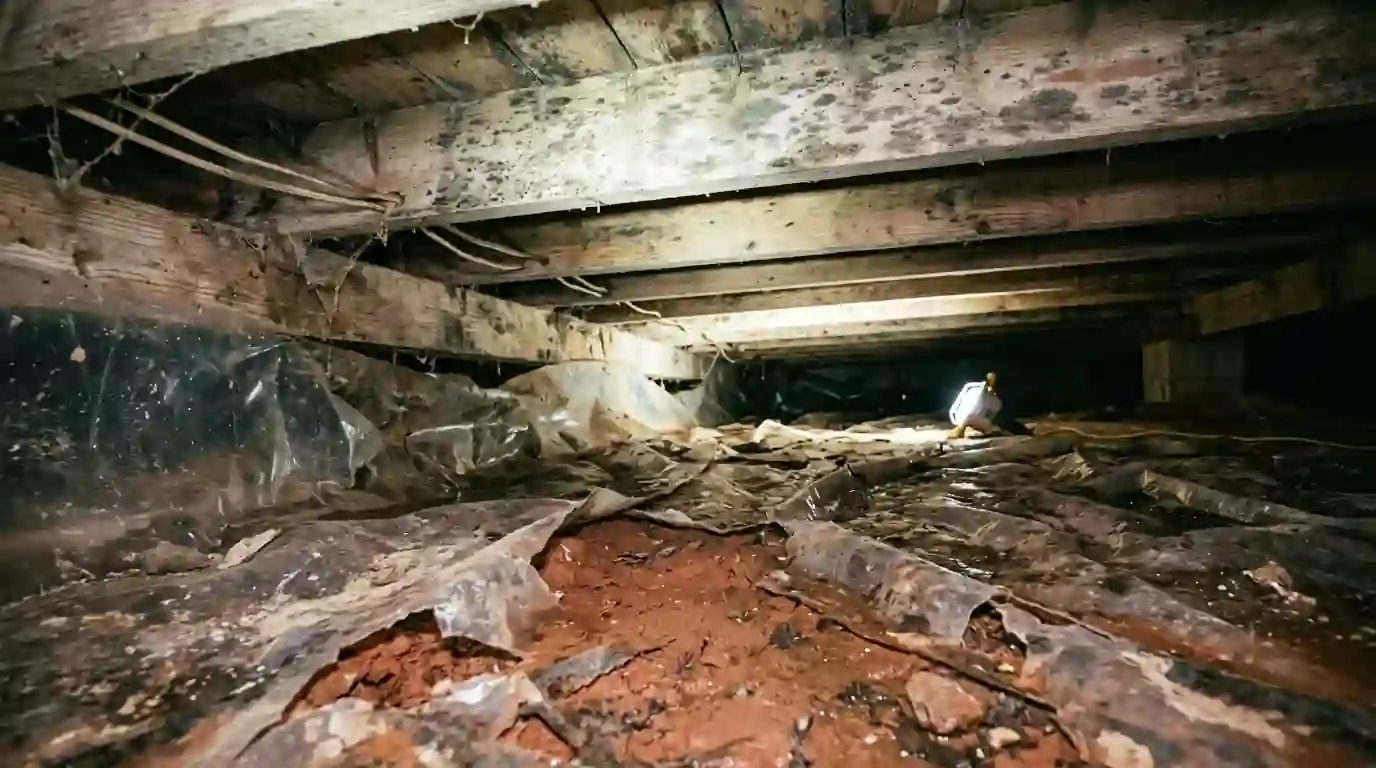
Crawl spaces and attics are the parts of a house nobody sees, so growth can spread across whole runs of framing before anyone notices a smell. It shows up as white, gray or black spotting on joists, subfloor and roof sheathing.
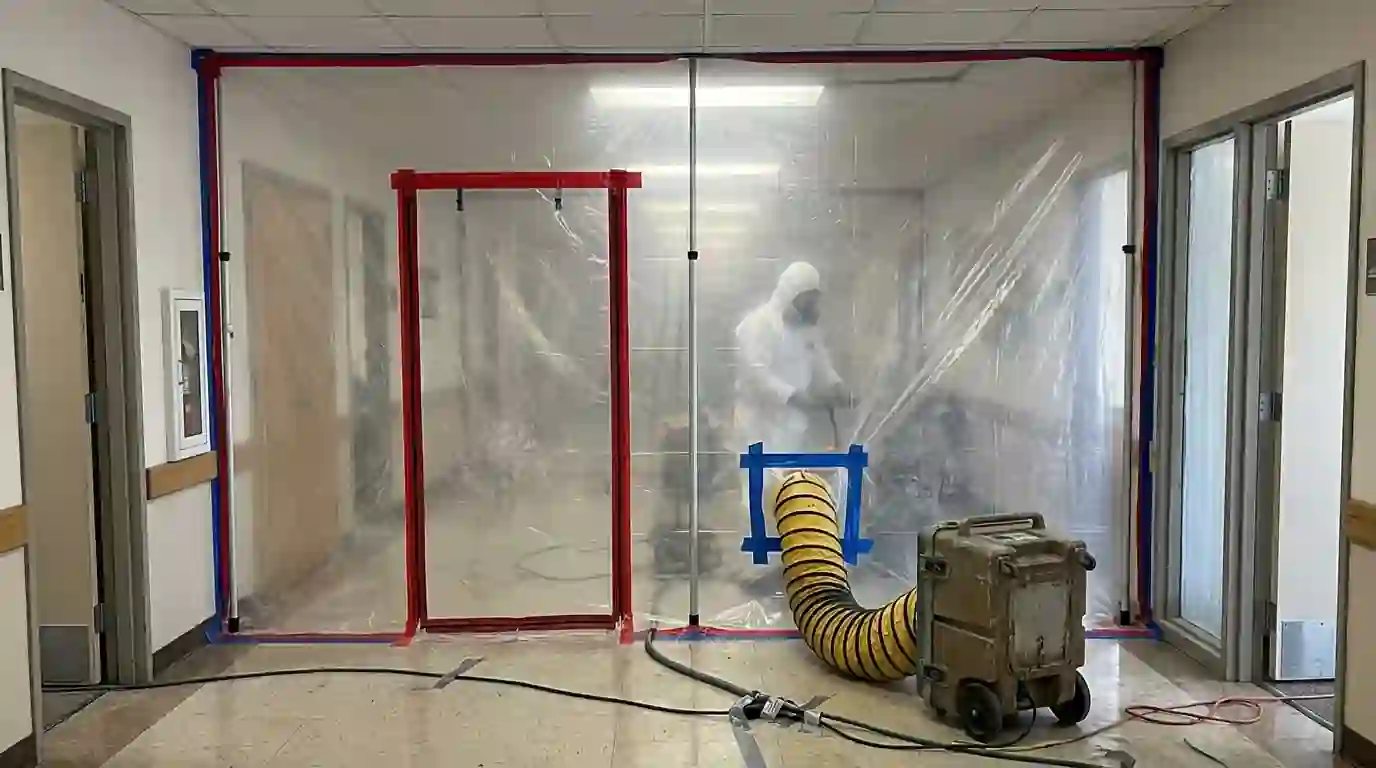
Removal is physical work: contain the area, clean the growth off the wood, HEPA vacuum the debris and treat the framing. Then we fix what kept it damp, whether that is standing water, a torn vapor barrier, a bath fan venting into the attic or blocked soffit vents.
Your options
Remove the mold only, or control the moisture too?
| Approach | What it involves | Good fit when | Trade-off |
|---|---|---|---|
| Clean and treat only | Remove the growth, HEPA vacuum and treat the framing | The moisture came from a one-time event that is fixed | Mold returns if the space stays damp |
| Clean plus a new vapor barrier | Removal plus a new ground cover sealed at seams and walls | Soil moisture is the main source under the house | Does not control humid air coming through vents |
| Clean plus a sealed crawl space | Removal, vapor barrier, sealed vents and a dehumidifier | The crawl space stays damp most of the summer | Highest upfront cost and ongoing power use |
| Clean plus attic ventilation fixes | Removal, bath fans ducted outside, clear soffits, air sealing | The attic mold follows moist house air | Needs attic access and some carpentry |
Cost
What mold removal in a crawl space or attic costs
Size and access drive most of the price.
Area affected
A few joists is a small job; a whole crawl space or roof deck is not.
Access
Low crawl spaces and tight attics slow the work.
Insulation
Moldy or soaked insulation comes out and is replaced.
Framing damage
Rotted joists, sills or sheathing add carpentry.
Moisture control
A vapor barrier or venting fix adds cost but stops repeats.
Fixr's 2025 figures show a typical attic job around $3,500, within a national range of $1,500 to $9,000, or roughly $10 to $30 per square foot. We price yours after an inspection.
Common case
Crawl space joist mold
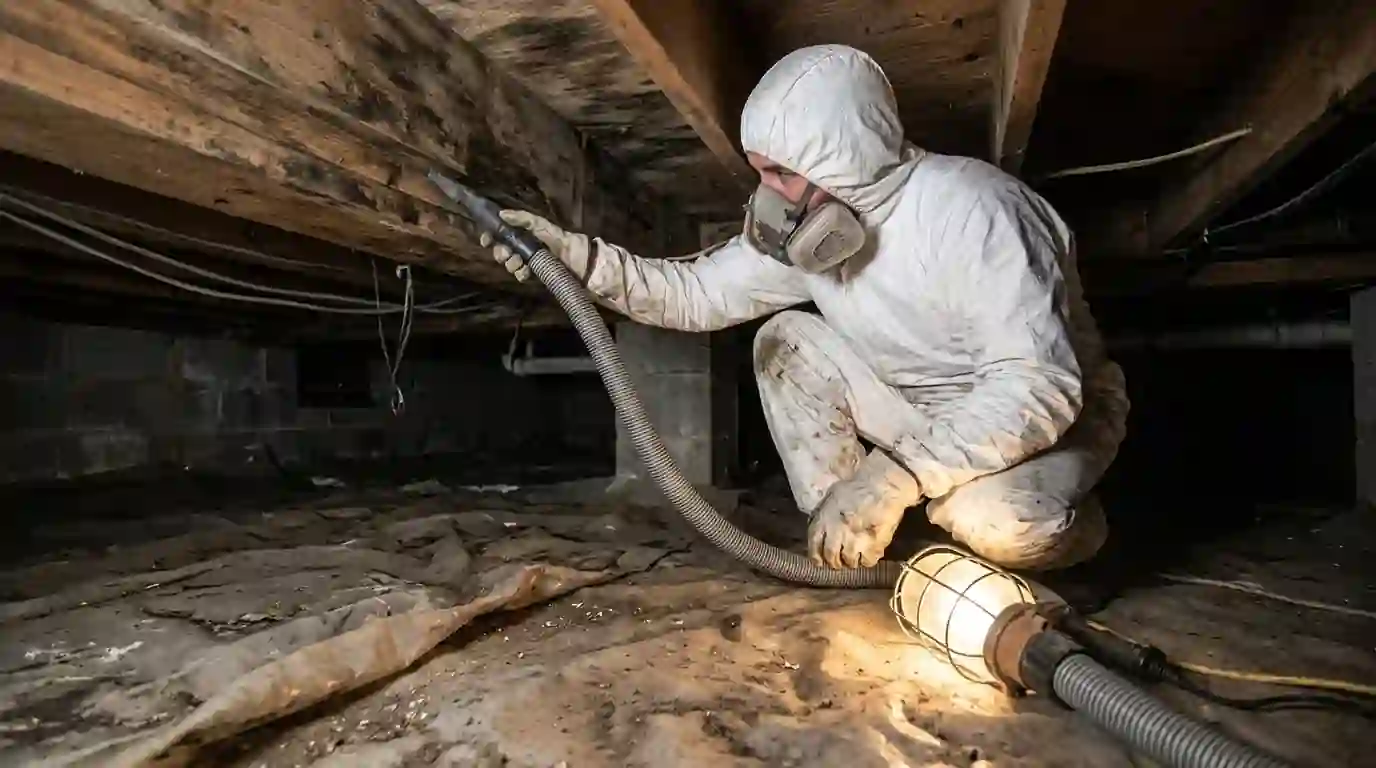
Mold under a house usually grows on the joists and the underside of the subfloor, where damp air from the soil meets cooler wood. It often shows up alongside sagging insulation, a musty smell in the rooms above and wood that reads wet on a meter.
We clean the framing, remove soaked or moldy insulation and check for rot while we are down there. If joists or the sill plate are soft, that becomes a framing repair before anything is closed up. Most of the work happens on our backs in a tight space, so lighting and ventilation go in first.
Common case
Attic sheathing mold
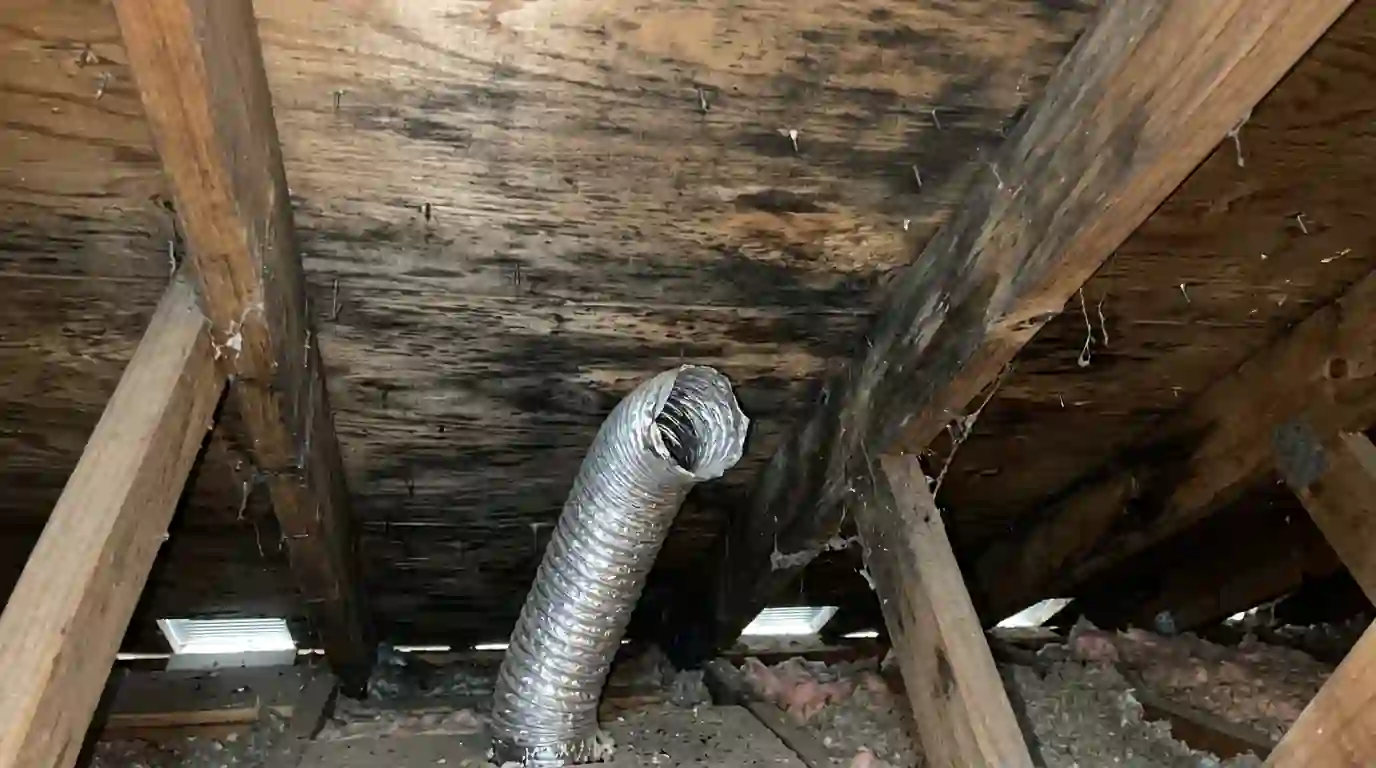
Attic mold usually covers the underside of the roof sheathing in a dark, even pattern, heaviest on the north side or around a bath fan that vents into the attic instead of outside. Warm, damp household air rising into a cold attic is the usual cause, not a roof leak.
We clean and treat the sheathing and rafters, then correct the airflow: extend bath fan ducts outside, clear soffit vents blocked by insulation and seal gaps that let house air into the attic. If there is a roof leak too, your roofer fixes that part.
Common case
Moisture control after removal
Cleaning mold without changing the conditions buys a year or two at best. Under the house, the fix can mean a new vapor barrier, sealed vents, a dehumidifier, or repairing gutters and grading that send water toward the foundation.
In the attic it usually means ventilation and air sealing. We explain the options and what each costs to run. Some fixes, like a downspout extension, are simple enough to do yourself; others, like a crawl space dehumidifier, need a drain line and power.
After you call
How crawl space and attic mold removal runs
- 01
Inspect and read
We look at the growth, read the framing and find the moisture source.
- 02
Contain
Access points are sealed so spores stay out of the house.
- 03
Remove and clean
Moldy insulation comes out; framing is cleaned and HEPA vacuumed.
- 04
Treat the wood
Cleaned framing is treated once it reads dry.
- 05
Fix the conditions
Vapor barrier, venting or airflow changes keep it dry.
In Atlanta
Why Atlanta crawl spaces grow mold
Around Decatur and across much of the metro, houses sit on red clay that swells, holds water and drains slowly. Add a normal year of about 50 inches of rain, with July the wettest month on average, and a vented crawl space can stay humid for most of the summer. That is the setup for joist mold, and it is why we look at the gutters, the grading and the vapor barrier before we call a crawl space job finished.
Signs to look for
Signs of mold under the house or in the attic
Musty smell upstairs
Odor strongest near floor vents or closets often starts below.
Sagging insulation
Batts hanging from the joists are usually holding moisture.
Dark roof sheathing
Even black staining under the roof deck is typical of attic mold.
Standing water below
Puddles under the house after rain keep the crawl space damp.
Soft spots in the floor
A spongy floor can mean rot in the joists below.
FAQ
Questions people ask about crawl space and attic mold removal
Yes. Crawl space air rises into the house, carrying odor and spores. Removing the growth and drying the space fixes both.
Bleach does not soak into wood or fix the moisture, so the mold returns. Removal plus a dry space is what lasts.
Not always. After a one-time leak, cleaning and drying may do. If it stays damp every summer, consider a vapor barrier or a sealed crawl space.
Warm, damp house air reaching a cold attic, often from a bath fan venting into it or gaps around lights and the hatch.
Mold from long-term humidity is often excluded; mold after a covered event like a burst pipe may be covered.
Talk to a person now
Musty smell coming up from under the house?
Call and we'll set up a visit to look at the crawl space or attic and tell you what we find.
Answered 24/7, holidays included.