Storm guide
Lightning hit the house: hidden damage to check
The visible damage from a lightning strike is often the smallest part. Current can travel through wiring, pipes and framing, and a fire can smolder in the attic for hours. Here is what to check.
- Written by
- Maxine Colburn
- Role
- Restoration Guides Editor
- Updated
- September 2026
Short answer
After a lightning strike, check for a burning smell, smoke near ceiling fixtures, tripped breakers, scorched outlets, roof or chimney damage and dead electronics. If you smell smoke, get everyone out and call 911, because attic fires can smolder unseen. Once the house is safe, have an electrician check the wiring and get the attic, walls and roof inspected.
By Maxine Colburn, Restoration Guides EditorUpdated
Right after the strike
If you heard a loud crack and saw a flash at the same moment, or lost power during a storm, assume the house may have been hit. Walk through and sniff for burning wood, plastic or electrical smells, especially near ceiling fixtures and at the attic access.
If you smell smoke or see haze, get everyone out and call 911, even with no flames in sight. Fires started by lightning often begin in the attic and can smolder for hours before breaking through.
Where lightning damage hides
Lightning follows conductive paths through a house, so damage can be far from the strike point:
- Attic framing and insulation near the roof penetration
- Wiring inside walls, along with outlets, switches and junction boxes
- Metal plumbing and gas lines, especially at fittings
- The roof, the flashing and the chimney cap or flue
- Appliances, HVAC controls and electronics on the same circuits
Leave the wiring to an electrician
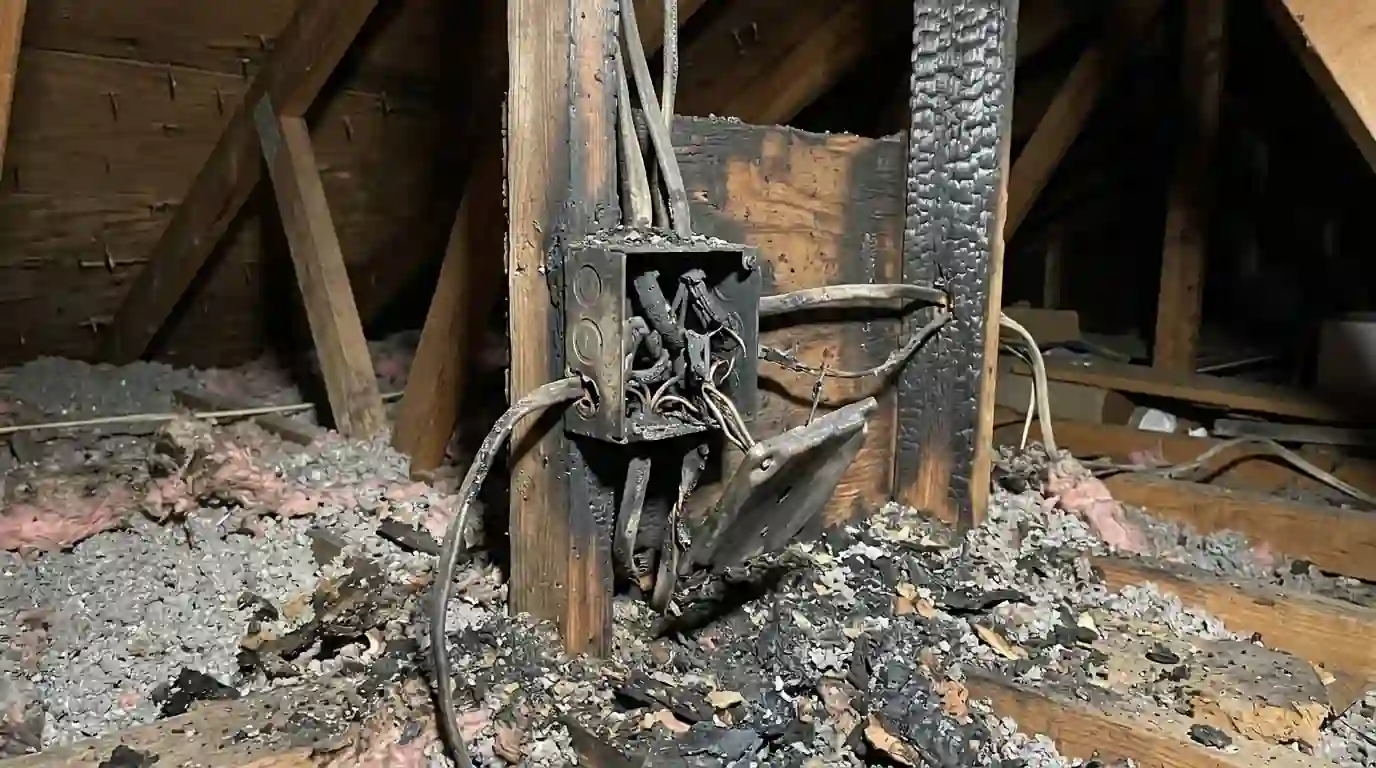
Surge damage can weaken wiring without any visible sign, and a damaged circuit can fail weeks later. After a strike, have an electrician check the panel, the circuits and any outlets or fixtures that stopped working or show burn marks.
If you smell gas, leave the house and call the gas company. Lightning can damage gas lines and fittings, and that is not something to test yourself.
The roof and chimney
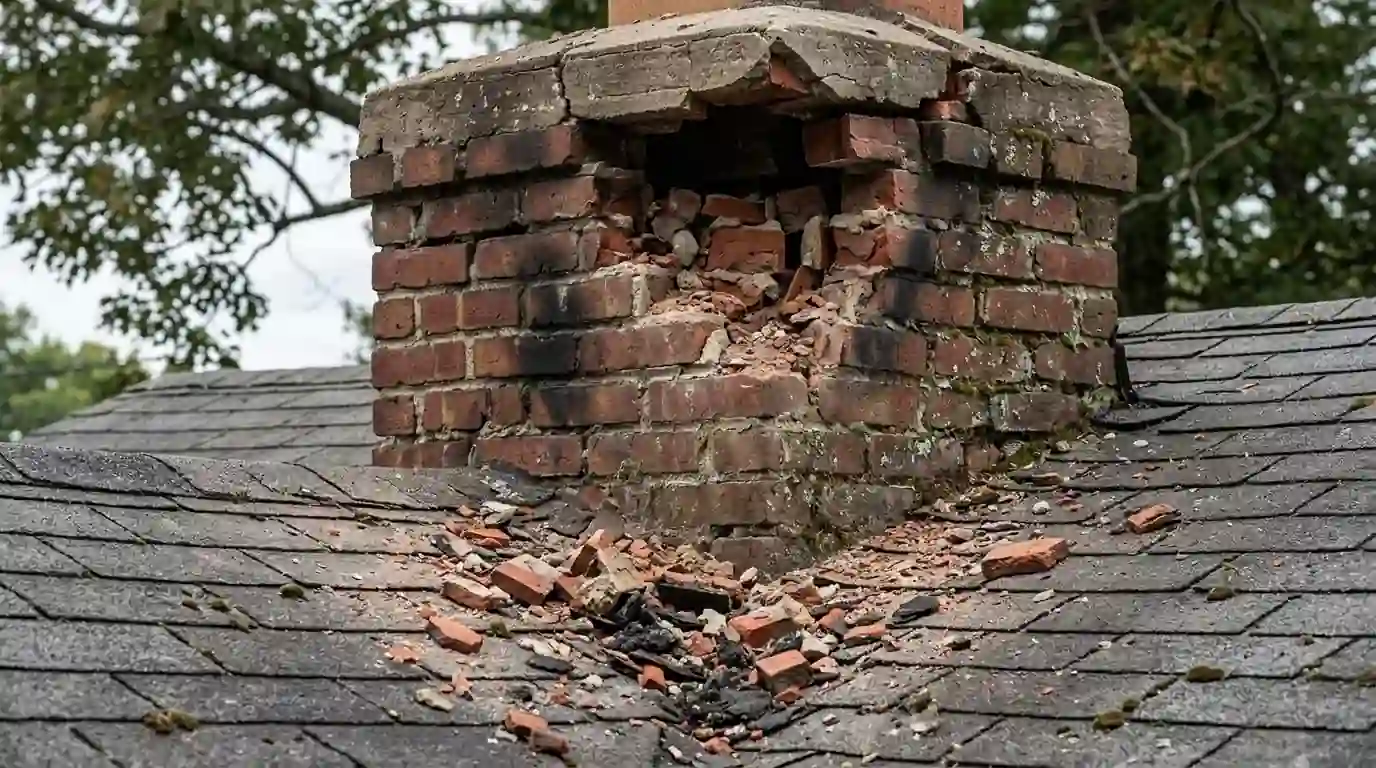
Look from the ground for missing shingles, holes, scorch marks or chimney bricks in the yard, and stay off the roof. A strike can crack a chimney flue liner, which can let heat reach the framing the next time the fireplace is used, so have a chimney professional inspect it before you light a fire.
If there is an opening, it needs a tarp before the next rain. The board-up and tarping page explains how temporary cover works.
Document it for your claim
Georgia homeowners filed about 4,000 lightning claims in 2025, fourth in the nation, and the average Georgia claim ran above $22,000, largely because of damage nobody sees at first. Photograph every scorch mark, damaged outlet, dead appliance and roof opening, and keep a list of the electronics that stopped working.
The lightning strike damage page covers how we trace and repair the damage, and the documentation guide covers the claim side.
FAQ
Common questions
A loud crack with a flash, tripped breakers, a burning smell, dead electronics or debris near the roof are common signs.
Yes, if you smell smoke or burning. Attic fires can smolder unseen.
It can travel along metal pipes and damage fittings or gas lines.
Lightning and the fire it causes are commonly covered; surge coverage varies by policy.
Not until a chimney professional has inspected the flue and the masonry.
Talk to a person now
Think lightning hit the house?
If you smell smoke, call 911 first. Once it is safe, call us and we'll trace the damage.
Answered 24/7, holidays included.