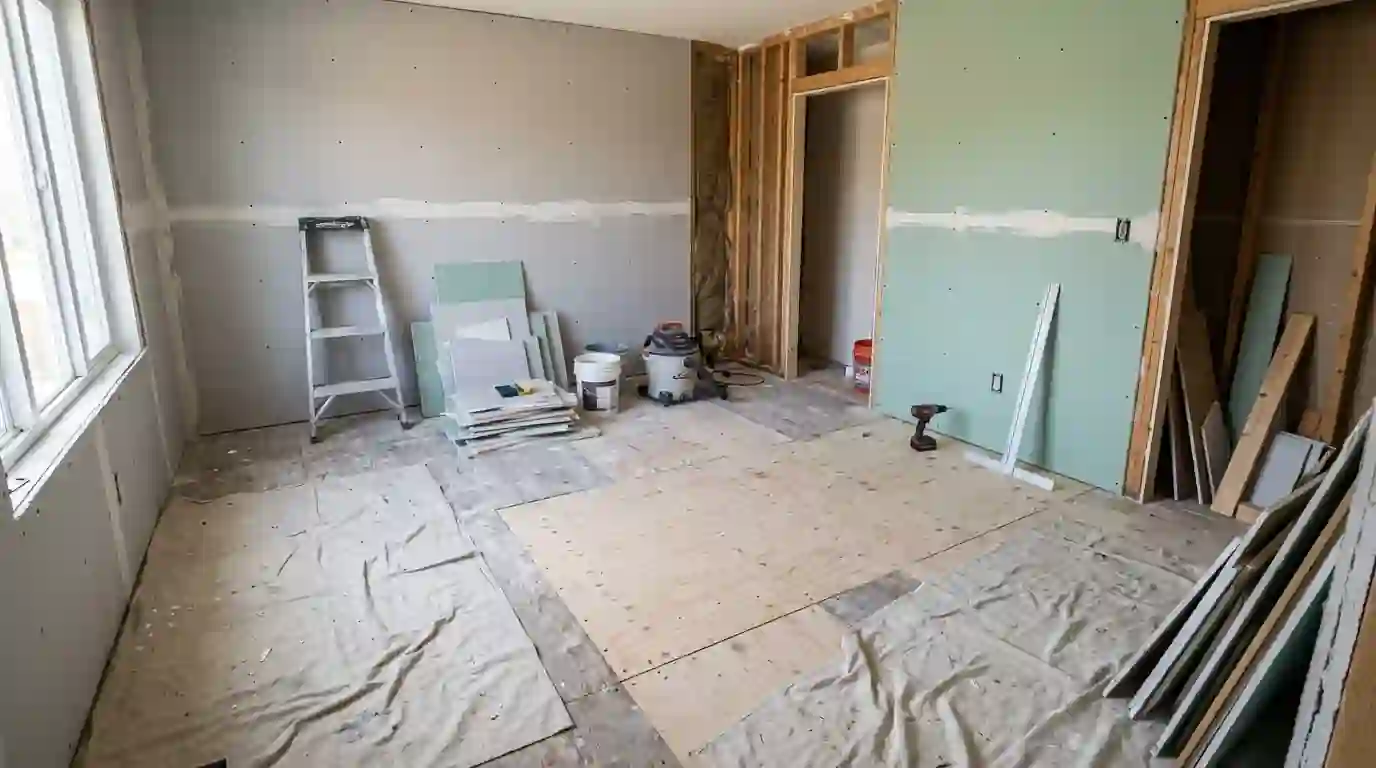
Attic, wall and crawl space insulation
Insulation removal after water or fire in Atlanta
Insulation soaks up water and smoke and rarely gives either back. We remove wet or smoke-damaged insulation from attics, walls and crawl spaces, clean and dry the framing behind it and install new insulation once the space is ready.
Updated September 2026
- Phones
- Answered 24/7
- Job type
- Repair and rebuild
- Service office
- Biscayne Dr NW, Atlanta
Short answer
Insulation removal in Atlanta is usually needed after a roof leak, AC overflow, flood or fire, because wet insulation will not dry in place and smoke-soaked insulation keeps the house smelling. We vacuum out loose fill or bag batts, clean or dry the framing, treat odor or mold and replace the insulation to the right depth.
The job
Why insulation usually has to go
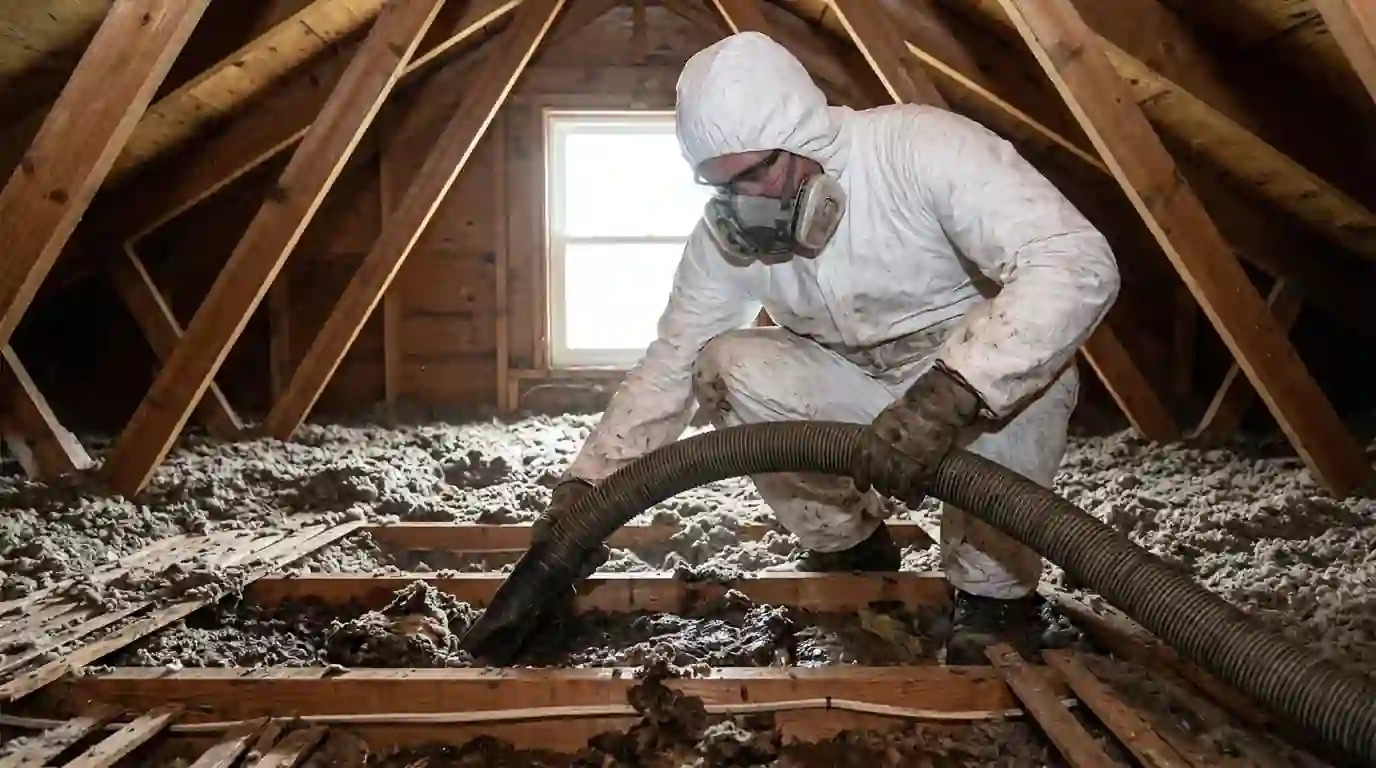
Blown cellulose and fiberglass hold water against the ceiling drywall and framing for days, compact and lose their insulating value. Batts in walls and floors do the same. Once insulation is soaked, removing it is faster and more reliable than trying to dry it.
Smoke is similar. Fine soot and odor settle into loose fill and batts and release the smell whenever the attic heats up. Removing the insulation also exposes the framing so it can be cleaned, sealed and inspected before the new insulation goes in.
Your options
Remove it all, or just the damaged part?
| Approach | When it fits | What it involves | Trade-off |
|---|---|---|---|
| Spot removal | Small wet area, clean water, fixed leak | Vacuum out the wet patch, dry, refill | Least disruption |
| Full attic removal | Smoke through the attic or widespread wetting | Vacuum all insulation, clean framing, blow new | Chance to air seal and upgrade |
| Batt removal | Wet or sagging floor or wall batts | Pull and bag batts, dry framing, replace | Access can be tight |
| Remove and upgrade | Old or thin insulation already due | Remove, air seal, install to current depth | Higher cost, better efficiency |
Cost
What moves the cost of insulation removal
Area, access and the type of insulation drive the price.
Area
A patch over one room costs less than a whole attic.
Type
Blown insulation is vacuumed; batts are pulled and bagged.
Access
Low attics and crawl spaces take longer.
Contamination
Smoke or sewage adds cleaning and handling.
Replacement
New insulation and air sealing add to removal.
Common case
Wet attic insulation
Roof leaks and AC overflows soak attic insulation in a patch that is usually larger than the ceiling stain below. Blown insulation mats down and holds water against the drywall.
We vacuum the wet insulation into bags or a collection unit, dry the joists and ceiling drywall and replace damaged drywall from below. New insulation is blown in to the original depth or better once the attic reads dry and the leak is fixed. We mark the edges of the wet area with readings, so dry insulation around it can stay in place.
Common case
Smoke-contaminated insulation
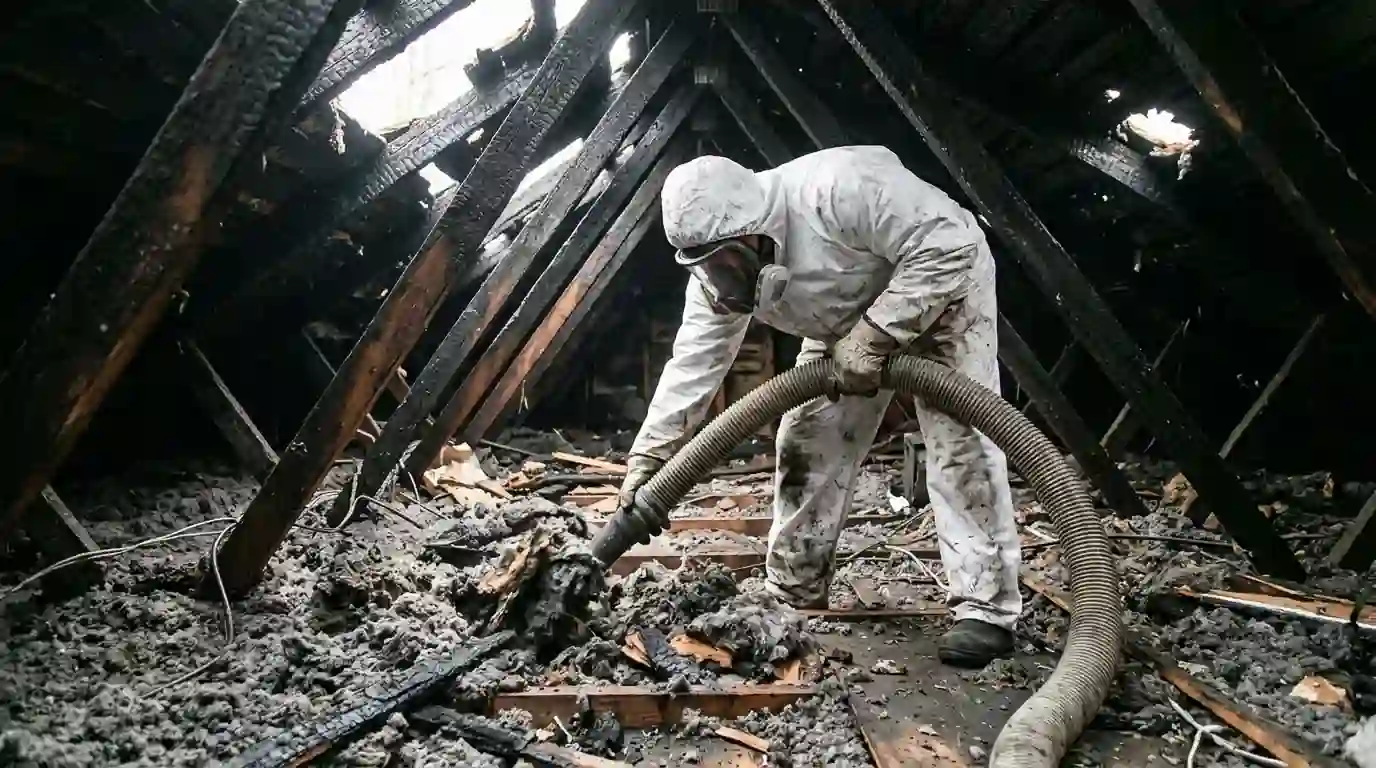
After a fire, insulation in the attic above and around the fire area absorbs smoke, and some of it may be scorched. Even insulation that looks clean can hold odor that returns on every hot afternoon.
We remove it, clean soot from the rafters and ceiling joists and seal any charred wood with an odor-blocking primer. The attic gets a fresh layer of insulation after the odor check. This step is part of what keeps a rebuilt house from smelling like the fire.
Common case
Crawl space batt insulation
Fiberglass batts under floors sag when they get wet from flooding, leaks or constant humidity, and they hold moisture against the subfloor. Rodents often nest in them too.
We pull the batts, bag them and dry the joists and subfloor. Before new insulation goes in, the moisture source is dealt with, whether that is a vapor barrier, drainage or a plumbing leak, so the new batts do not end up the same way. Rodent nests and droppings found in old batts are bagged and the area is cleaned and treated.
What is included
What insulation removal includes
- Readings to map wet or contaminated insulation
- Protection of the living areas below the work
- Vacuum removal of loose fill or bagging of batts
- Drying or cleaning of the exposed framing
- Odor sealing or mold treatment where needed
- Disposal of the removed insulation
- New insulation installed to the right depth
- Photos before and after for your claim
After you call
How insulation removal runs
- 01
Map the damage
Readings and inspection show what must come out.
- 02
Protect the house
Rooms below are covered and access routes protected.
- 03
Remove
Insulation vacuumed or bagged and taken away.
- 04
Clean and dry
Framing dried, cleaned and sealed as needed.
- 05
Reinsulate
New insulation installed once the space reads dry.
In Atlanta
Attics in older DeKalb County homes
State housing data counted about 61 percent of DeKalb County homes as built before 1980. Attics in houses that age often carry several layers of insulation added over the decades, sometimes on top of old wiring, and a leak or a fire soaks all of them at once. When we remove insulation in an older attic, we look at what is underneath before anything new goes in, and we note any wiring an electrician should see.
FAQ
Questions people ask about insulation removal after water or fire
Rarely well. It compacts and holds water against the drywall, so it is usually removed.
Usually, because it holds odor that comes back on hot days.
We vacuum through hoses to a collection unit outside and protect the rooms below.
After a covered leak or fire, replacing damaged insulation is commonly included.
Yes. It is a good time to air seal and add depth; upgrades beyond the claim are billed separately.
Talk to a person now
Wet or smoky insulation in the attic?
Call and we'll map what has to come out and replace it once the space is dry.
Answered 24/7, holidays included.