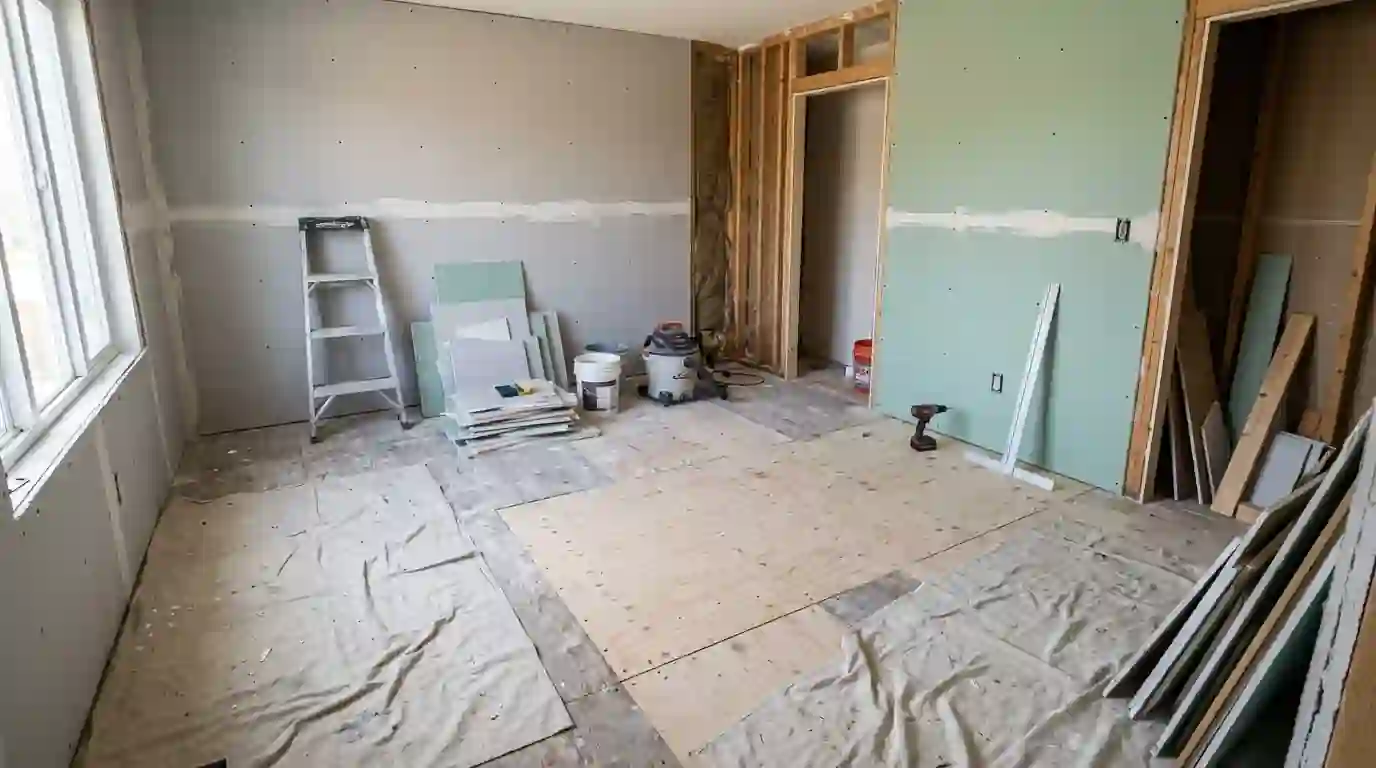
Soft floors, rotted joists and sill plates
Subfloor and framing repair in Atlanta
A floor that gives underfoot is telling you the wood under it has been wet for a long time. We open it up, cut out what rotted, replace the subfloor and repair joists or sill plates, then dry and close it.
Updated September 2026
- Phones
- Answered 24/7
- Job type
- Repair and rebuild
- Service office
- Biscayne Dr NW, Atlanta
Short answer
Subfloor and framing repair in Atlanta usually follows a slow leak that ran for months under a toilet, tub, dishwasher or exterior wall. We find the wet and rotted wood, confirm the source is fixed, replace the damaged subfloor, repair or sister joists and sill plates and close the floor up solid.
The job
What rot does to a floor, and how we fix it
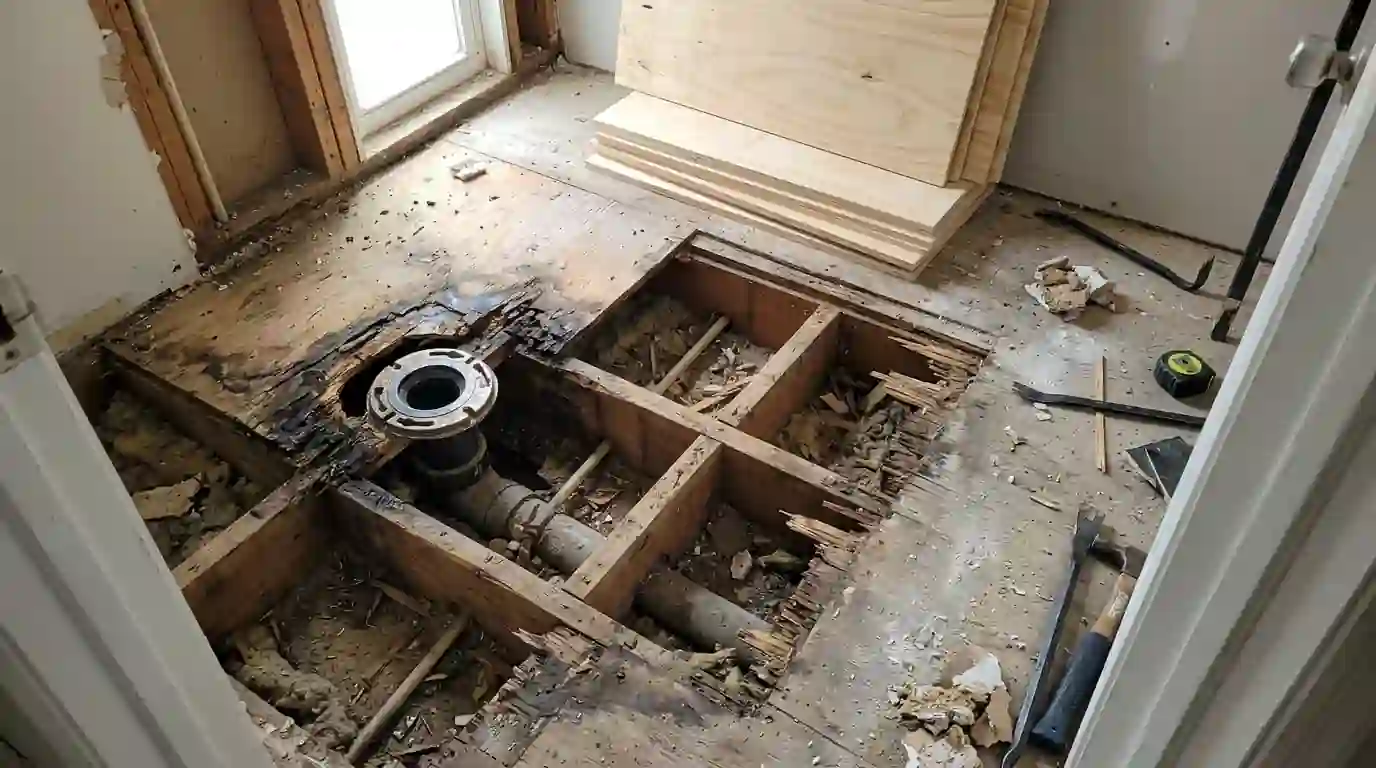
Plywood and OSB subfloors swell and lose strength when they stay wet, and rot follows. Joists and sill plates hold out longer, but a leak that runs for months or a damp crawl space can soften them too.
The repair is straightforward carpentry once the source is fixed: open the floor, cut back to sound wood, replace subfloor panels glued and screwed to the joists, and sister or replace framing that lost strength. The hard part is finding all of it, which is why we read the wood with a meter before cutting.
Your options
Patch, sister or replace?
| Repair | When it fits | What it involves | Trade-off |
|---|---|---|---|
| Subfloor patch | Rot limited to one area between joists | Cut back to sound wood, new panel glued and screwed | Quick; needs solid edges to fasten to |
| Full subfloor section | Rot spread across several joist bays | Replace panels wall to wall in the room | More flooring comes up |
| Sister joists | Joist weakened but still in place | New lumber fastened alongside | Keeps the original, restores strength |
| Replace framing | Joist or sill rotted through | Shore, cut out and replace | Most work, the cleanest fix |
Cost
What moves the cost of subfloor and framing repair
The spread of the rot and what sits on top of it drive the price.
Area of rot
One joist bay is small; a whole bathroom floor is not.
Finish flooring
Tile and hardwood cost more to remove and replace than vinyl.
Framing involved
Joists and sill plates add shoring and carpentry.
Access
Crawl spaces and slab edges change how the work is done.
Fixtures
Toilets, tubs and cabinets that must come out add labor.
Common case
Rotted subfloor under baths and kitchens
Bathrooms and kitchens are where subfloors fail most: a wax ring that seeps, a shower pan that leaks at the corner, a dishwasher that dribbles for a year. The finish floor hides it until tile cracks or the floor starts to flex.
We remove the finish flooring in the affected area, cut out the soft subfloor back to solid wood and replace it. If the toilet, tub or dishwasher was the source, the plumber fixes it before new flooring goes down, or the repair simply rots again.
Common case
Sill plate and joist repair
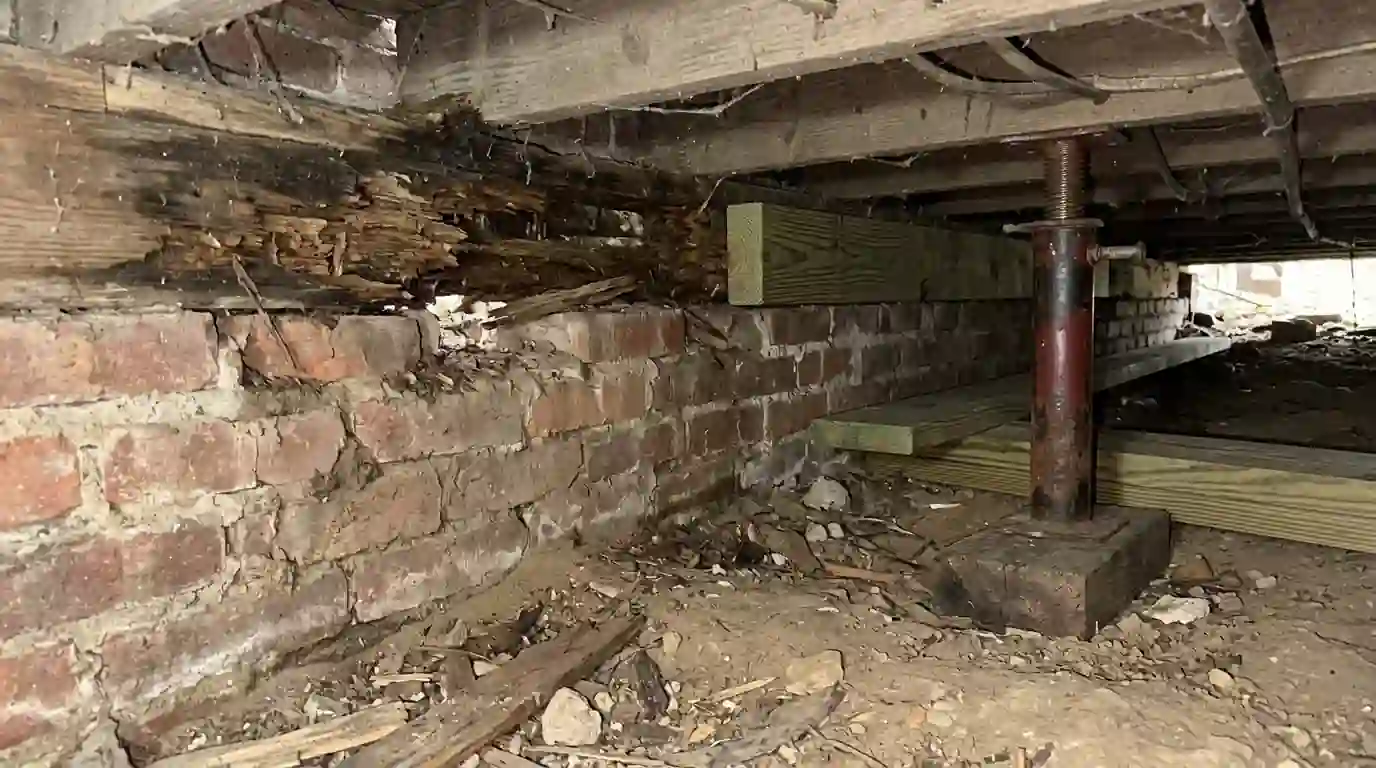
The sill plate sits on the foundation and carries the house. Gutter overflow, grading that slopes toward the house or a damp crawl space can rot it along one wall, and the joists that rest on it follow.
We shore the floor, cut out the rotted sections, install treated lumber on the foundation and sister or replace joist ends. Soft framing found along the way is noted and photographed. If the cause is outside water, the gutters and grading need fixing too.
Common case
Subfloor under hardwood
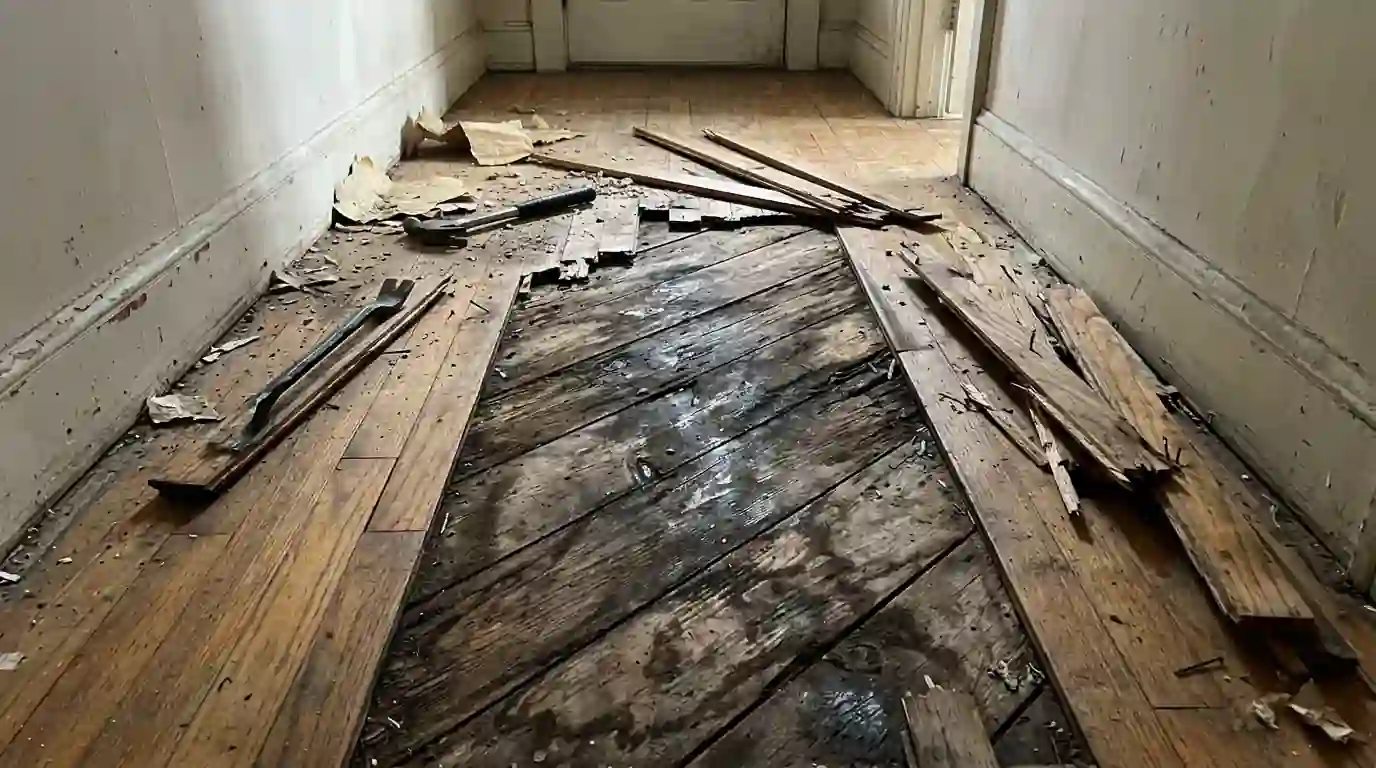
A leak under hardwood can rot the subfloor while the boards on top only cup a little. Pulling the hardwood is the only way to see and replace what is underneath.
We remove boards carefully so they can be reused where possible, replace the subfloor and dry the joists, then relay and refinish. In older houses with plank subfloors, we match materials rather than patching with modern panels where it would show. The drying side is covered under hardwood floor water damage.
After you call
How a subfloor and framing repair runs
- 01
Find the source
The leak or moisture source is confirmed and fixed.
- 02
Read and open
Meters show how far the rot spread; the floor is opened.
- 03
Cut to sound wood
Rotted subfloor and framing are removed.
- 04
Rebuild
New subfloor and framing, glued and fastened.
- 05
Close and finish
Flooring goes back once everything reads dry.
In Atlanta
Subfloors in older and newer Atlanta homes
State housing data counted about 61 percent of DeKalb County homes and about 39 percent of Cobb County homes as built before 1980, while most of Gwinnett County went up after 1970. Older houses often sit on plank subfloors over crawl spaces, and newer ones mostly use plywood or OSB panels. We match the repair to what is there, because a modern panel pieced into a plank floor can telegraph through the finish.
Signs to look for
Signs your subfloor or framing is failing
Floor flexes or bounces
A spot that gives underfoot usually means soft subfloor or a weak joist.
Cracked tile near fixtures
Tile cracking around a toilet or tub points to movement below.
Gaps under baseboards
A floor that has dropped away from the baseboard may be sagging.
Musty smell from below
Rot and damp framing smell earthy, often strongest near floor vents.
Doors that start sticking
Doors that rub after years of closing fine can mean the framing is settling.
FAQ
Questions people ask about subfloor and framing repair
A soft or bouncy spot, cracked tile or a musty smell from below are the usual signs. A meter reading confirms it.
Often, if the rot is confined and the wood around it is solid enough to fasten to.
Yes. A plumber or roofer fixes the source; otherwise the new wood rots too.
It can be if joists or sills are badly weakened. Keep heavy loads off it and have it checked.
Rot from a long-term leak is often excluded; sudden water damage may be covered. Your policy decides.
Talk to a person now
Floor feeling soft or bouncy?
Call and we'll come read it, find out how far the rot goes and tell you what the repair involves.
Answered 24/7, holidays included.