Dry chemical, powder and hood suppression
Fire extinguisher residue cleanup in Atlanta
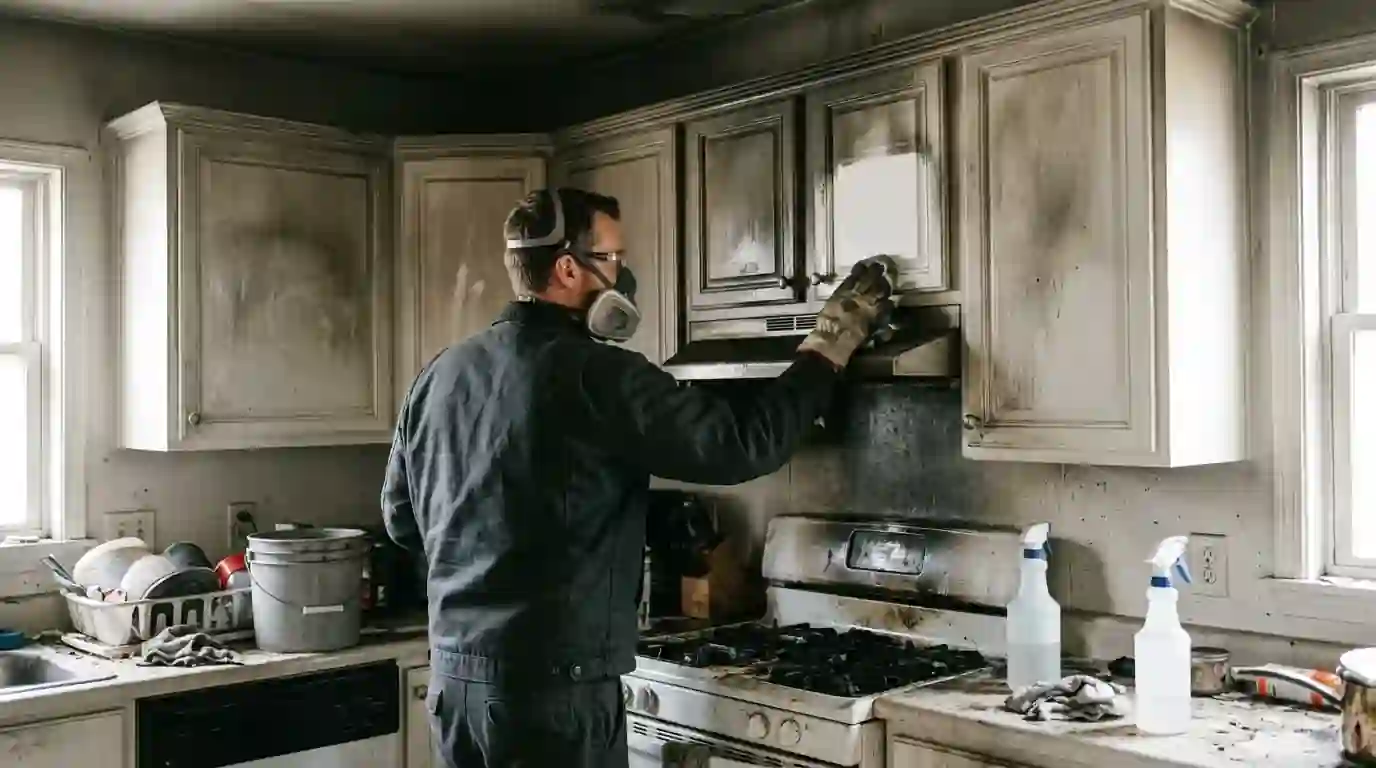
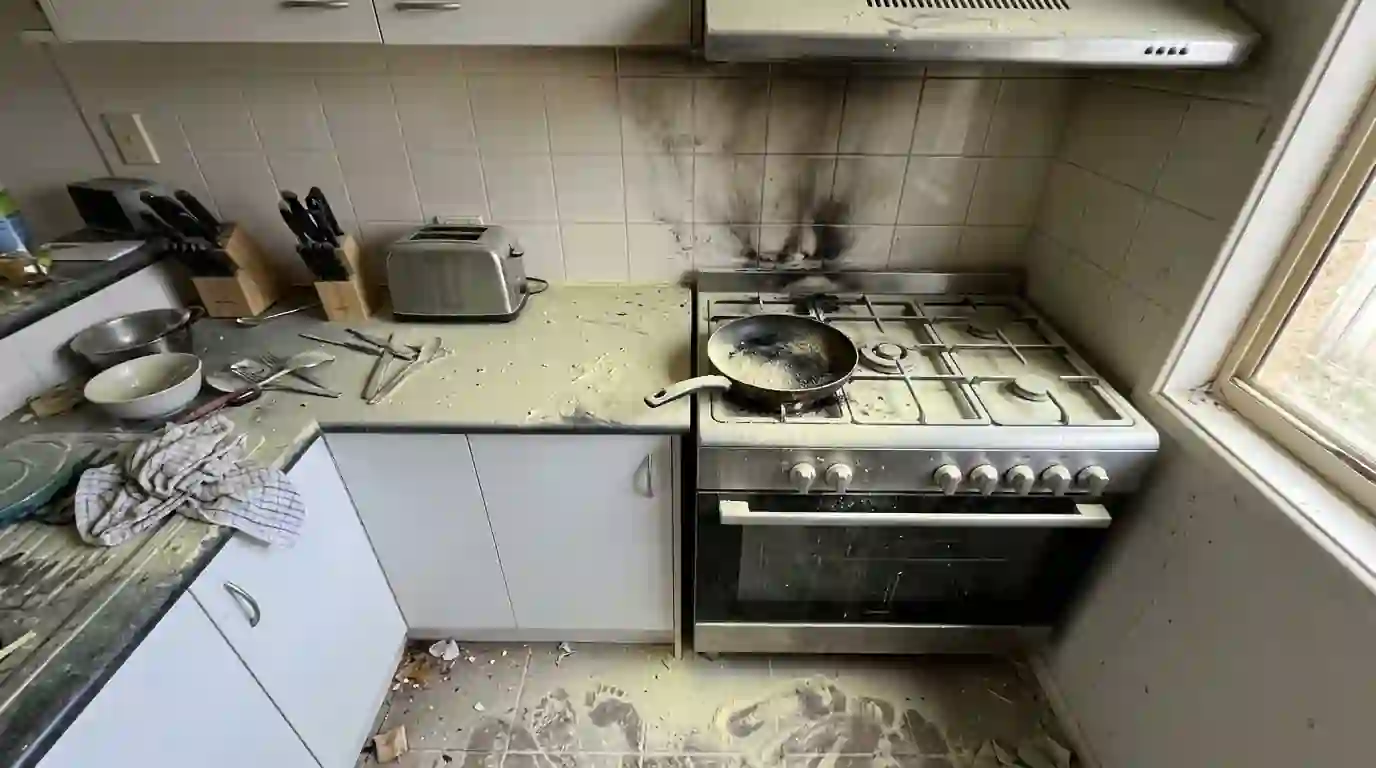
A few seconds of extinguisher powder can coat a whole room. Dry chemical agents are fine and mildly corrosive once they meet humidity, so they need to come off metal, electronics and vents soon, not whenever there is time.
Updated September 2026
- Phones
- Answered 24/7
- Job type
- Fire and smoke
- Service office
- Biscayne Dr NW, Atlanta
Short answer
Fire extinguisher residue in Atlanta should be cleaned within a day or two, because most home extinguishers use a dry chemical powder that turns corrosive when it picks up moisture from the air. We vacuum the powder with HEPA equipment, wipe and neutralize surfaces and clean the vents, appliances and electronics it reached.
The job
Why extinguisher powder needs prompt cleanup
Most household extinguishers use a dry chemical agent, usually monoammonium phosphate; home units from Kidde and First Alert and many commercial ones from Amerex rely on it. It smothers a fire well, and it drifts everywhere: into cabinets, onto shelves, into the HVAC return and inside electronics.
The powder is low in toxicity, but it is slightly acidic and draws moisture. Left on metal, it can corrode appliance surfaces, hardware and electrical contacts. Wiping it with a wet rag turns it into a paste that is harder to remove, so dry removal comes first.
After you call
How we clean up extinguisher residue
- 01
Stop the spread
HVAC off and doors closed so the powder does not travel.
- 02
Dry removal
HEPA vacuuming of every surface before any wiping.
- 03
Neutralize and wipe
Surfaces are cleaned to remove the remaining residue.
- 04
Vents and electronics
Registers, filters and dusted devices are handled.
- 05
Final check
We look for residue in cabinets, tracks and hidden corners.
Common case
Dry chemical powder cleanup
We start dry. HEPA vacuums pull the loose powder off every surface, including cabinet interiors and the tops of door frames where it settles. Only then do we wipe surfaces with a cleaner that neutralizes the remaining residue.
Soft surfaces are vacuumed and, where needed, cleaned. Food and open packages that were dusted are thrown out, and sealed containers are wiped. The same process works in garages and workshops where an extinguisher was used on a small fire, where tools and metal shelving need the same prompt attention.
Common case
Residue in electronics and vents
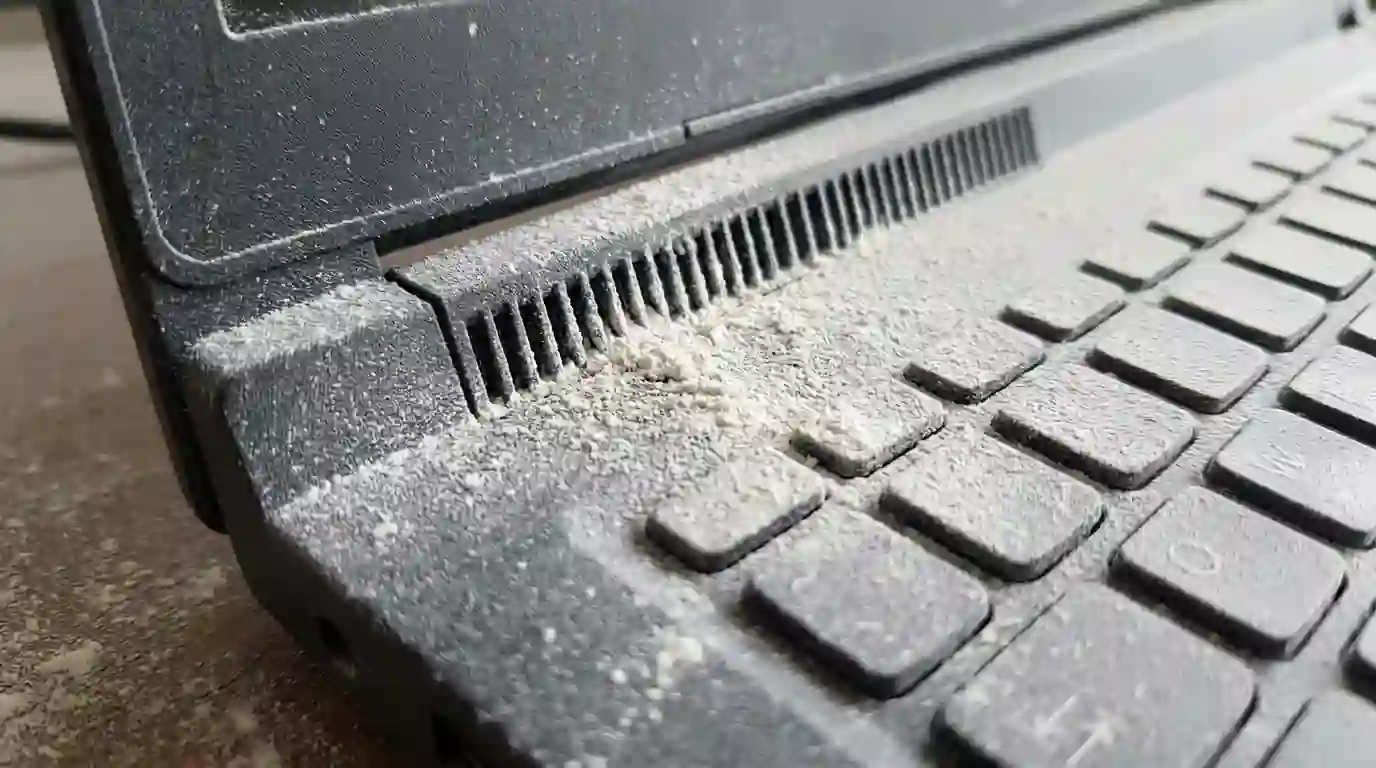
Fine powder gets pulled into computer fans, TV vents and the HVAC return. Inside electronics it can hold moisture against circuit boards, and in the ductwork it spreads the dust every time the system runs.
We keep the HVAC off until the ducts near the event are cleaned, change the filter and clean the registers. Electronics are unplugged, and heavily dusted devices go to an electronics specialist. Running them full of powder is how small damage becomes a replacement, so leave them off until they are checked.
Common case
Kitchen hood suppression discharge
Restaurant hoods, and some residential ones, carry a fixed suppression system that dumps wet chemical agent onto the cooking line when it trips. It is designed for grease fires and leaves a greasy, slippery residue on equipment, floors and the hood.
We clean the line, the hood and the floors so the kitchen can be inspected and put back into service. The suppression company recharges the system and signs off; we handle the cleanup around it, which usually decides when a restaurant reopens.
In Atlanta
Why humidity makes this urgent here
Georgia summers are humid enough that HVAC contractors warn about algae clogging condensate lines, and the same damp air works on extinguisher powder. Monoammonium phosphate absorbs moisture and turns slightly acidic, so a kitchen dusted in July can show pitting on stainless steel and hardware sooner than one dusted in January. After a summer discharge, we clean metal surfaces and electronics first.
Before you start
What you can clean, and when to call
A small puff in one spot is a vacuum job. A whole room is not.
Fine to do yourself
- Vacuum a small dusting with a HEPA vacuum
- Throw out open food that was dusted
- Turn off the HVAC until the vents are cleaned
- Unplug electronics that got powder on them
Call us instead
- Powder through several rooms or the ductwork
- Residue inside appliances or electronics
- Hood suppression discharge in a restaurant
- Powder mixed with soot or firefighting water
Extinguishers and systems behind these calls include home units from Kidde and First Alert, and commercial equipment from Amerex, Ansul and Badger.
- Kidde
- First Alert
- Amerex
- Ansul
- Badger
- Buckeye
- Pyro-Chem
- Range Guard
- Strike First
Cost
What moves the cost of extinguisher cleanup
Spread matters more than the size of the fire.
Rooms reached
Powder carried through a house takes far longer than one kitchen.
Ductwork
Powder in the HVAC means duct and register cleaning.
Contents
Dishes, food, clothing and electronics each need handling.
Mixed residue
Powder mixed with soot or water adds cleaning steps.
Commercial systems
Hood suppression cleanup is a bigger, messier job.
HomeAdvisor lists cleanup of water or fire extinguisher material after a fire at roughly $3,000 to $6,000, including drying and drywall repair. A small cleanup in one room can come in below that, and we price yours once we see it.
FAQ
Questions people ask about fire extinguisher residue cleanup
Household dry chemical is low in toxicity but irritating to breathe and to skin. Ventilate, wear a mask while vacuuming and keep kids and pets out.
Vacuum first. Wet wiping turns the powder into a paste that smears and sticks.
It can corrode metal and electrical contacts if it sits in humid air, which is why prompt cleanup matters.
Cleanup after a covered fire is commonly part of the claim. We document it for your adjuster.
No. A fire protection company recharges and inspects them; we clean the residue.
Talk to a person now
Powder everywhere after a small fire?
Turn off the HVAC and call. We'll tell you what to vacuum and what to leave for us.
Answered 24/7, holidays included.