Offices, retail, restaurants and multi-tenant buildings
Commercial water damage restoration in Atlanta
For a business, the water is only part of the loss. Downtime is the rest. We extract and dry with a plan built around your hours, tenants and customers, and keep one record for owners, managers and insurers.
Updated September 2026
- Phones
- Answered 24/7
- Job type
- Commercial and multi-unit
- Service office
- Biscayne Dr NW, Atlanta
Short answer
Commercial water damage in Atlanta needs extraction and drying started within 24 to 48 hours to limit mold and downtime. We extract standing water, lift carpet tile, open wet walls and ceilings, run commercial drying equipment on a schedule around your business hours and document everything for owners, tenants and insurers.
The job
What changes when the building is a business
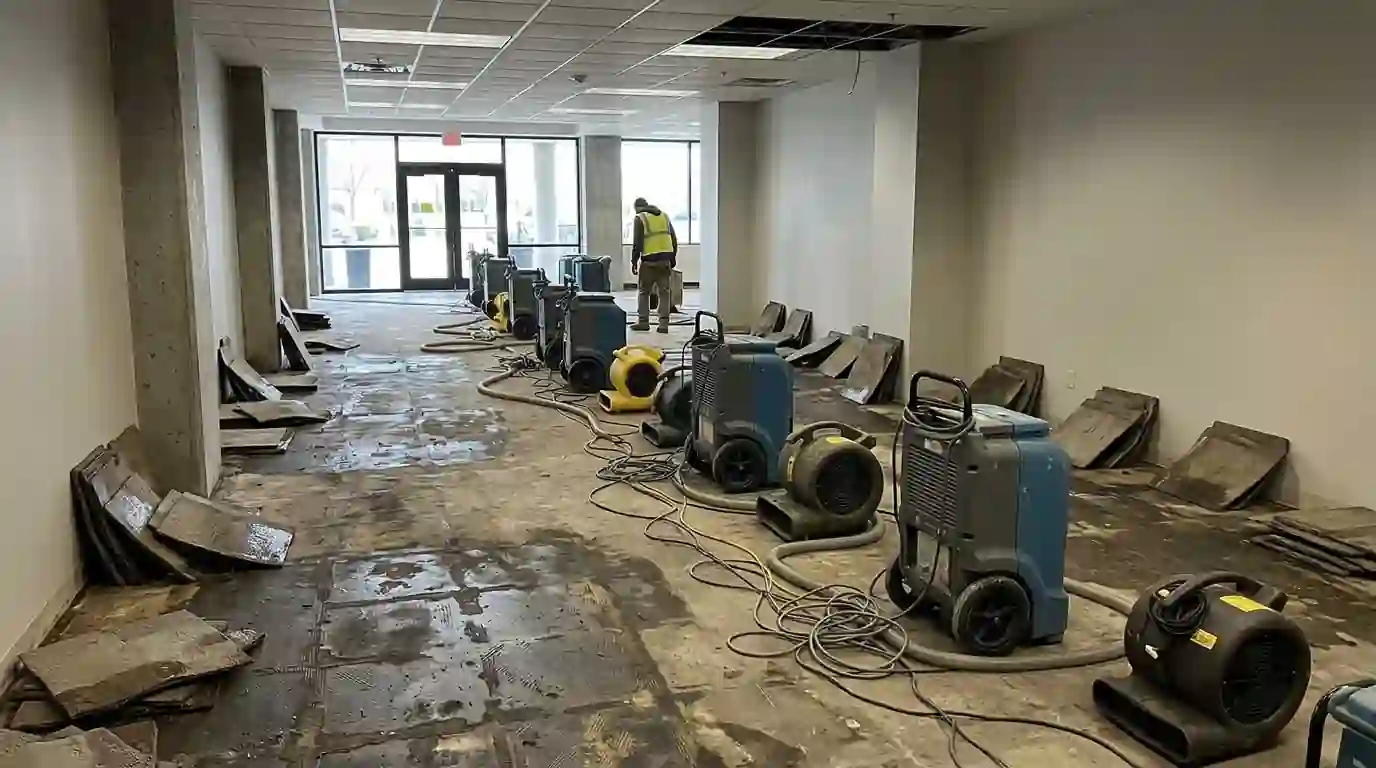
The drying science is the same as in a house. The job around it is different. There are tenants and customers, equipment and inventory, shared systems and a clock that counts lost revenue, and every decision about what to open, what to dry in place and when to work has to account for them.
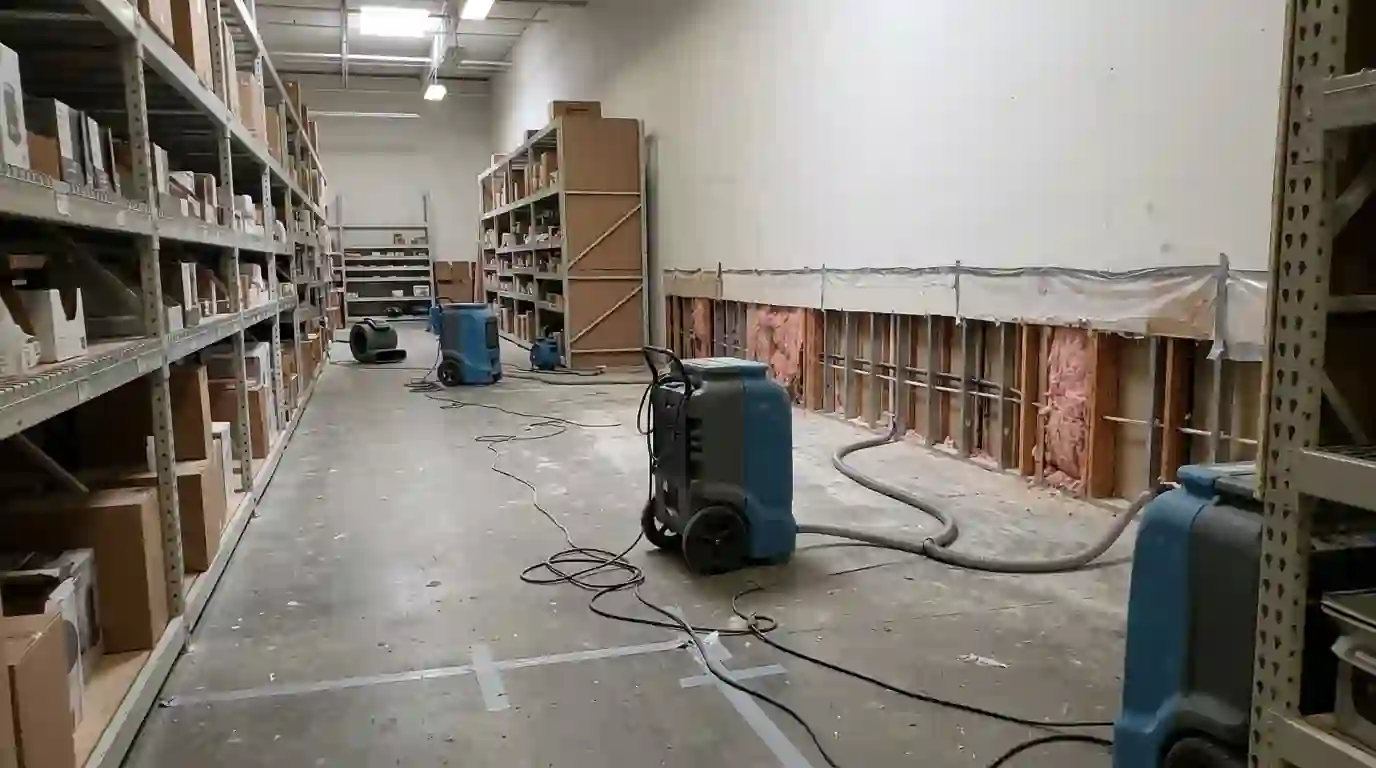
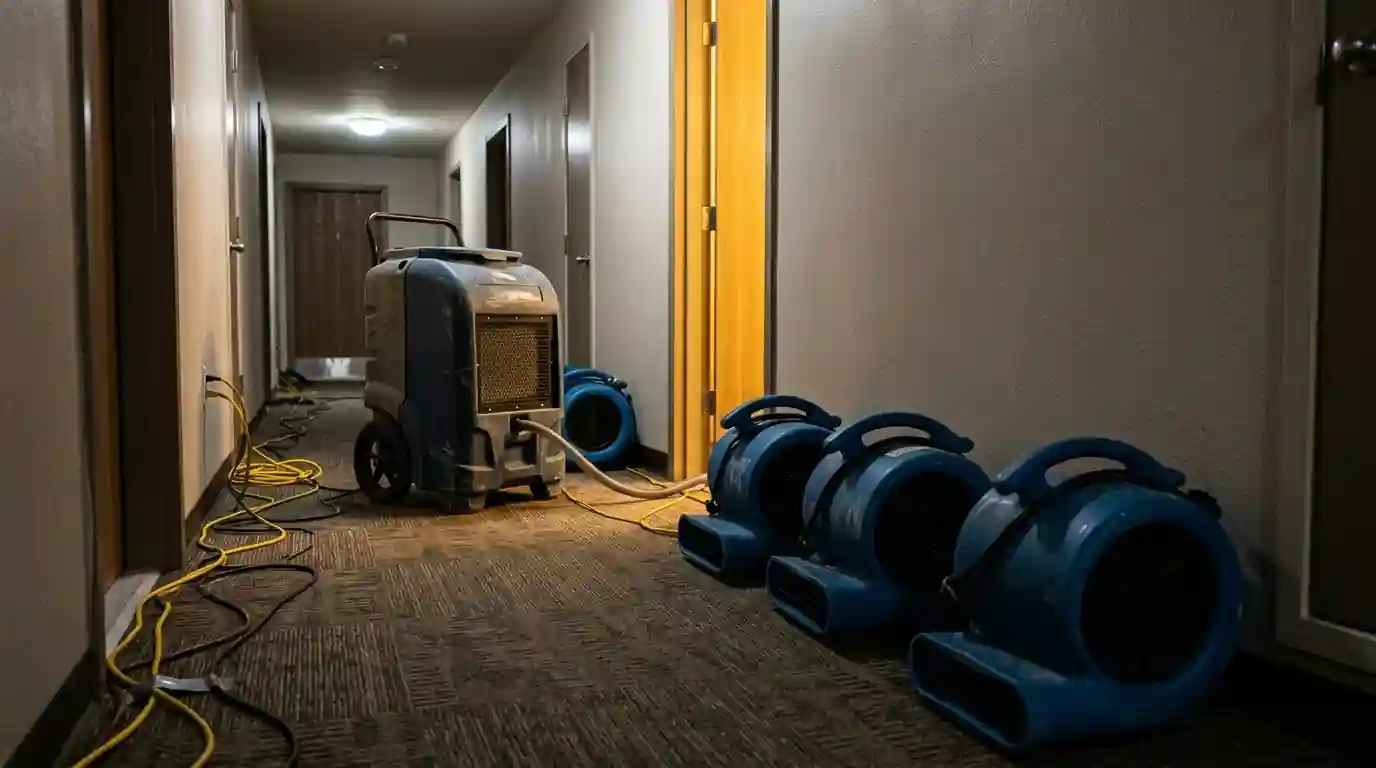
We plan the work with whoever runs the building: which areas must reopen first, where equipment can run overnight and how to keep power and walkways safe. Each affected area gets its own readings and photos, so a landlord, a tenant and their insurers can all work from the same record.
Signs to look for
Signs of water damage in a commercial space
Stained ceiling tiles
Brown rings or sagging tiles point to a roof, drain or plumbing leak above.
Musty smell after hours
An odor that is strongest when the HVAC is off can mean damp materials.
Carpet tile lifting
Tiles that curl or come loose often have water under them.
Bubbling paint low on walls
Blistering near the floor line suggests water in the wall cavity.
Water near equipment
Puddles under ice machines, dishwashers or water heaters mean a slow leak.
After you call
How a commercial water job runs
- 01
Stop the source
Water off and hazards secured with your staff.
- 02
Plan around hours
We agree what reopens first and when work can run.
- 03
Extract and open
Water out; wet ceilings and walls opened where readings say.
- 04
Dry and document
Commercial equipment with daily readings for each area.
- 05
Repair and reopen
Repairs scheduled to keep downtime short.
Common case
Offices and retail
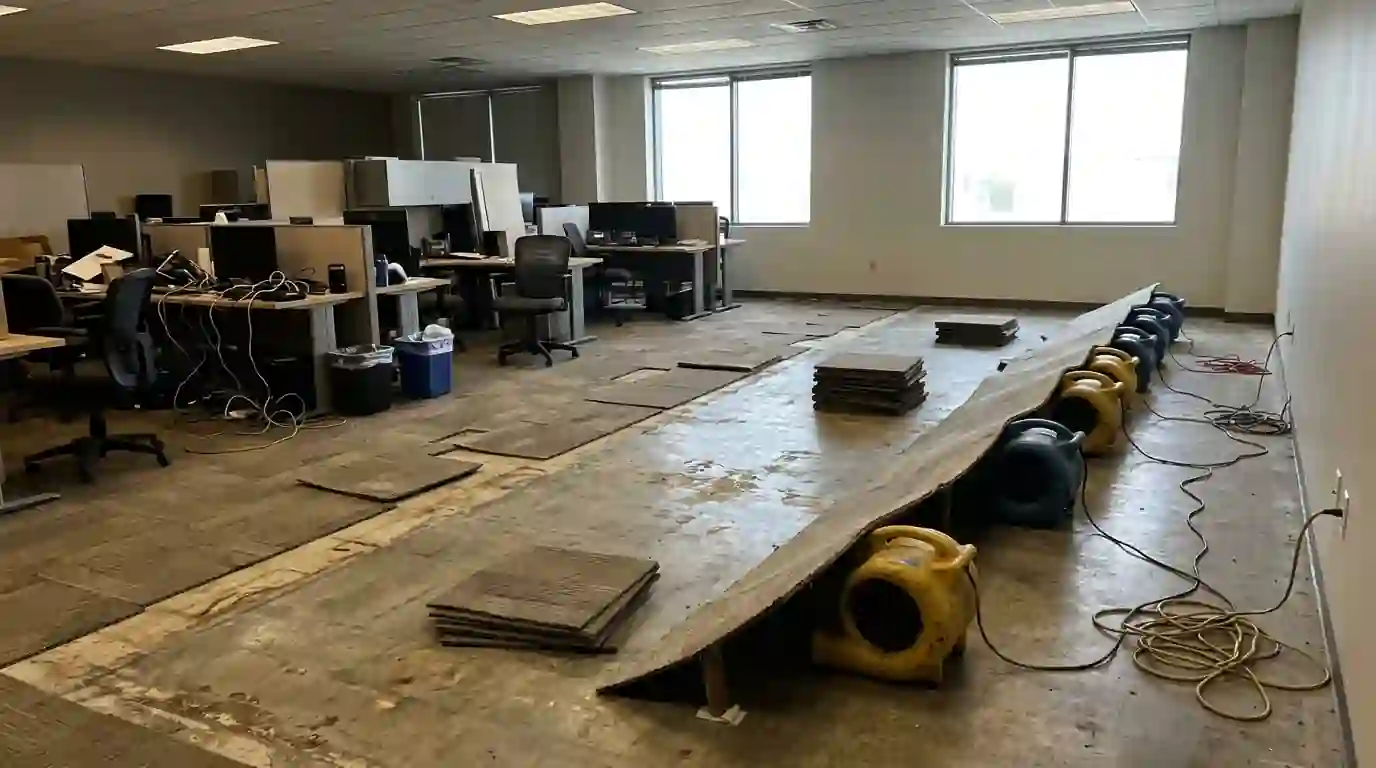
Carpet tile, drywall partitions and suspended ceilings are standard in offices and stores. Carpet tile can often be lifted, dried and relaid, soaked ceiling tiles are replaced, and drywall partitions are opened low to dry the framing behind them.
We protect server rooms, records and inventory first and schedule noisy work outside business hours when possible. Wet inventory is photographed and listed for your claim before anything is thrown out. Where a space must stay open, we section off the work with containment so customers never walk past the equipment.
Common case
Restaurants
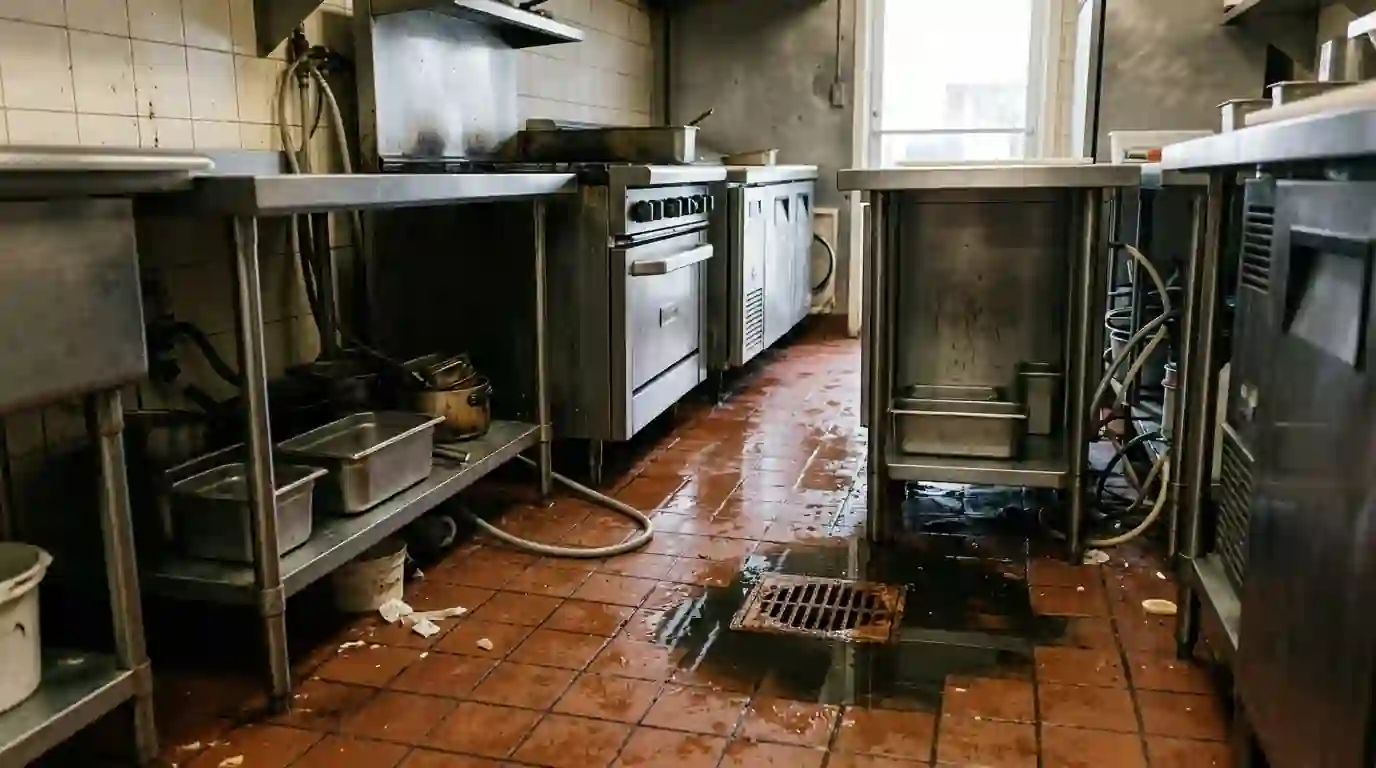
Restaurants add health and safety to the drying: food storage, kitchen equipment and walk-in coolers all have to be protected or cleaned before the health inspector will sign off on reopening.
Kitchen floors often hide water under tile and equipment, and dishwashers, ice machines and floor drains are common sources. We extract, dry and clean surfaces, work with your staff on which food and supplies to discard and give you the documentation reopening requires. Walk-in coolers and ice machines are checked for water underneath before they go back into service.
Common case
Multi-tenant buildings
In office parks, strip centers and mixed-use buildings, one leak often crosses a lease line. A roof drain, a sprinkler or an upstairs tenant's supply line can damage two or three suites at once.
We record each suite separately, share readings with building management and each tenant and schedule entry around their hours. Common areas, roof drains and shared risers go through the building owner's team. When the drying is done, everyone receives the same final readings, which keeps the repair discussion simple.
In Atlanta
Old water mains and Atlanta businesses
Atlanta's June 2024 run of water main breaks started on transmission mains about a century old, one laid in 1910 and another in 1930, with a break at 11th and West Peachtree in Midtown and an 80-year-old main failing in Vine City. Breaks like those can push a lot of water into street-level shops and garage levels fast, and they often come with a boil advisory that complicates cleanup. We plan the drying around both.
Water in your business right now? Call and we'll plan the extraction around what has to stay open.
Call (943) 315-6150Cost
What moves the cost of commercial water damage
Square footage and downtime drive commercial jobs.
Area and floors
Large floor plates and several floors need more equipment.
Materials
Carpet tile, ceiling tile and partitions each dry or get replaced differently.
After-hours work
Night and weekend schedules keep you open but add labor.
Inventory and equipment
Protecting and documenting stock adds time.
Water category
Sewage or floodwater means removal instead of drying.
FAQ
Questions people ask about commercial water damage restoration
Often, in part. We section off work areas and schedule noisy work after hours where we can.
Yes. Each suite gets its own record, and management gets the readings for the whole building.
Within a day or two. After that, drywall, carpet tile and ceiling tile start to grow mold, and downtime grows with it.
We provide photos, moisture readings, a scope and an inventory of damaged stock for your adjuster.
Yes. We extract, dry and clean and give you the documentation reopening requires. Walk-in coolers and ice machines are checked for water underneath before they go back into service.
Talk to a person now
Water in your office, store or restaurant?
Call now and we'll plan the extraction around your business.
Answered 24/7, holidays included.