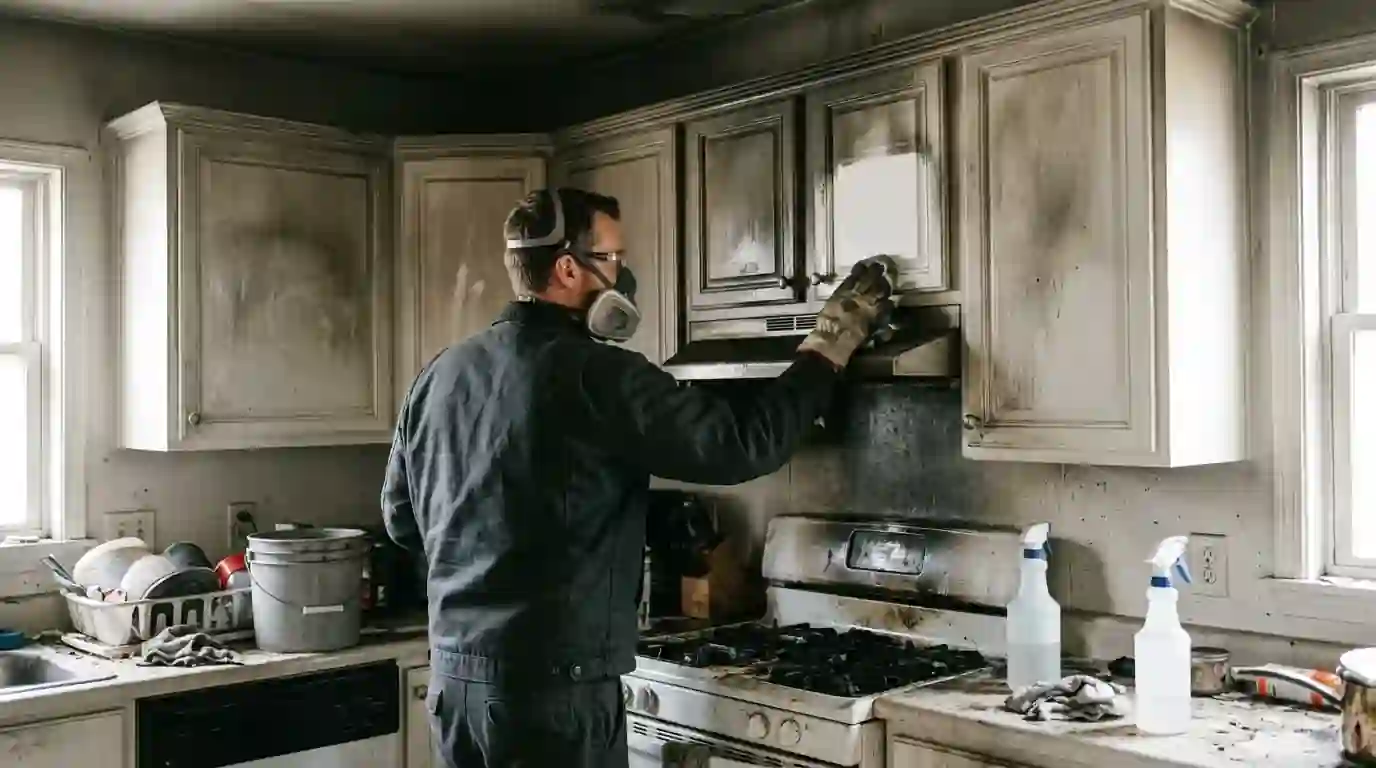
Attic fires, surge paths and roof punctures
Lightning strike damage repair in Atlanta
A lightning strike can start a fire you do not see for hours. If you smell smoke or hear a crack and then lose power, get everyone out and call the fire department first. Once the house is released, we trace the damage and repair it.
Updated September 2026
- Phones
- Answered 24/7
- Job type
- Fire and smoke
- Service office
- Biscayne Dr NW, Atlanta
Short answer
Lightning damage in Atlanta can smolder in attics and walls for hours, so call the fire department first if you smell smoke after a strike. Once the house is safe, we trace the strike path through the roof, attic and walls, clean smoke and water damage and repair burned framing, drywall and roofing.
The job
Where lightning damage hides in a house
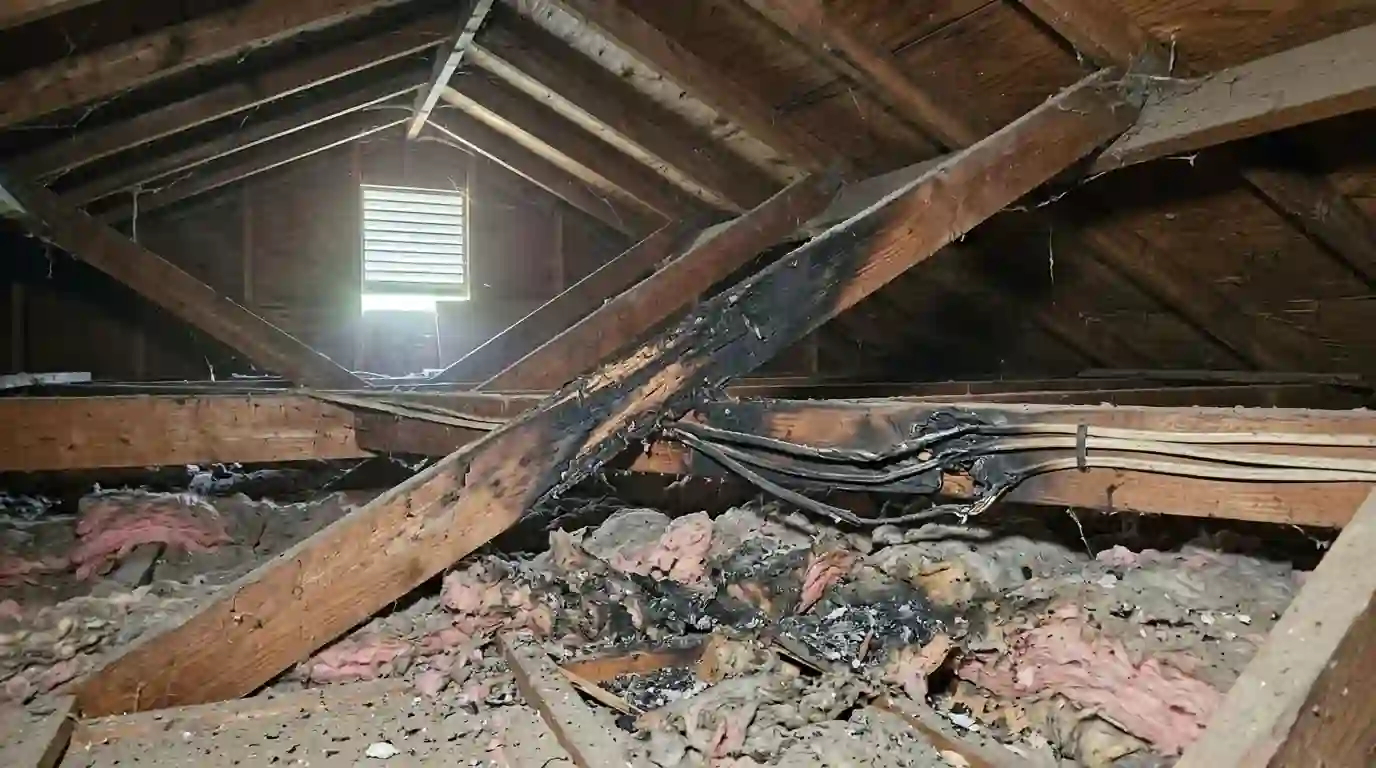
A direct strike usually hits the highest point: a chimney, a roof peak, a tree next to the house or an antenna. The current then follows wiring, pipes and gas lines toward the ground, scorching wood and melting insulation along the way.
That path is why lightning jobs need a careful trace. We look for scorch marks in the attic, burned insulation, damaged outlets and punctures in the roof, then work down through the walls. Electrical repairs go to an electrician; we handle the fire, smoke and water damage and the structure.
Signs to look for
Signs lightning may have hit your house
Burning smell after a storm
A smell of burning wood or plastic after a strike means check the attic now.
Breakers tripped, power out
A strike that trips breakers or kills circuits may have scorched wiring.
Scorch marks on outlets
Black marks or melted covers on outlets and switches show surge damage.
Smoke near fixtures
Smoke or haze near a ceiling light points to heat in the attic above.
Debris around the chimney
Brick or shingle pieces on the ground after a storm mean a possible hit.
After you call
How we handle lightning damage
- 01
Fire department first
If there is smoke or a burning smell, the fire department clears the house.
- 02
Trace the strike
Roof, attic and walls are checked along the current path.
- 03
Secure and dry
Openings are tarped and firefighting water is removed.
- 04
Clean and remove
Soot is cleaned and burned material comes out.
- 05
Repair
Framing, drywall and roofing are rebuilt after electrical repairs.
Common case
Attic fires from a strike
Lightning that enters through the roof often ignites insulation or framing in the attic. The fire can stay small and smoldering, and the first sign in the rooms below may be a smell or smoke from a light fixture.
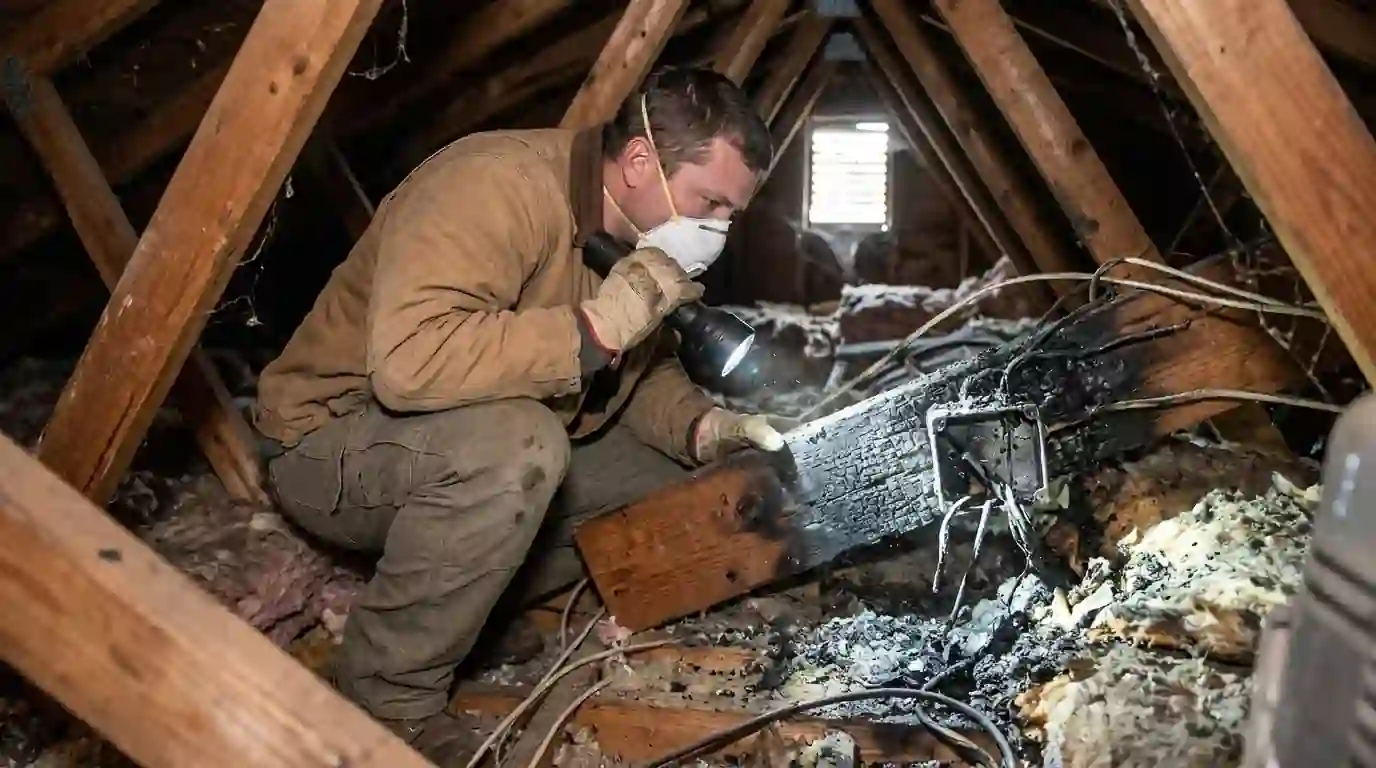
After the fire department clears the house, we remove burned insulation and framing, clean soot from the attic and the rooms below, dry out the firefighting water and plan the roof and framing repairs. The attic is checked for residue and odor before anything is closed up again.
Common case
Surge damage traced through walls
Surges travel on wiring and metal plumbing, and they can scorch the wood around outlets, switches and junction boxes inside walls. Sometimes a single outlet shows a burn mark; sometimes nothing shows at all.
We open walls where outlets, scorch marks or smell point to damage and look along the wiring runs. An electrician repairs the wiring, and we repair the drywall and framing and clean any soot. Appliances and electronics that died in the surge are listed for your claim.
Common case
Roof and chimney punctures
A strike can blow holes in roofing, crack chimney masonry and scatter brick or shingles into the yard. Water gets in on the next rain even if there was no fire.
We tarp the roof or chimney opening, check the attic for water and scorch damage and coordinate the roof and chimney repairs. The chimney is checked by a chimney professional before the fireplace is used again. Cracked flue liners are easy to miss and can let heat into framing the next time a fire is lit, so that inspection matters.
In Atlanta
Lightning losses in Georgia
Georgia homeowners filed about 4,000 lightning claims in 2025, the fourth most in the country, and the average Georgia claim ran above $22,000. Much of that cost is damage nobody sees at first: scorched wiring, a smoldering attic and electronics lost to the surge. That is why we trace the whole path through the house rather than patching the visible hole in the roof.
What is included
What we check after a lightning strike
- Roof, chimney and flashing at the likely strike point
- Attic framing and insulation for scorching
- Outlets, switches and fixtures for burn marks
- Wall cavities along suspected wiring runs
- Ceilings below the attic for smoke and water
- Firefighting water in the rooms below
- Damaged appliances and electronics, listed for the claim
- Photos and notes for your adjuster
Cost
What moves the cost of lightning damage repair
Hidden damage is what makes lightning claims expensive.
Fire or no fire
An attic fire adds cleanup, framing and roof work.
Wiring damage
Scorched runs mean opening walls for the electrician.
Roof and chimney
Punctures and cracked masonry need tarping and repair.
Water from firefighting
Soaked ceilings and floors add drying.
Electronics lost
Surge-damaged appliances are replaced, not repaired.
The Insurance Information Institute puts the average Georgia lightning claim above $22,000 in 2025. That is a claim average, not a price, and your repair depends on what the strike reached.
FAQ
Questions people ask about lightning strike damage
Yes, if you smell smoke or burning after a strike. Attic fires can smolder unseen.
Lightning and the fire it causes are commonly covered; surge coverage varies. We document everything for your adjuster.
No, an electrician does. We handle the fire, smoke and water damage and the structure.
A loud crack with a flash, tripped breakers, a burning smell, dead electronics or debris near the roof are common signs.
It can travel along metal pipes and damage fittings or gas lines. If you smell gas, leave and call the gas company.
Talk to a person now
Lightning hit the house?
If you smell smoke, call 911 first. Once it is safe, call us and we'll trace and repair the damage.
Answered 24/7, holidays included.