Cupping, crowning, heart pine and engineered wood
Hardwood floor water damage drying in Atlanta
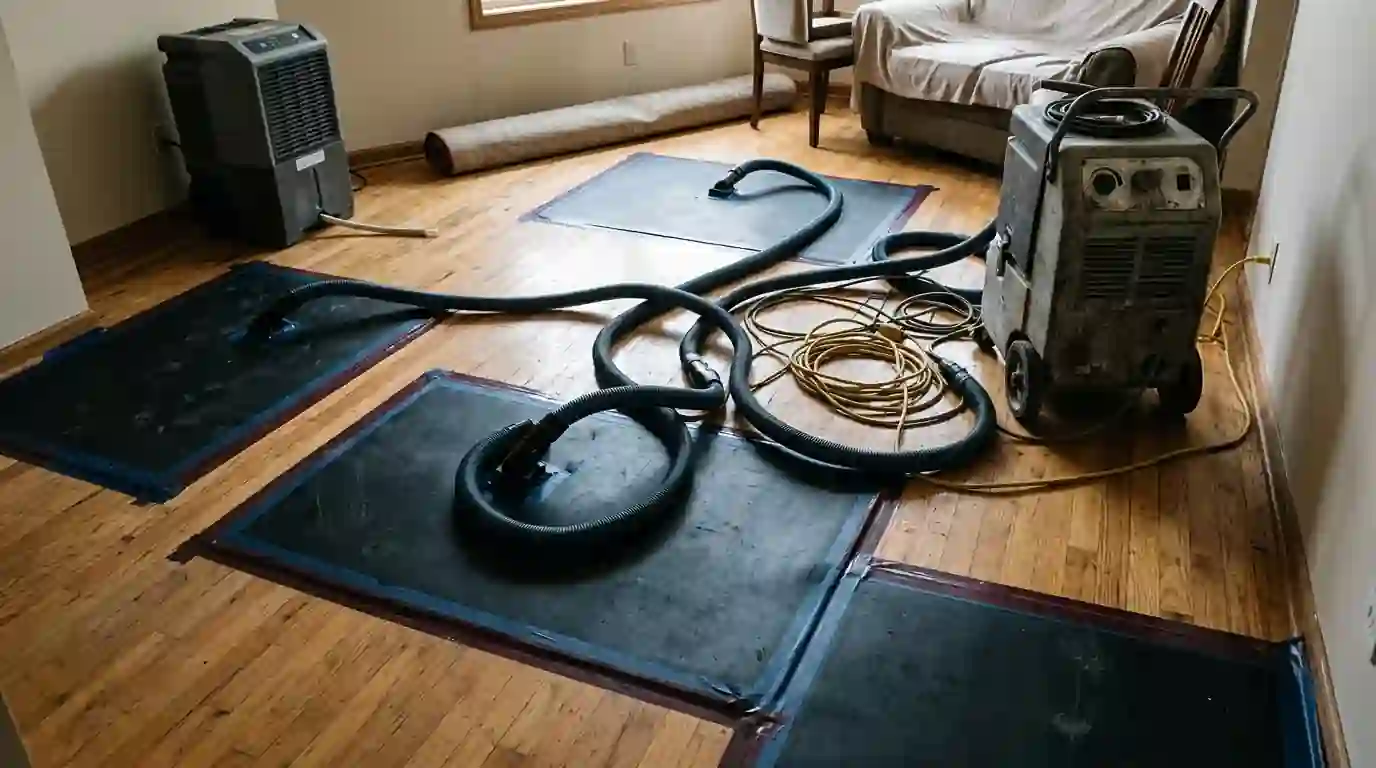
Wet hardwood can often be saved if drying starts fast. We pull the water out of the wood and the subfloor with drying mats and dehumidifiers, track the readings and only replace boards that cannot come back.
Updated September 2026
- Phones
- Answered 24/7
- Job type
- Repair and rebuild
- Service office
- Biscayne Dr NW, Atlanta
Short answer
Hardwood floor water damage in Atlanta can often be dried in place if drying starts within a day or two, using floor drying mats that pull moisture up through the boards and dehumidifiers that take it out of the air. Cupping often flattens as the wood dries; boards that stay cupped, crack or stain are replaced and refinished.
The job
What water does to a wood floor
Wood swells when it takes on water from below. The bottom of each board swells more than the top, so the edges rise and the board cups. Pushed further, boards buckle up off the subfloor.
The key is drying slowly and evenly from the bottom. Sanding a cupped floor before it dries flattens it for now, but when the wood finishes drying it crowns the other way. We dry first, wait for the readings to settle and only then decide whether the floor needs sanding, board replacement or nothing more.
After you call
How we dry a wet wood floor
- 01
Extract
Standing water off the floor and out of the gaps.
- 02
Read the wood
Board and subfloor readings set the drying plan.
- 03
Dry with mats
Mats and dehumidifiers pull moisture from below.
- 04
Let it settle
Readings held steady before any sanding.
- 05
Refinish or replace
Sand, patch boards or replace as needed.
Common case
Cupping and crowning
Cupping means the edges of each board sit higher than the middle, a sign of moisture from below. Crowning is the opposite, usually caused by sanding a floor that was still wet.
We read the boards and the subfloor, dry them with mats and dehumidifiers and let the wood settle for a while after it reaches normal readings. Many cupped floors flatten on their own; the rest are sanded and refinished once the moisture is right. Rushing that step is the most common reason floors get redone.
Common case
Heart pine floors in older homes
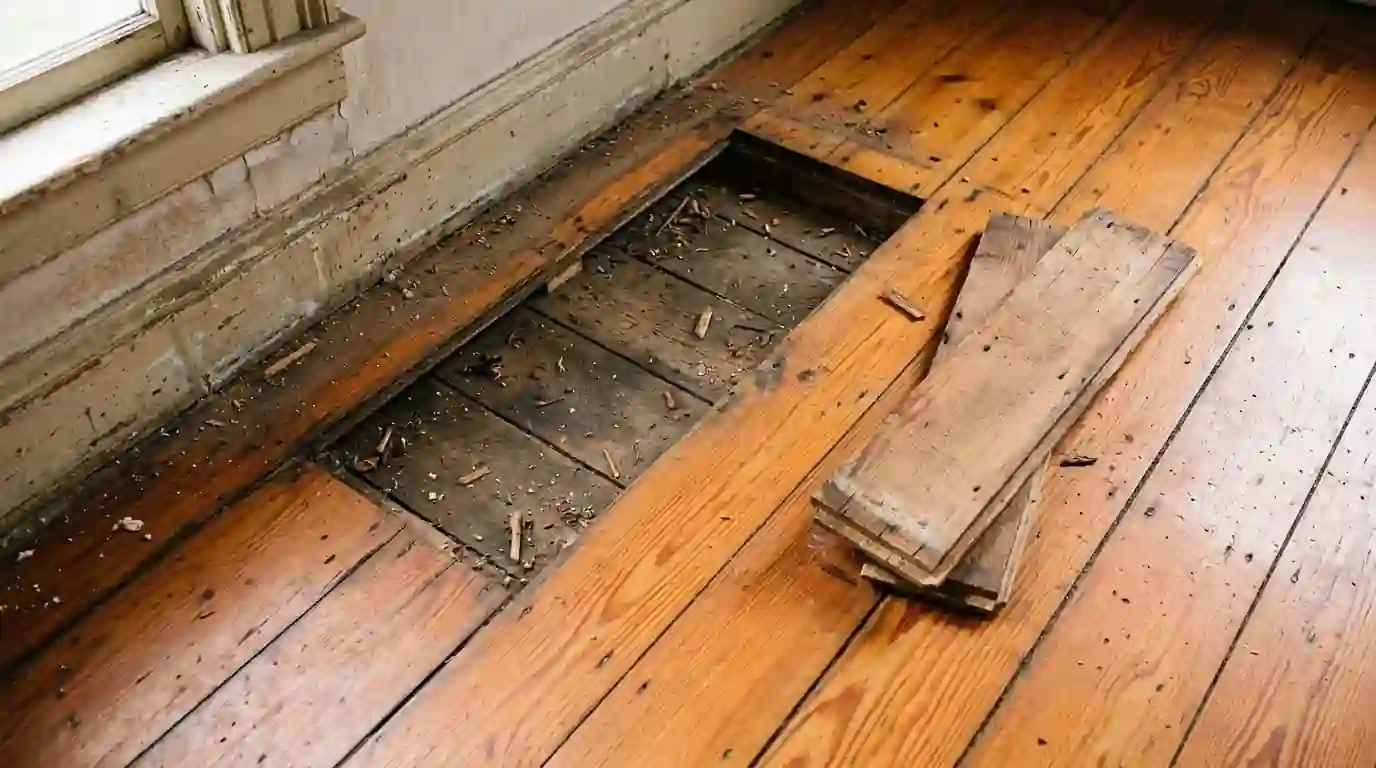
Many older Atlanta houses have original heart pine: dense, resinous old-growth wood that cannot be bought new, only as reclaimed lumber. It is worth real effort to save, and it usually dries well when handled carefully.
We dry it slowly to avoid splitting, remove only boards that truly failed and source reclaimed heart pine for replacements when needed. Refinishing takes a light hand because old boards have often been sanded before. The subfloor underneath gets checked too, since it has usually been down for a century.
Common case
Engineered wood and luxury vinyl plank
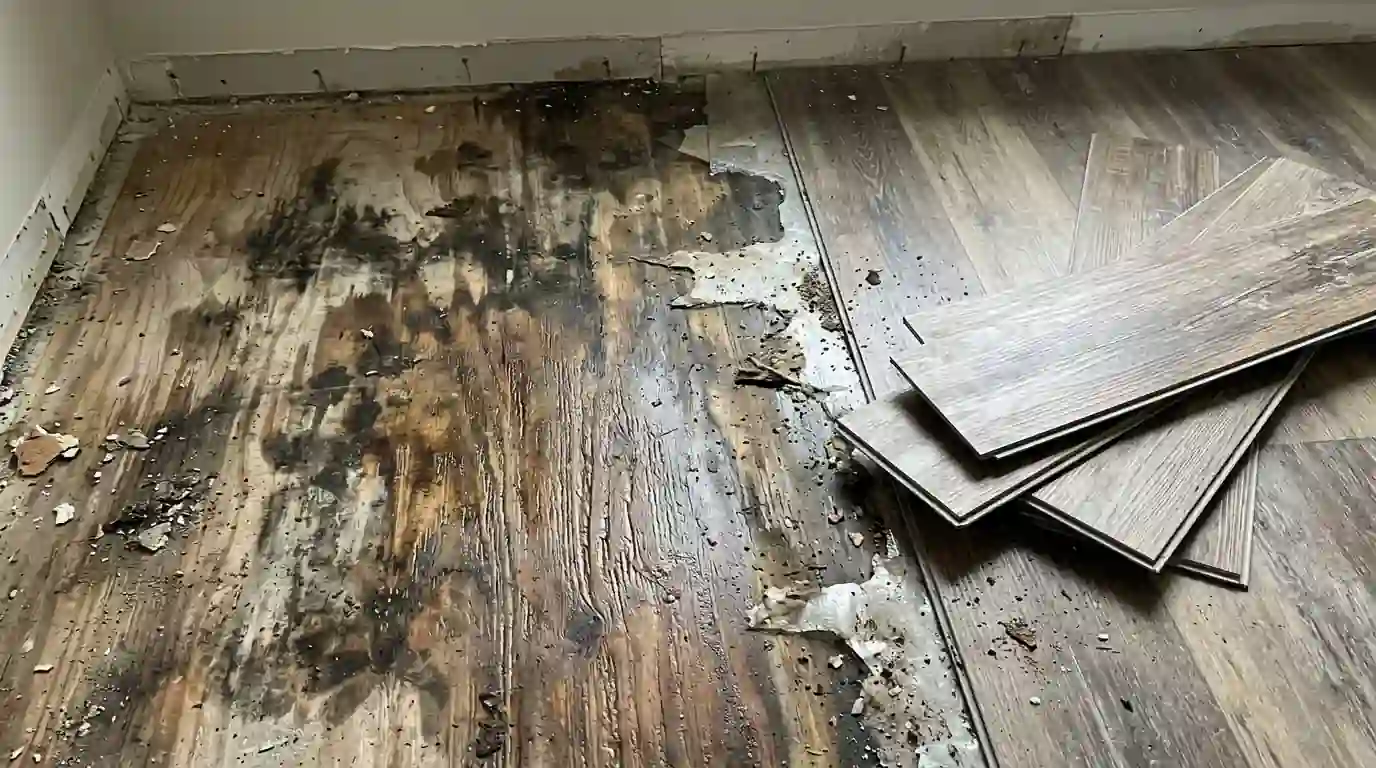
Engineered hardwood has a thin wood layer over plywood, and the layers can separate when soaked. Luxury vinyl plank does not absorb water, but water gets trapped under the click-lock joints and sits on the subfloor.
Engineered floors sometimes dry in place, but delaminated boards are replaced. With vinyl plank, we usually lift the floor to dry the subfloor and then reinstall the planks if they are undamaged, which is often possible with click-lock products. Glue-down vinyl is harder to reuse and is usually replaced.
Timeline
How long hardwood takes to dry
Wood floors dry more slowly than drywall. Several days on mats is common, and longer for thick heart pine or floors over a damp crawl space.
After that, we wait for the readings to hold steady before any sanding, because wood keeps moving for a while after the surface feels dry.
In Atlanta
Heart pine floors in Atlanta bungalows
Many of the 1920s bungalows in Grant Park still have original heart pine floors, and those boards cannot simply be bought again. When one of those floors gets wet, we take the slow route: gentle drying, a long settling period and reclaimed heart pine for any board that has to come out. A newer engineered floor might be quicker to replace, but an original floor like that is worth the patience.
Your options
Dry in place, replace boards, or replace the floor?
| Option | When it fits | What it involves | Trade-off |
|---|---|---|---|
| Dry in place | Solid wood, caught within a day or two | Drying mats, dehumidifiers, readings | Several days of equipment |
| Dry and refinish | Cupping remains after drying | Sand and refinish once readings settle | Room out of use during refinishing |
| Replace boards | Cracked, stained or delaminated boards | Weave new boards in, then refinish | Matching old wood takes care |
| Replace the floor | Black water or widespread failure | Remove, dry the subfloor, install new | Highest cost |
Cost
What moves the cost of hardwood floor drying
Wood type and how long it was wet decide most of it.
Time wet
A floor reached in hours dries far better than one found after a weekend.
Wood type
Solid wood dries better than engineered layers.
Area
More square footage means more mats and equipment.
Subfloor
Wet or rotted subfloor adds drying or replacement.
Refinishing
Sanding and finish work after drying add cost.
FAQ
Questions people ask about hardwood floor water damage
Often, if drying starts quickly and the water was clean. Cupping frequently flattens as the wood dries.
Not until the wood is fully dry. Sanding early leads to crowning later.
They seal to the floor and pull air, and moisture with it, up through the boards into a vacuum unit.
We use reclaimed heart pine for replacement boards and refinish to blend.
If the water event is covered, the floor usually is too. We document the readings for your adjuster.
Talk to a person now
Wood floor wet or starting to cup?
Call now. The sooner the drying starts, the more of the floor we can save.
Answered 24/7, holidays included.