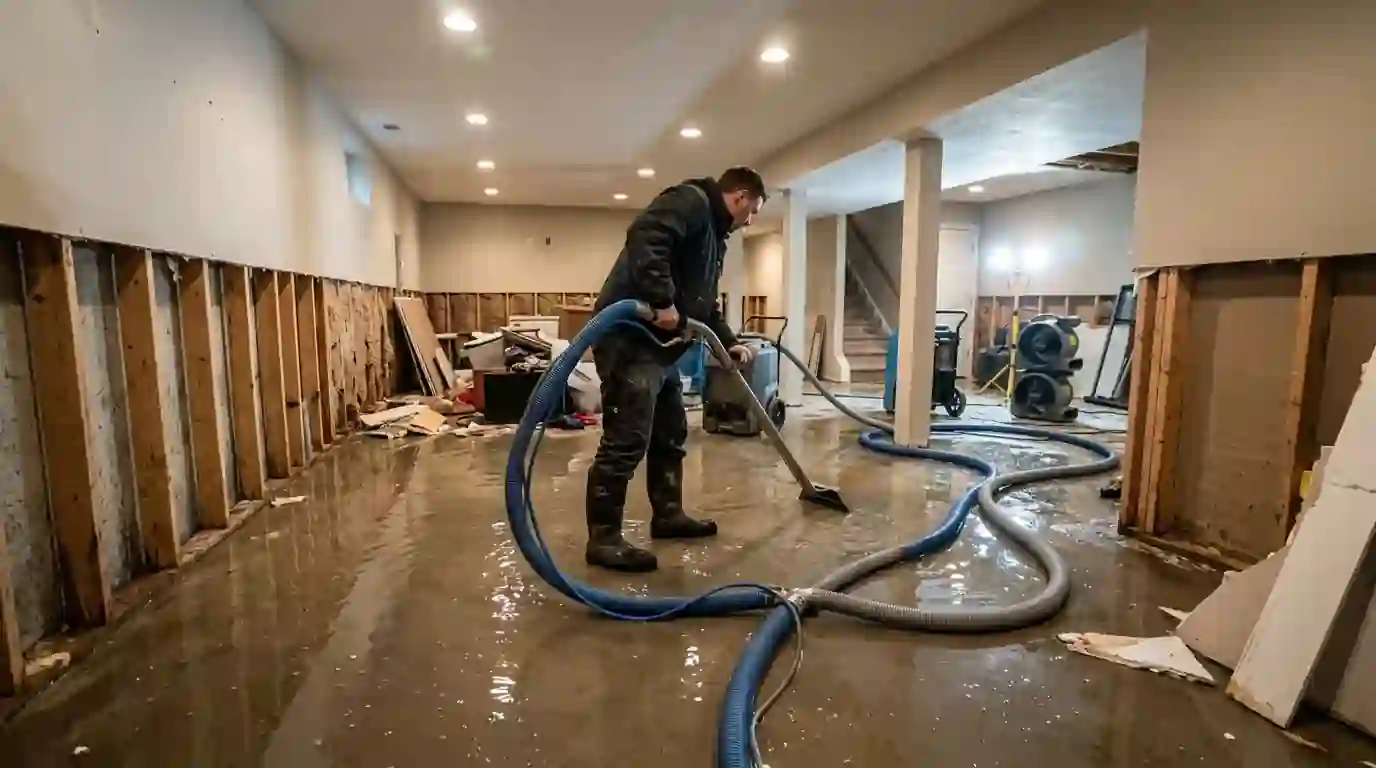
Air movers, dehumidifiers and daily readings
Structural drying and dehumidification in Atlanta
Drying is not done when the surface feels dry. We set air movers and dehumidifiers sized to the space, take readings every day and pull the equipment only when framing, drywall and floors match a dry reference.
Updated September 2026
- Phones
- Answered 24/7
- Job type
- Water emergencies
- Service office
- Biscayne Dr NW, Atlanta
Short answer
Structural drying in Atlanta uses air movers to pull moisture out of walls, floors and framing and dehumidifiers to take it out of the air, with meter readings every day until materials match a dry reference reading. Most rooms dry in several days, and drying stops when the numbers say dry, not when the surface feels dry.
The job
How drying actually works
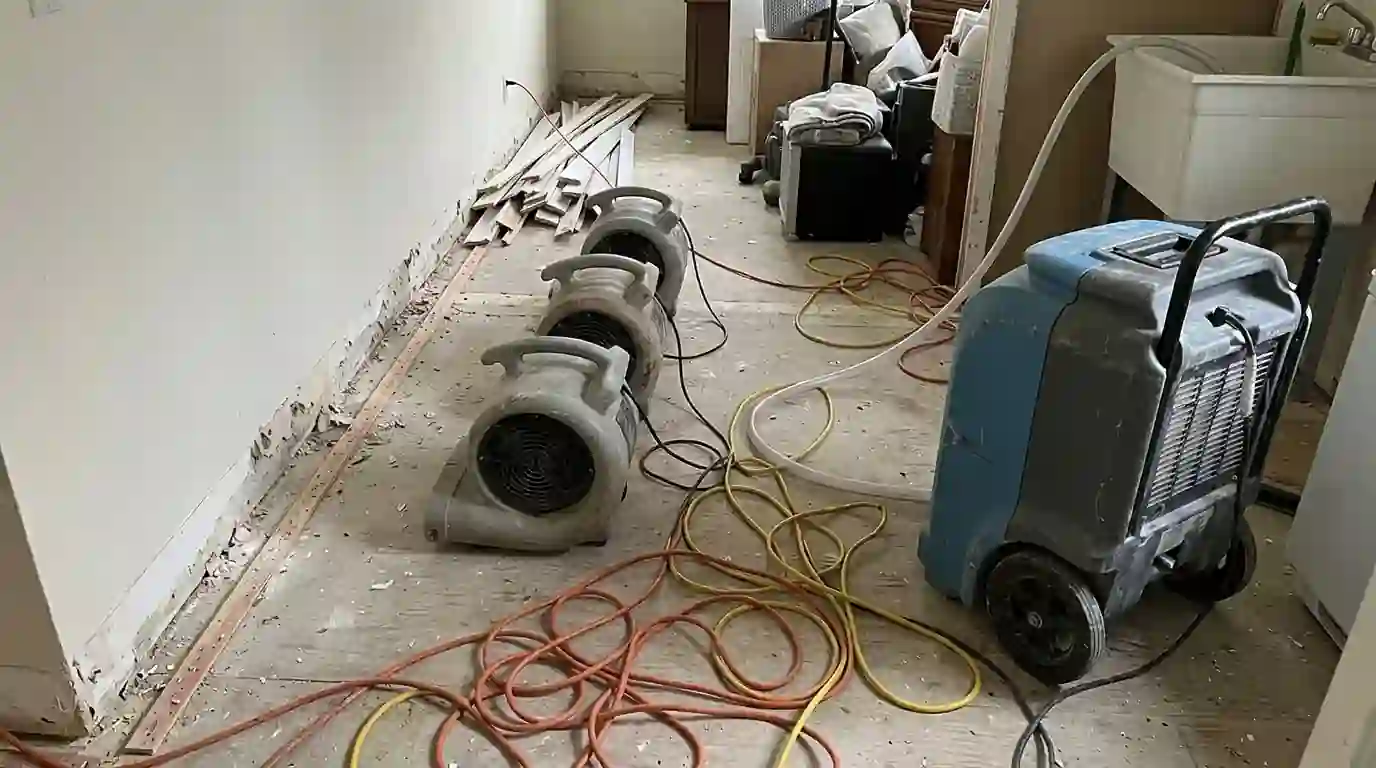
Wet materials give up water into the air around them. Air movers speed that up by moving air across wet surfaces and into wall cavities. Dehumidifiers pull the water back out of the air so it does not just settle somewhere else in the house.
The balance matters. Too little dehumidification and the room turns into a humid box that grows mold. Heat without it pushes the moisture deeper into the framing. We size the equipment to the room, check the air and the materials every day and adjust.
After you call
How we dry a wet structure
- 01
Map the moisture
Readings show what is wet and how wet.
- 02
Open what traps water
Baseboards off, cavities vented, wet insulation out.
- 03
Set equipment
Air movers and dehumidifiers sized to the space.
- 04
Read daily
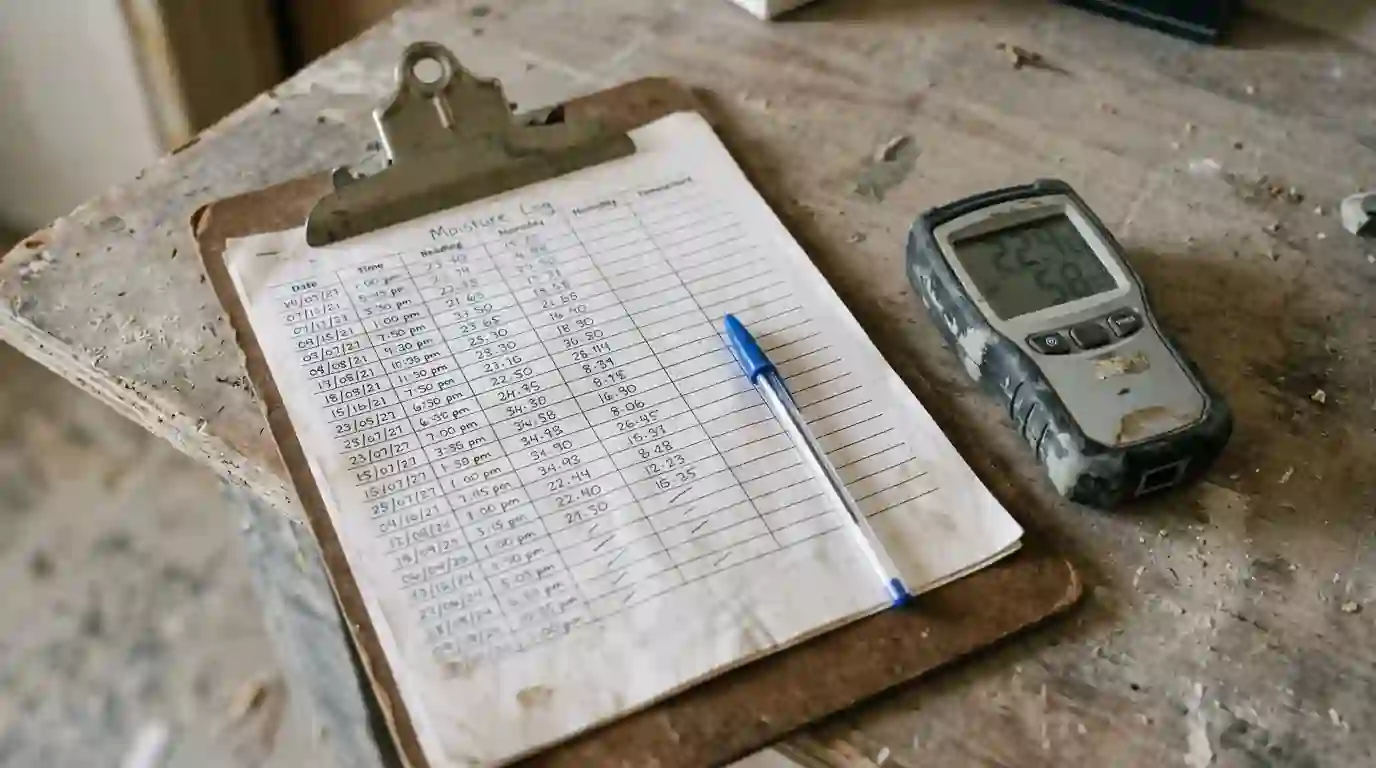
Air and materials logged at the same points.
- 05
Confirm dry
Readings match the dry reference before equipment leaves.
Common case
Wall cavity drying
Water that runs into a wall sits on the bottom plate and wicks up the drywall from inside, where air movers pointed at the surface barely reach it. Removing the baseboard or drilling small holes behind it lets dry air into the cavity.
For walls with insulation, we often open the bottom of the drywall so the batt can be removed and the cavity dried. We read the plate and studs, not just the drywall face, before calling a wall dry. Closing a wall with a wet plate is how mold ends up behind new paint.
Common case
Dehumidifier sizing and daily readings
Dehumidifiers are rated by how much water they pull from the air in a day, and a wet basement can overwhelm a household unit in hours. We use commercial units sized to the room volume and the amount of wet material, and move or add units as the job changes.
Every day we record the temperature and humidity of the air and moisture readings at the same marked spots on walls and floors. When those readings stop dropping, something is wrong: more water, more material or the wrong equipment. The log is also what your adjuster reads.
Common case
Drying plaster and masonry
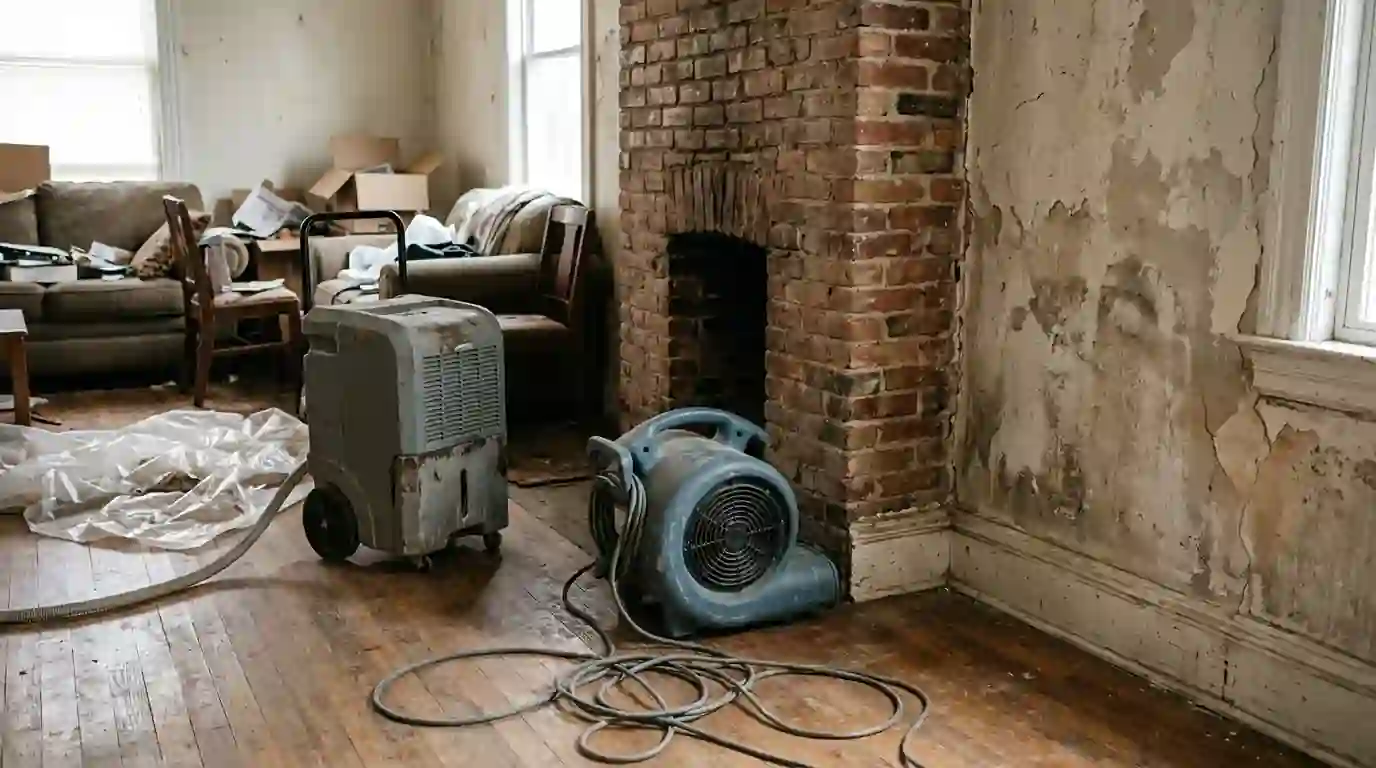
Plaster, brick and concrete hold more water than drywall and give it up slowly. They can look dry on the surface for days while the core stays wet, and finishing over them too soon brings back stains and peeling paint.
We dry them longer, with steadier airflow and lower humidity, and read them with meters suited to dense materials. Old plaster in particular is worth saving, so we dry it rather than tear it out whenever it is still bonded to the lath.
Timeline
How long structural drying takes
Drywall and framing often dry in several days. Hardwood, plaster, masonry and crawl spaces take longer, and anything found after a delay starts drying later.
We do not set an end date in advance. The equipment stays until the readings reach the dry reference, then it comes out.
In Atlanta
Drying in a humid climate
Georgia summers are humid enough that HVAC contractors warn about condensate lines clogging with algae, and some years are simply wet: 2009 brought Atlanta 69.43 inches of rain, its second-wettest year on record. In weather like that, opening windows adds moisture instead of removing it. We keep the house closed while drying, run dehumidifiers around the clock and watch the air readings as closely as the walls.
What is included
What structural drying includes
- A moisture map before equipment goes in
- Air movers placed for walls, floors and cavities
- Commercial dehumidifiers sized to the space
- Baseboard removal or small vent holes where cavities are wet
- Removal of wet insulation and pad that will not dry
- Daily air and material readings at marked points
- Equipment adjusted as the readings change
- A final dry-standard record with photos
Cost
What moves the cost of structural drying
Equipment days and the amount of wet material drive the price.
Area wet
More square footage means more air movers and dehumidifiers.
Materials
Hardwood, plaster and masonry take more days.
Water category
Gray and black water add cleaning before drying.
Access
Wall cavities and crawl spaces need more setup.
Delay
Water that sat for days soaks deeper and dries slower.
HomeAdvisor puts water damage restoration at about $3.50 to $7.50 per square foot in 2025, depending on the water category. We price your drying once we map the moisture.
FAQ
Questions people ask about structural drying and dehumidification
In humid weather, outside air adds moisture. Closed rooms with dehumidifiers dry faster.
Please do not. Drying works around the clock, and stopping it lets moisture settle back in.
We compare readings with the same material in a dry area of the house and record them daily.
Some, since air movers and dehumidifiers draw power. The drying log shows how many days they ran.
Only what cannot dry in place, like drywall with wet insulation behind it or contaminated water in it.
Talk to a person now
Walls or floors still wet after a leak?
Call and we'll map the moisture and get the right equipment running.
Answered 24/7, holidays included.