Drain lines, drain pans and attic air handlers
AC condensate leak water damage in Atlanta
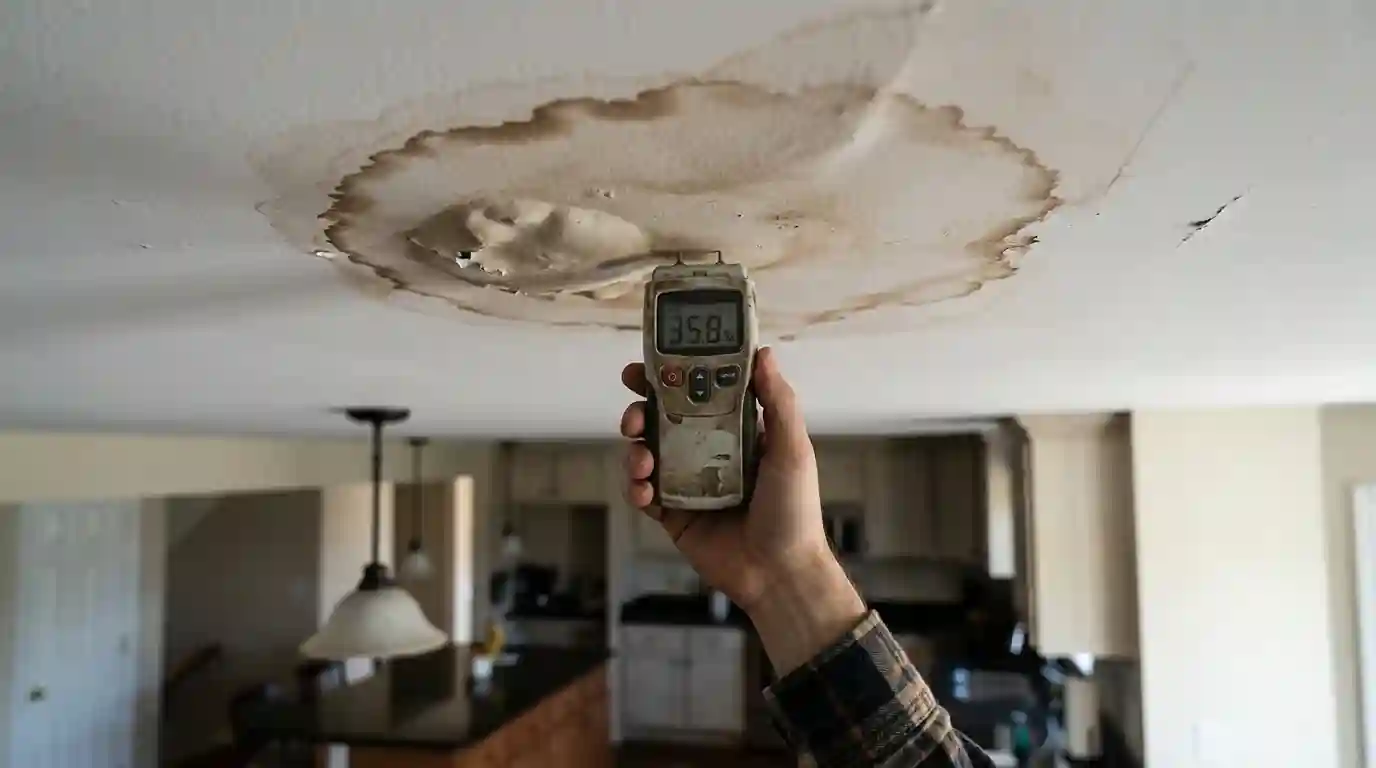
An air conditioner pulls a steady stream of water out of humid air, and it has to go somewhere. When the drain line clogs or the pan rusts, that water lands on the ceiling. We dry the attic and ceiling and repair the damage while your HVAC tech fixes the drain.
Updated September 2026
- Phones
- Answered 24/7
- Job type
- Leaks by source
- Service office
- Biscayne Dr NW, Atlanta
Short answer
AC condensate leak damage in Atlanta usually shows up in summer as a ceiling stain under an attic air handler, after a clogged drain line or a rusted pan overflows. Turn the system off, have an HVAC technician clear the drain and call us; we dry the attic insulation and ceiling and replace drywall that sagged or stained.
The job
How an AC ends up leaking into the house
Cooling coils pull moisture out of the air, and in a humid summer that is a steady stream of water. It drips into a pan and runs out through a small drain line. Algae, dust and insects clog that line, and the pan overflows.
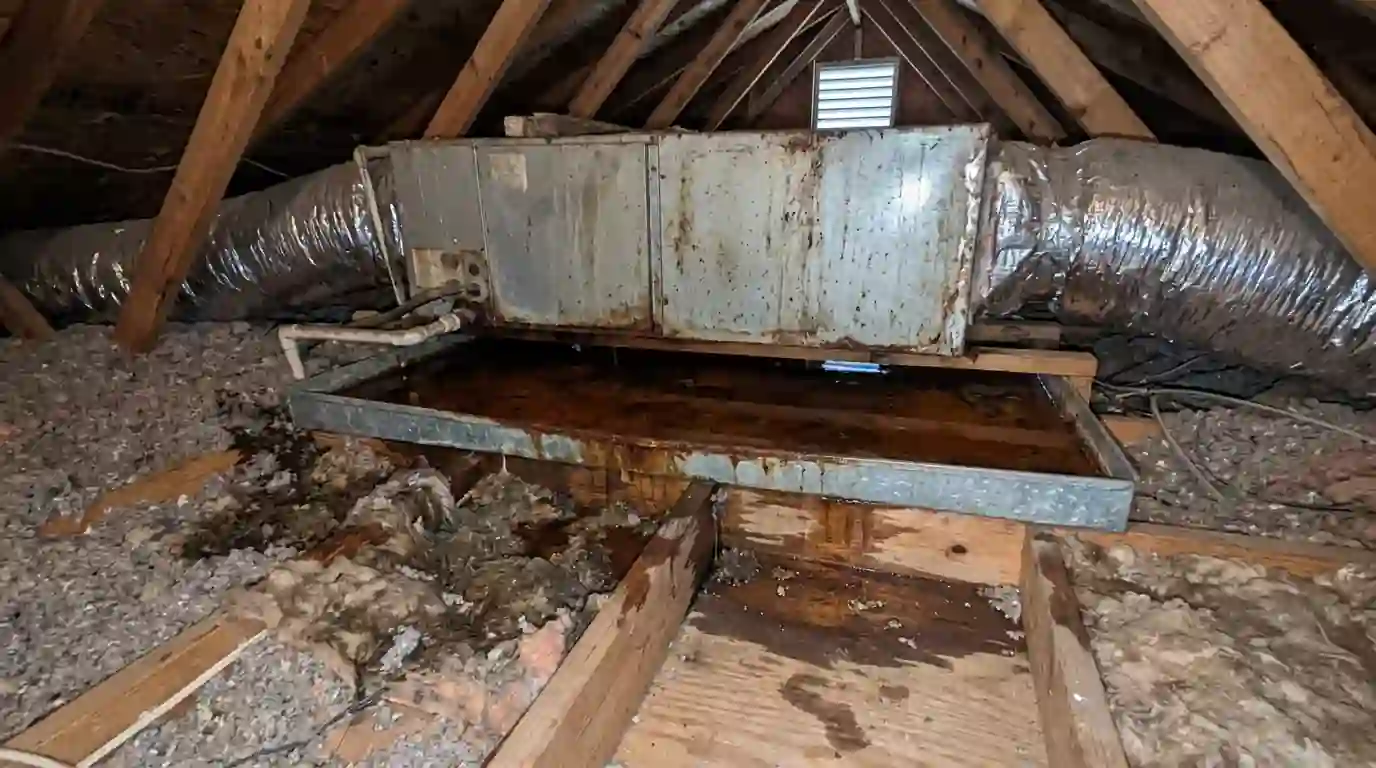
In homes with the air handler in the attic, the overflow soaks insulation and then the ceiling drywall below, often over a hallway or bedroom. A secondary pan or float switch should stop it, but those fail too. Units from Carrier, Trane and Lennox all drain the same way, so the failure points are the same.
Signs to look for
Signs your AC is leaking into the house
Stain near an air register
A ceiling stain close to a supply vent often traces back to the air handler.
Water in the emergency pan
Any water in the secondary pan means the primary drain is clogged.
AC shutting off in summer
A float switch that trips shuts the system down when the drain backs up.
Musty smell from vents
Damp insulation and standing water near the unit smell earthy.
Dripping from the soffit pipe
A secondary drain line dripping outside means the primary is blocked.
After you call
How we clean up after an AC overflow
- 01
System off
Cooling off so the unit stops making water.
- 02
Stop the overflow
Your HVAC tech clears the drain or replaces the pan.
- 03
Remove wet insulation
Soaked blown insulation is vacuumed out.
- 04
Dry attic and ceiling
Framing and drywall dried with readings.
- 05
Repair
Ceiling replaced or sealed and painted; insulation restored.
Common case
Clogged condensate drain lines
The primary drain line is small PVC that runs from the air handler to the outside or to a drain. Algae and sludge grow in it through the cooling season until the flow slows and then stops.
When it stops, the pan fills and overflows, or a float switch shuts the system off and the house gets warm. Either way, check the ceiling around the air handler. We dry the attic and the ceiling; your HVAC technician clears the line and can add a cleanout or a float switch if there is none.
Common case
Rusted secondary drain pans
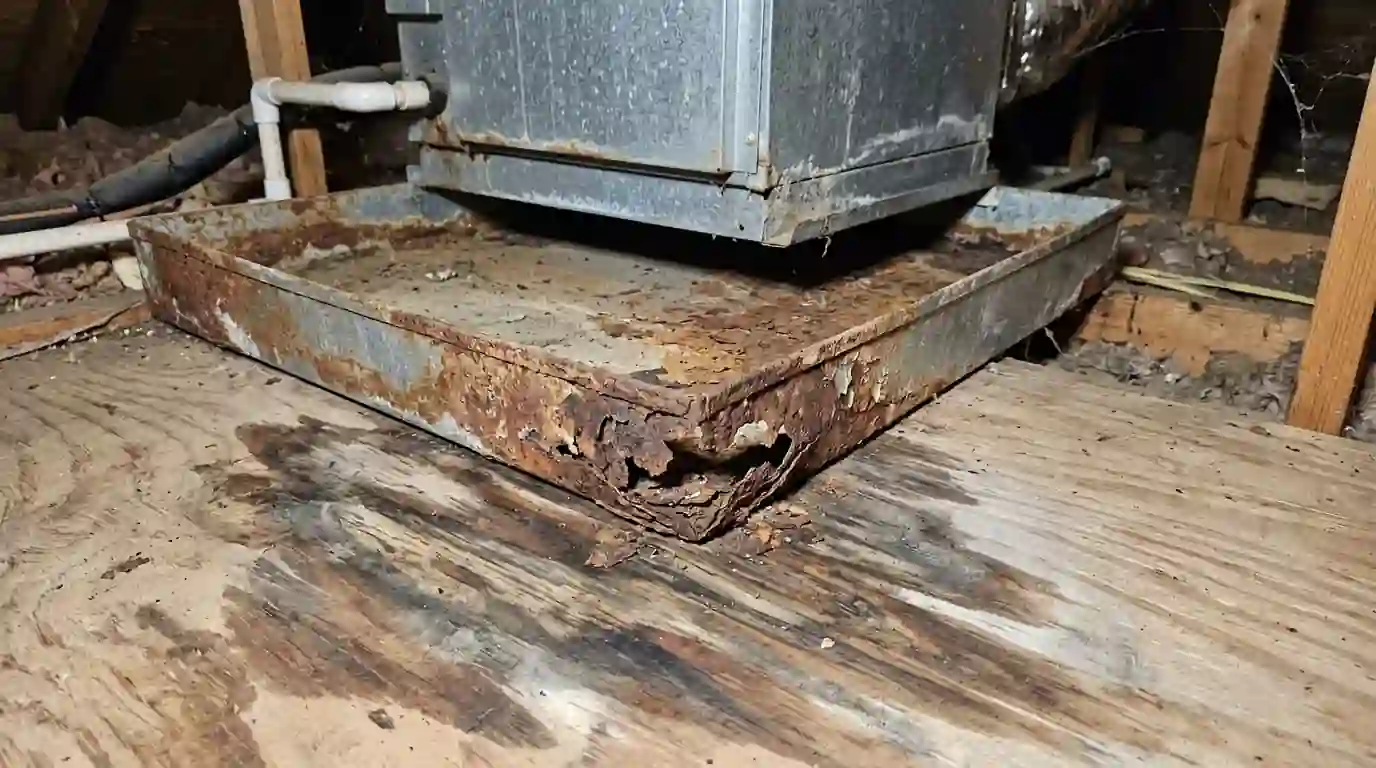
The metal secondary pan under an attic unit is the backup that catches overflow. Over the years it rusts through, often without anyone looking at it, and the next overflow goes straight into the insulation.
We remove the wet insulation, dry the attic framing and replace the damaged ceiling below. The pan should be replaced, ideally with its own float switch, before the next summer; it is an inexpensive part compared with a ceiling. We photograph the old pan and the overflow path for your records.
Common case
Attic air handler overflow
An overflow from an attic unit spreads across the insulation before it finds a path down, so the ceiling stain can show up several feet from the unit. Wet blown insulation compacts and holds water against the drywall for days.
We vacuum out the wet insulation, dry the ceiling joists and read the drywall. Small stains on sound drywall can be sealed and painted; sagging or soft drywall is replaced. New insulation goes back to the original depth once everything reads dry.
In Atlanta
Why Atlanta attics see this every summer
Atlanta sits in a mixed-humid climate, and an Atlanta building-science consultant has written about finding his own condo's condensate line clogged with gunk until it barely drained. Georgia HVAC contractors warn about the same problem: algae, dirt and insects plug these lines in the humid months. A condensate line flushed in spring and a float switch on the pan are the cheapest protection an attic unit can have.
Air handlers behind these leaks include units from Carrier, Trane and Lennox, as well as Rheem, Goodman and American Standard.
- Carrier
- Trane
- Lennox
- Rheem
- Goodman
- American Standard
- Daikin
- Ruud
- York
- Bryant
Cost
What moves the cost of AC leak cleanup
How long it overflowed and how much ceiling it reached drive the price.
Overflow duration
A pan that overflowed for days soaks far more insulation.
Insulation
Wet blown insulation is removed and replaced.
Ceiling area
A small stain can be sealed; a sagging section is replaced.
Attic access
Tight attics slow removal and drying.
Repeat events
A second overflow on the same ceiling usually means replacement.
HomeAdvisor puts most water damage jobs between $1,364 and $6,301 in 2025. We price yours after we see the attic and the ceiling below it.
FAQ
Questions people ask about ac condensate leak water damage
Yes, until the drain is cleared. That stops it from producing water.
Many homeowners can flush the line at the cleanout. If the pan is rusted or the line keeps clogging, call an HVAC technician.
Only if it sagged or softened. Small stains on sound drywall can be sealed and painted.
Sudden overflow damage is often covered; the AC repair itself and long-term leaks usually are not.
Flush the drain line each spring, check the secondary pan and add a float switch.
Talk to a person now
AC dripping through the ceiling?
Turn the system off and call. We'll dry the attic and ceiling while your HVAC tech clears the drain.
Answered 24/7, holidays included.