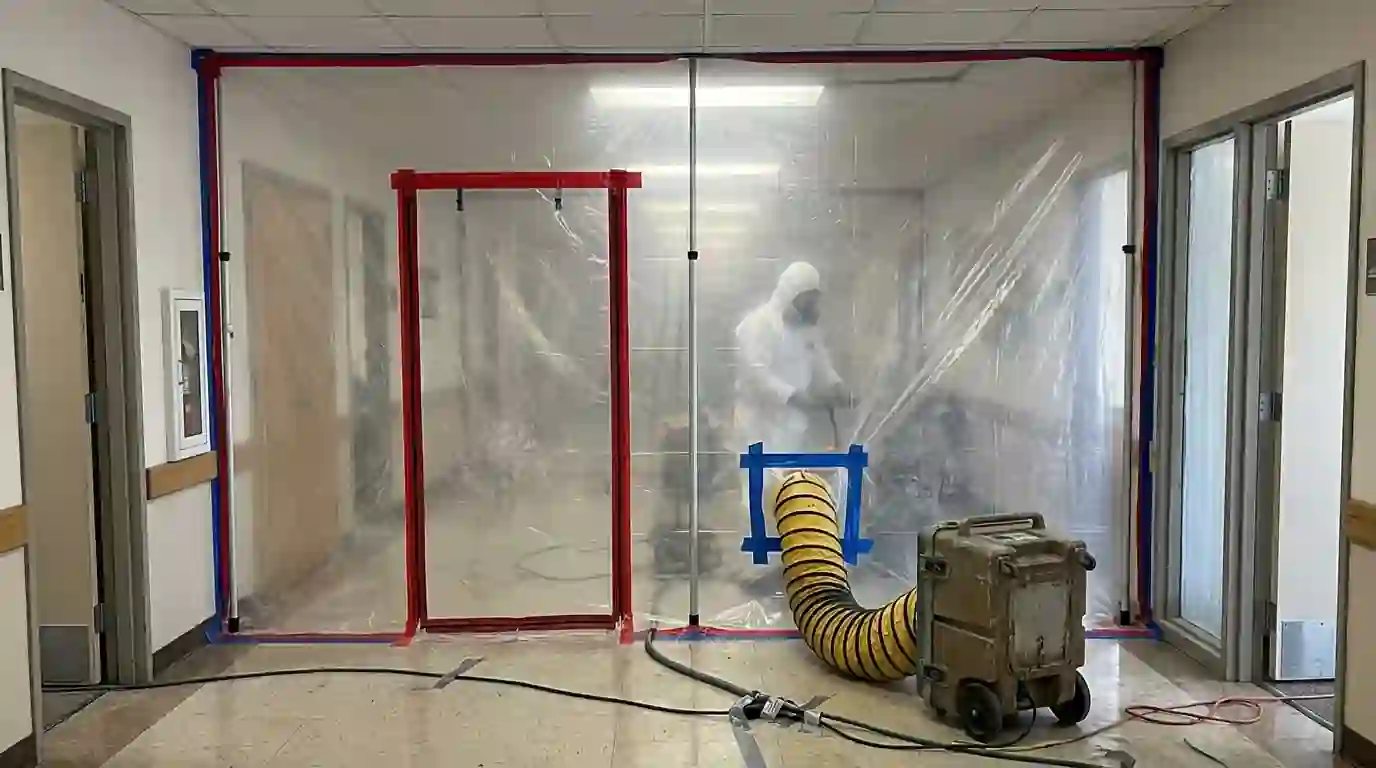
Soot, floodwater and air handler cleaning
Duct cleaning after fire or flood in Atlanta
After a fire or flood, the HVAC can undo the cleanup by blowing residue back into every room. We clean or replace contaminated ductwork, clean the air handler and registers and get the system ready to run again.
Updated September 2026
- Phones
- Answered 24/7
- Job type
- Mold, air and contents
- Service office
- Biscayne Dr NW, Atlanta
Short answer
Duct cleaning after a fire or flood in Atlanta should happen before the HVAC runs for long, because soot, extinguisher powder or floodwater residue in the ducts spreads to every room each time the system cycles. We inspect the ducts, clean or replace contaminated runs, clean the air handler, change filters and clean the registers.
The job
Why ducts need attention after a fire or flood
Smoke is pulled into return vents while a fire burns, and soot settles inside the ducts. Floodwater can fill floor ducts and crawl space runs. Either way, once the system restarts, it carries the residue or the smell straight back into cleaned rooms.
Rigid metal ducts can usually be cleaned. Flexible ducts and duct board that absorbed smoke or floodwater are usually replaced, because their inside surfaces cannot be cleaned well. The air handler, coil and blower get cleaned too, and filters are changed more than once during the cleanup.
Cost
What moves the cost of duct cleaning after a loss
Duct type and contamination drive the price.
Duct material
Metal ducts are cleaned; flex and duct board are usually replaced.
Contamination
Heavy soot or sewage takes more work than light smoke.
System size
More runs and returns mean more time.
Access
Attic and crawl space ducts are slower to reach.
Equipment cleaning
Air handler and coil cleaning adds to the duct work.
HomeAdvisor's 2025 fire data lists duct cleaning at about $250 to $500 as part of a fire cleanup; heavy contamination or duct replacement costs more. We price yours after an inspection.
Common case
Soot in ductwork
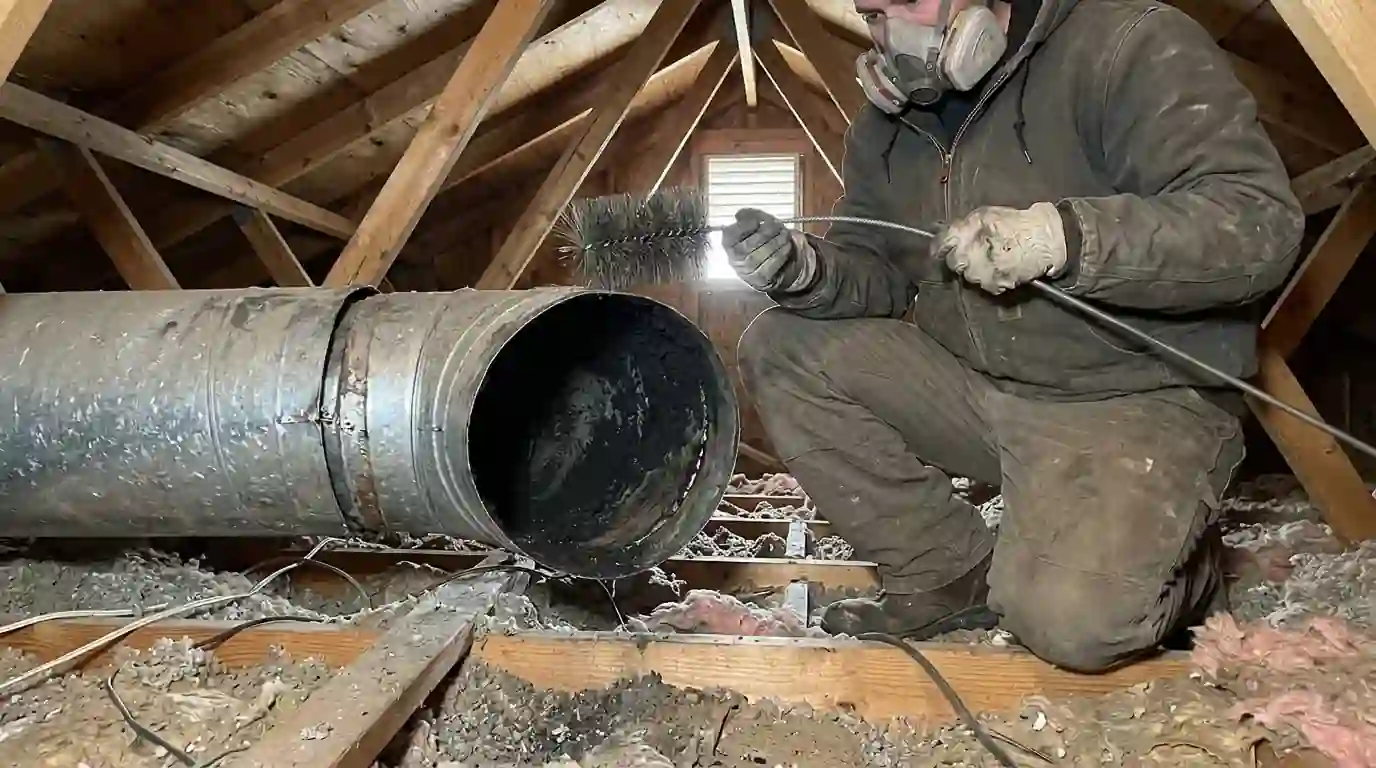
Soot is fine and oily, and it clings to duct walls. Rotary brushes and negative-air vacuums pull it out of metal runs, and the registers and grilles are cleaned separately.
We seal off the registers while cleaning so soot is not blown back into the house, and we check any duct liner. Flex duct that still smells of smoke after cleaning is replaced rather than cleaned again, because the smell lives in the inner plastic and the insulation around it. The system then runs on a fresh filter while we check the registers for returning soot.
Common case
Flooded floor ducts
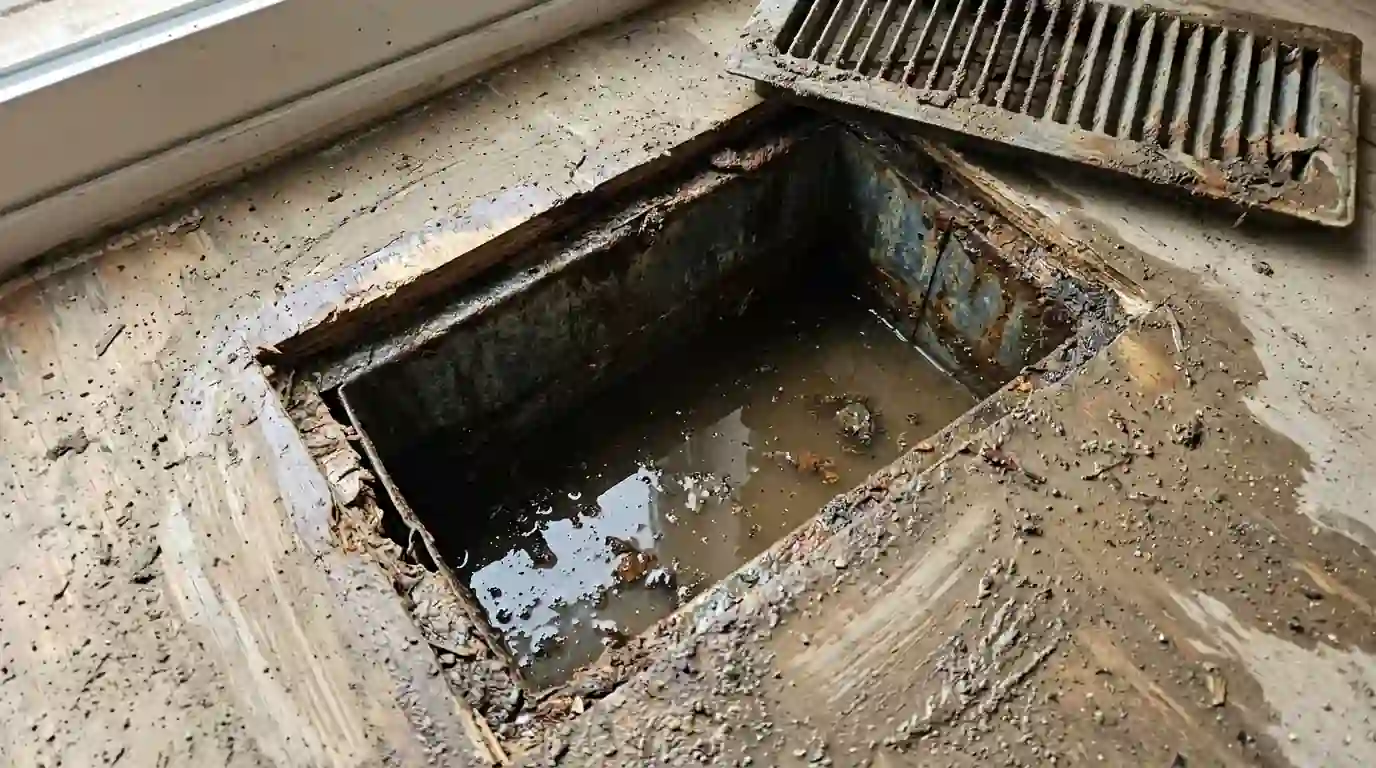
Houses with slab or crawl space ducts can take on floodwater or sewage in the ductwork. Those ducts hold water and contamination where nobody can see it.
Metal floor ducts are pumped out, cleaned and disinfected if the water was clean or gray. Ducts that carried floodwater or sewage, and any flex or duct board runs, are usually replaced. The system stays off until the ducts are cleaned or replaced and dry, because running it sooner blows damp, contaminated air through the house and spreads the odor.
Common case
Air handler cleaning
The air handler holds the blower, the coil and the drain pan, and it pulls air from every return. After a fire or flood it collects the heaviest residue in the system.
An HVAC technician checks the equipment, and the blower, coil and cabinet are cleaned so the system does not reload the ducts after they are done. Filters are replaced at the start, during and at the end of the cleanup. If the unit sat in floodwater, the HVAC contractor decides whether it can be repaired.
What is included
What duct cleaning after a loss includes
- An inspection of supply and return ducts
- Sealing registers to protect cleaned rooms
- Negative-air cleaning of metal duct runs
- Replacement of contaminated flex duct or duct board
- Cleaning of registers, grilles and boots
- Blower, coil and cabinet cleaning with the HVAC contractor
- Filter changes throughout the cleanup
- A final check for residue and odor at the registers
Before you start
What to do with the HVAC right now
Do this
- Leave the HVAC off after a fire or flood
- Change the filter before any test run
- Close off rooms that were not affected
- Tell us where the returns are
Avoid this
- Running the system to clear the smell
- Spraying deodorizer into the vents
- Reusing a soot-covered filter
- Starting equipment that sat in floodwater
After you call
How duct cleaning after a loss runs
- 01
Inspect
Ducts, returns and the air handler are checked.
- 02
Protect the house
Registers sealed, negative air set up.
- 03
Clean or replace
Metal runs cleaned; contaminated flex replaced.
- 04
Clean the equipment
Blower, coil and cabinet cleaned with the HVAC contractor.
- 05
Verify
Registers checked for residue and odor with a fresh filter.
In Atlanta
Crawl space ducts in Atlanta houses
Many Atlanta-area houses run their ductwork through the crawl space, and around Decatur that crawl space often sits on red clay that holds water after heavy rain. Ducts down there sweat, collect moisture and can take on water when the crawl space floods. After any flood under the house, we check the duct runs and the insulation around them before the system runs again.
FAQ
Questions people ask about duct cleaning after fire or flood
Not until the ducts and air handler are checked and cleaned. Running it spreads soot and smell.
Usually not well enough after smoke or floodwater. It is normally replaced.
An HVAC technician handles the equipment; we clean the ducts, registers and cabinet alongside them.
After a covered fire or flood, duct cleaning is commonly part of the claim.
Most homes take a day or two, longer if runs need replacing.
Talk to a person now
Smoke smell coming from the vents?
Leave the system off and call. We'll check the ducts and tell you what needs cleaning or replacing.
Answered 24/7, holidays included.