Board-up, water, soot and smoke
Fire damage restoration and cleanup in Atlanta
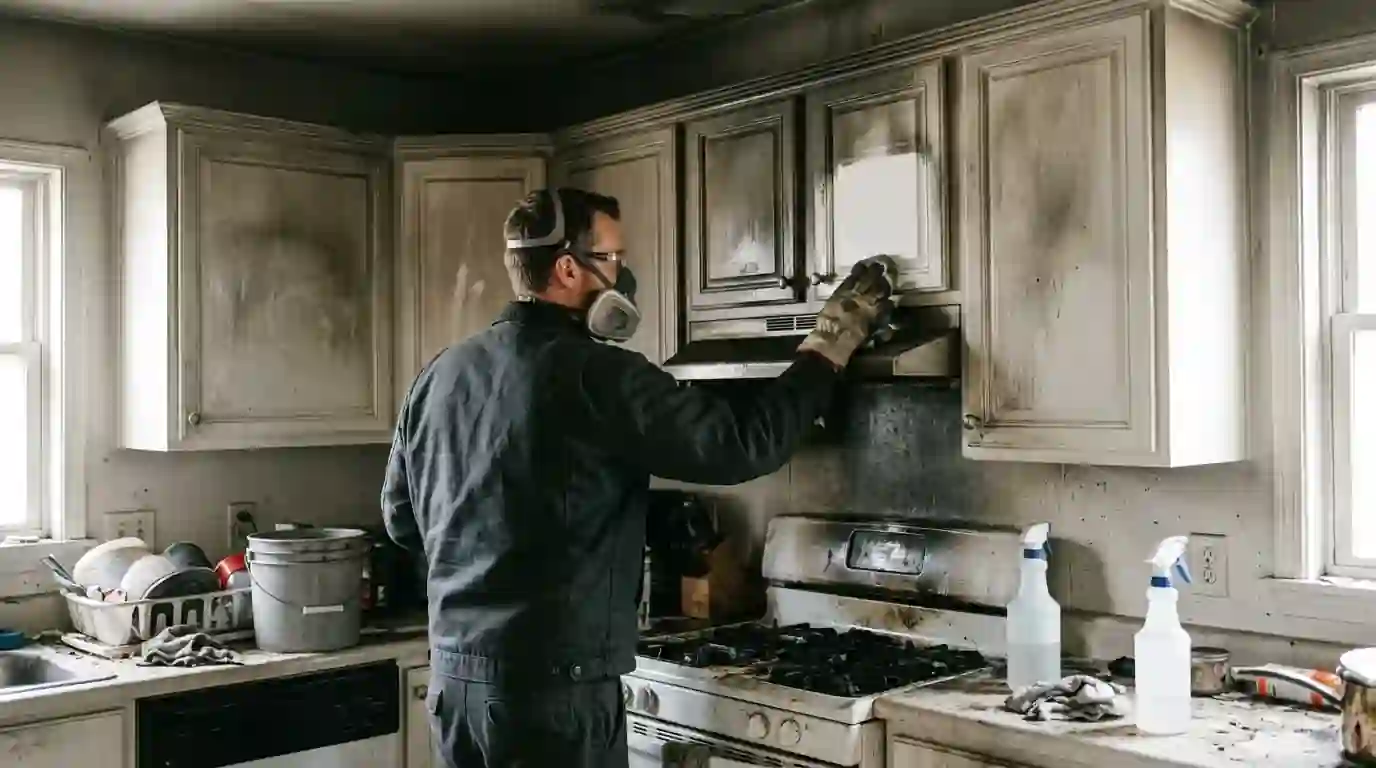
After the fire department leaves, the house is open, wet and full of smoke residue. We secure it, get the water out, clean what can be saved and plan the rebuild, room by room.
Updated September 2026
- Phones
- Answered 24/7
- Job type
- Fire and smoke
- Service office
- Biscayne Dr NW, Atlanta
Short answer
Fire damage restoration in Atlanta starts with securing the house and removing firefighting water within the first day or two, before soot sets and wet framing starts to fail. We board up openings, extract water, clean soot and smoke from what can be saved, remove what cannot and plan the rebuild.
The job
What a house fire actually leaves behind
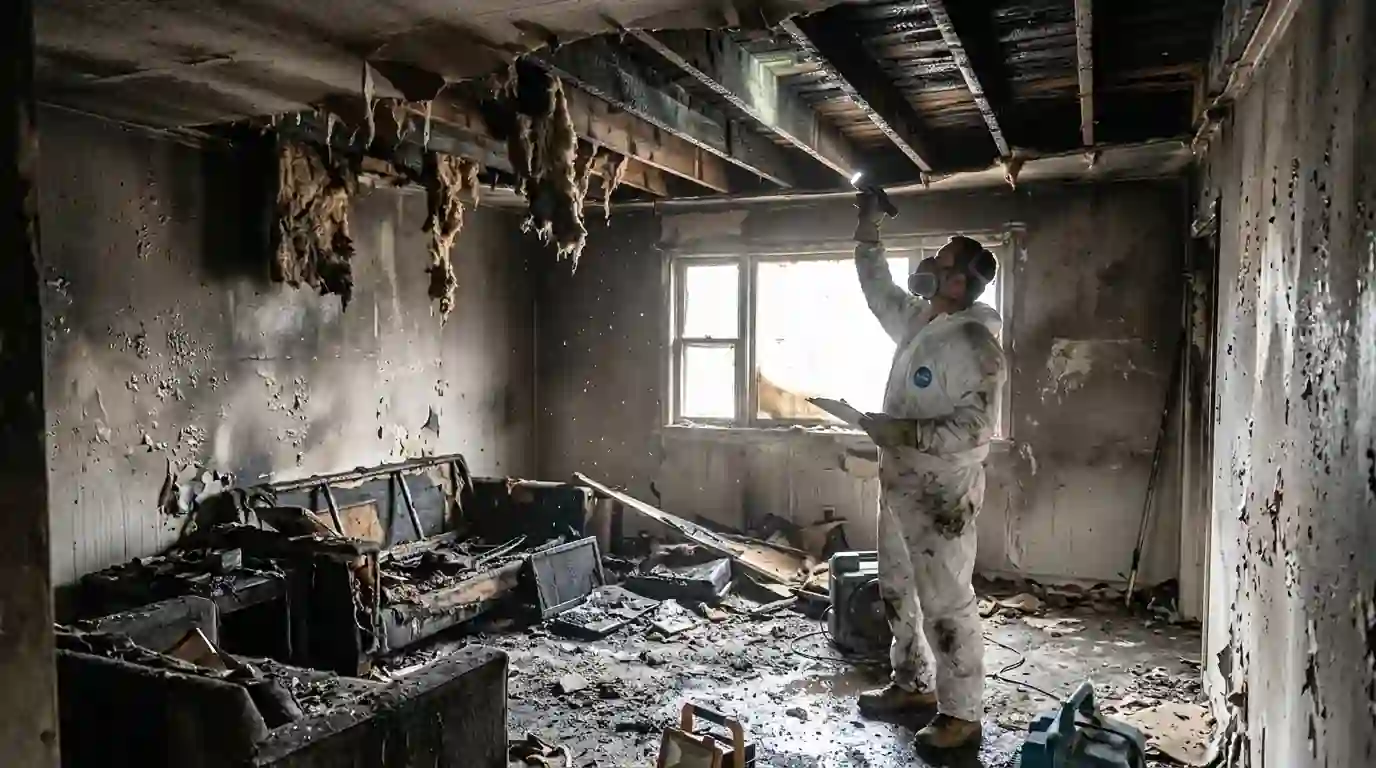
Three kinds of damage stack up. There is the burn itself, often confined to one room. There is the water used to put it out, which can soak several rooms and the floor below. And there is smoke, which travels through the whole house and into the HVAC system.
Order matters. Water comes out first, because wet framing and drywall start to fail within days. Soot is cleaned before it bonds to surfaces. Charred material is removed so the smell stops. Then the rebuild starts on a structure that is clean and dry.
After you call
What happens after a house fire
- 01
Secure the house
Openings are boarded and the roof tarped.
- 02
Water out
Firefighting water is extracted and drying starts.
- 03
Clean soot and smoke
Salvageable surfaces and contents are cleaned.
- 04
Remove what burned
Charred materials come out so the odor stops.
- 05
Rebuild
Repairs start on a clean, dry structure.
Common case
Room and contents fires
Most house fires stay in one room: a kitchen, a bedroom, a living room. The burned room needs demolition and rebuilding, while the rest of the house usually needs smoke cleaning and odor treatment.
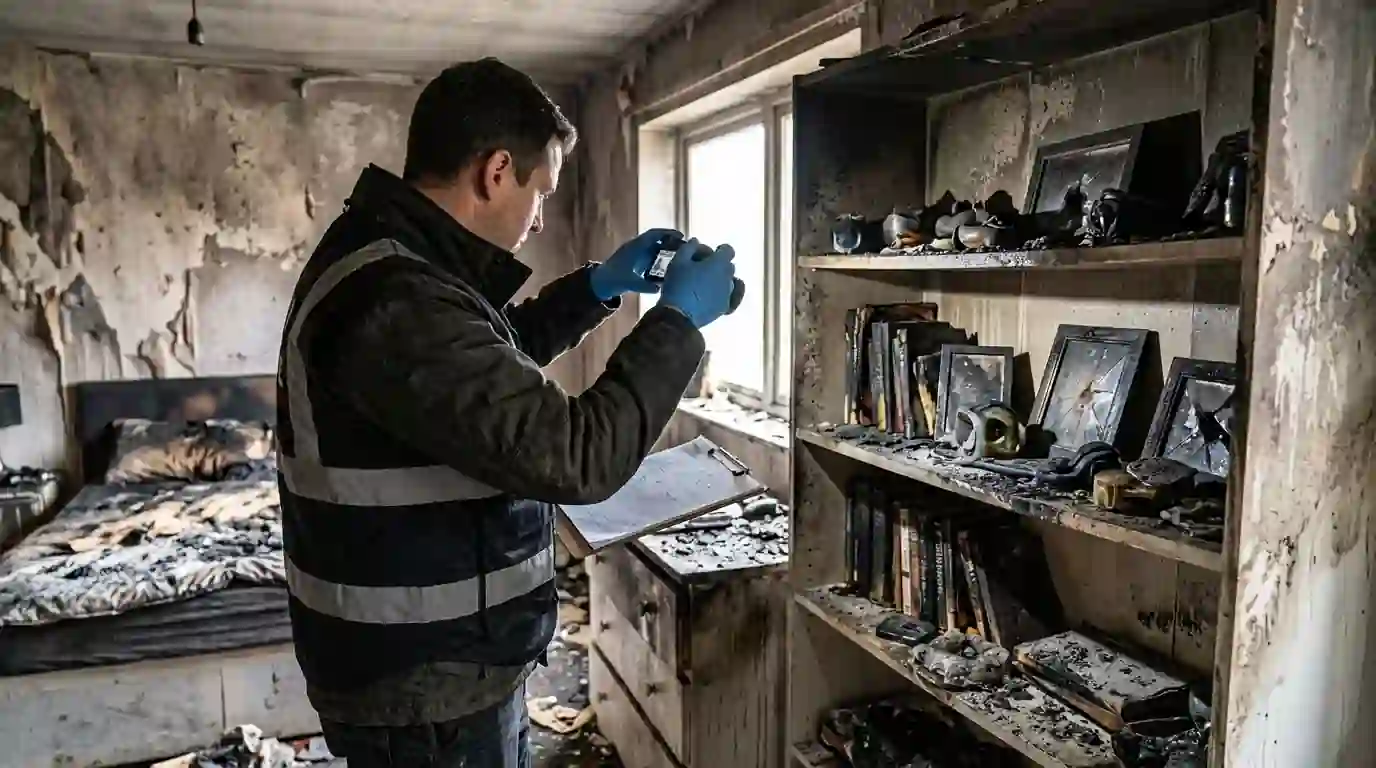
We separate what burned from what is only smoke-damaged, inventory the contents room by room and pack out items that can be cleaned. Anything that cannot be saved is listed and photographed for your claim. The inventory is often the slowest part of a fire claim, so we start it on day one.
Common case
Firefighting water cleanup
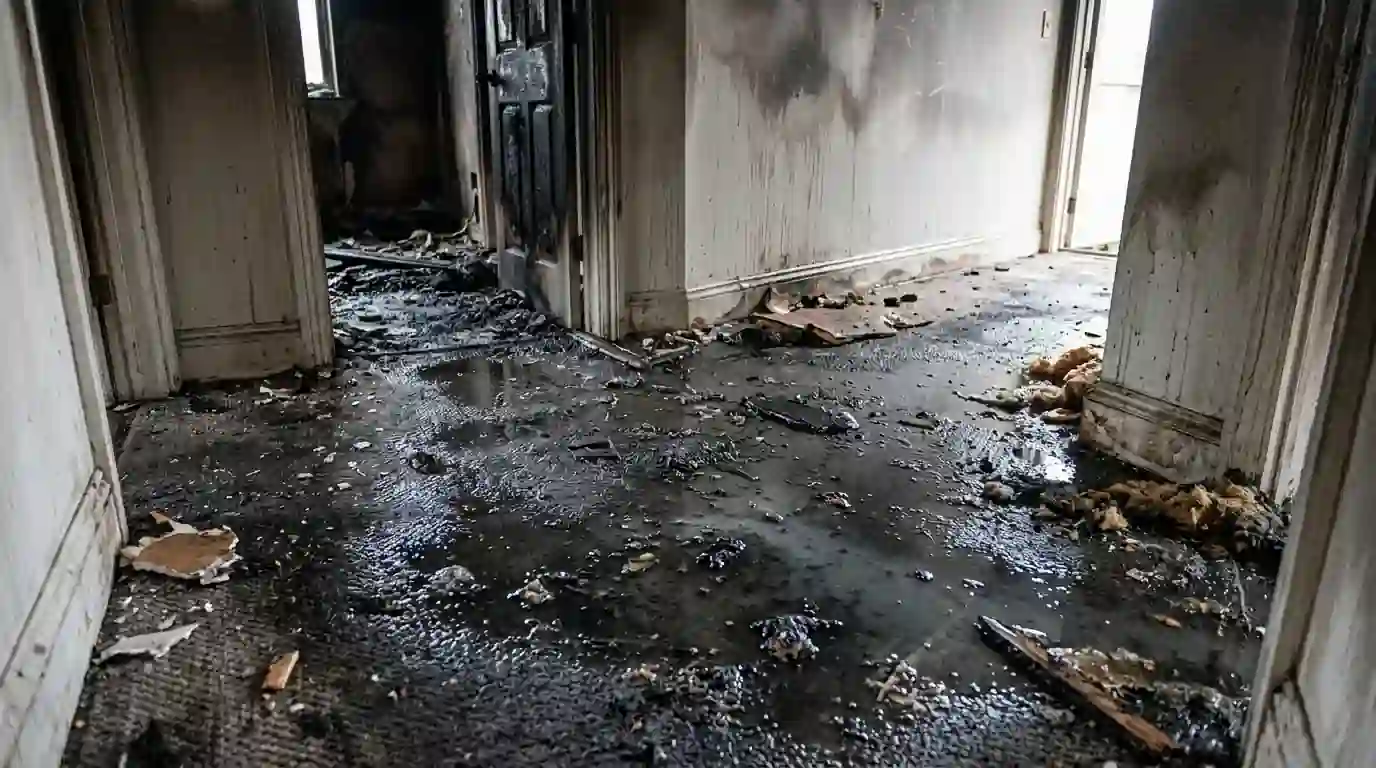
Fire hoses put a lot of water into a house in a short time. It soaks carpet, drywall, insulation and the floor below, and in the rooms next to the fire it often does more damage than the flames.
We extract it and dry the structure much as we would after a burst pipe, but with soot mixed in, so cleaning comes before drying on many surfaces. Wet insulation in the ceilings usually comes out, and hardwood floors get watched closely for cupping.
Common case
Garage and attic fires
Garage fires often involve fuel, chemicals and the electrical panel, and the smoke is heavy and oily. Attic fires can burn rafters and roof sheathing while leaving the rooms below mostly smoke-damaged and wet.
We secure the roof or garage opening, clean the living spaces and plan the structural repairs. Framing and electrical repairs go through permits and inspections before the rebuild is closed up. Cars, tools and stored items in a burned garage get sorted and listed like any other contents.
In Atlanta
Fires in older Atlanta houses
State housing data counted about 61 percent of DeKalb County homes as built before 1980, and most of Virginia-Highland went up between 1909 and 1926. Older houses often have open framing cavities and plaster walls that let smoke travel farther and sink deeper than in newer construction. After a fire in one of them, we check rooms well beyond the burned one for residue and odor before anything is repainted.
Once the fire department releases the house, call. We'll start by securing it and getting the water out.
Call (943) 315-6150What is included
What fire damage restoration includes
A fire job has more moving parts than any other we take on, so here is the full scope.
- Board-up and roof tarping to secure the house
- Water extraction and structural drying
- Soot cleaning of walls, ceilings and surfaces that can be saved
- Removal of charred and unsalvageable materials
- Odor treatment for the structure
- Contents inventory, pack-out and cleaning
- Duct cleaning where smoke reached the HVAC system
- A rebuild plan once the house is clean and dry
Cost
What moves the cost of fire damage restoration
Fire jobs vary more than any other restoration work.
Burned area
A one-room fire costs far less to rebuild than one that reached the attic.
Water from firefighting
Soaked rooms add extraction, drying and drywall.
Smoke spread
Smoke in every room means cleaning the whole house.
Contents
Pack-out, cleaning and inventory add labor.
Structural repairs
Framing, roof and electrical work need permits and inspections.
HomeAdvisor's 2025 data shows most fire and smoke jobs between $3,107 and $51,243, with structural repairs running $15,000 to $25,000 per room. We scope yours on site.
FAQ
Questions people ask about fire damage restoration
Only after the fire department releases the house and it is safe to enter. We check floors, ceilings and electrical before anyone walks through.
Many hard items clean well. Porous items that absorbed heavy smoke, like mattresses and upholstery, often do not. We sort it room by room.
Fire is commonly covered under homeowners policies. We document everything for your adjuster.
Yes. Once the structure is clean and dry, we plan and carry out the repairs.
Cleanup and drying take days to weeks; rebuilding depends on the size of the fire and the permits.
Talk to a person now
Had a fire and not sure where to start?
Call and we'll walk you through the first steps, from securing the house to what to keep.
Answered 24/7, holidays included.