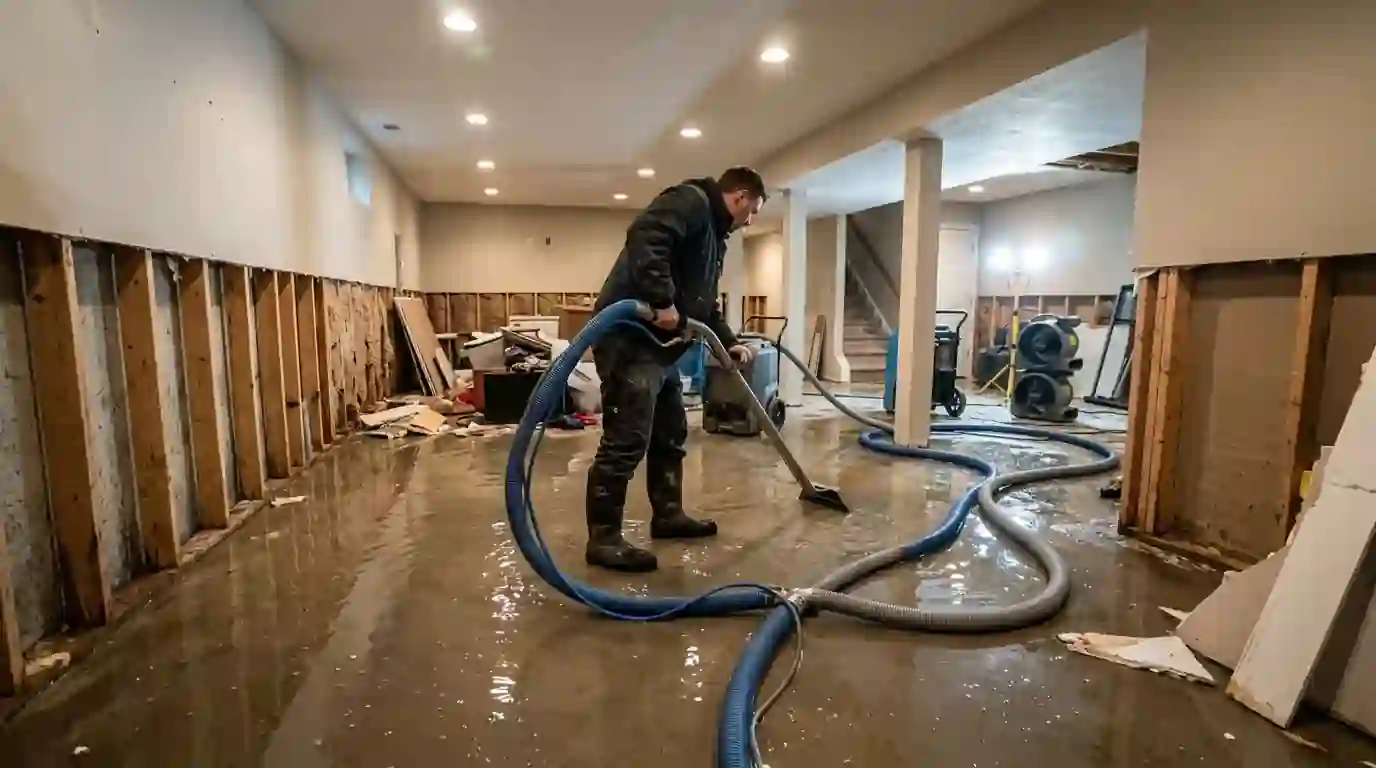
Wind, rain, hail and fallen limbs
Storm damage restoration in Atlanta
After a storm, the hole in the roof is only half of it. Rain that got in soaks insulation, ceilings and floors below. We cover the opening, get the water out and dry the house while your roofer or tree crew handles the outside.
Updated September 2026
- Phones
- Answered 24/7
- Job type
- Water emergencies
- Service office
- Biscayne Dr NW, Atlanta
Short answer
Storm damage in Atlanta should be covered and drying within the first day or two, before rain-soaked ceilings, insulation and floors start growing mold. We tarp or board the opening, extract standing water, remove soaked insulation and drywall and dry the rooms with daily readings while the roof or tree work is arranged.
The job
What a storm leaves inside the house
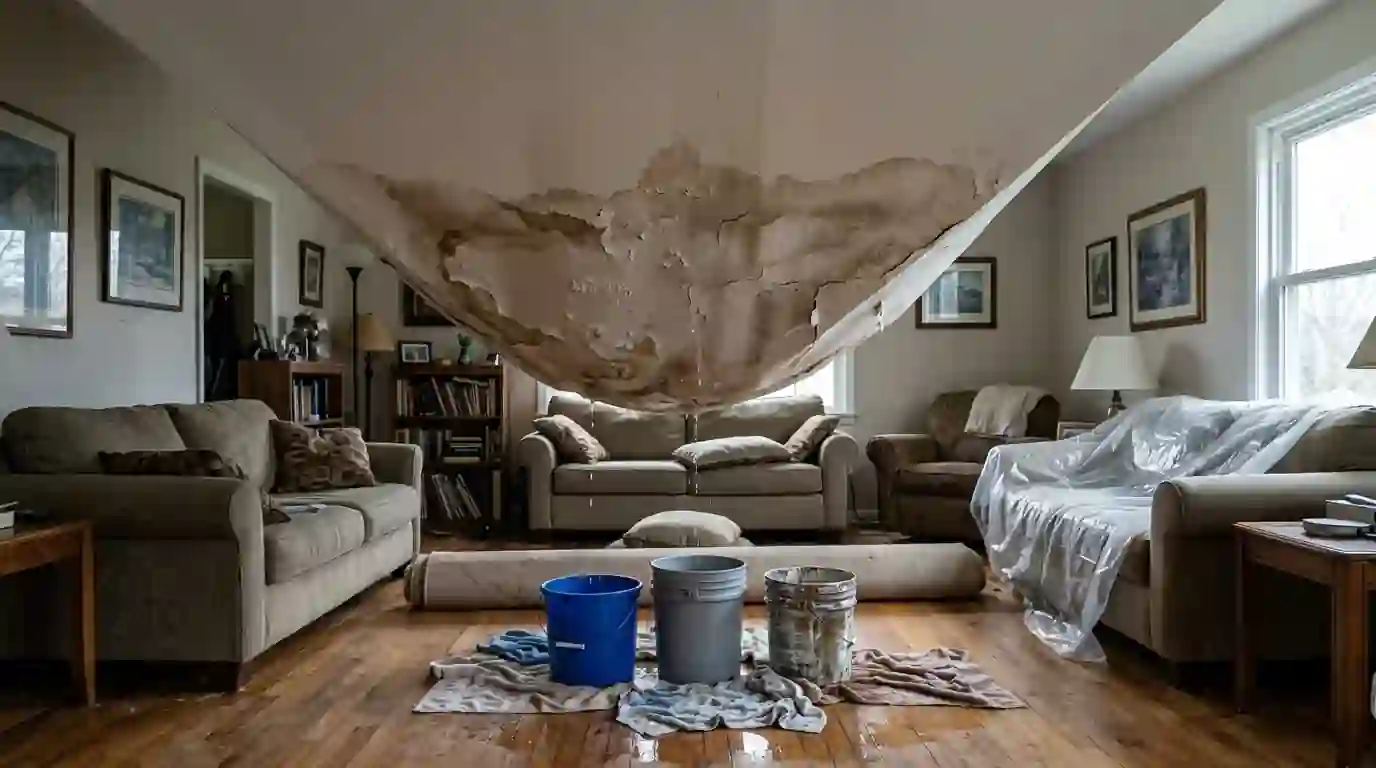
Wind lifts shingles and flashing, limbs punch through roofs and gutters overflow into walls. Rain follows the framing down, so the stain in the living room ceiling may start at a chimney or a valley several feet away.
We handle the inside of the house: temporary cover, water removal, drying and the interior repairs. A roofer fixes the roof and a tree service removes large limbs. We work alongside both and document the interior for your claim.
Signs to look for
Signs a storm let water in
Stains after heavy rain
New ceiling or wall spots after a storm point to a roof or flashing leak.
Wet attic insulation
Compressed or dark insulation near valleys and chimneys is holding water.
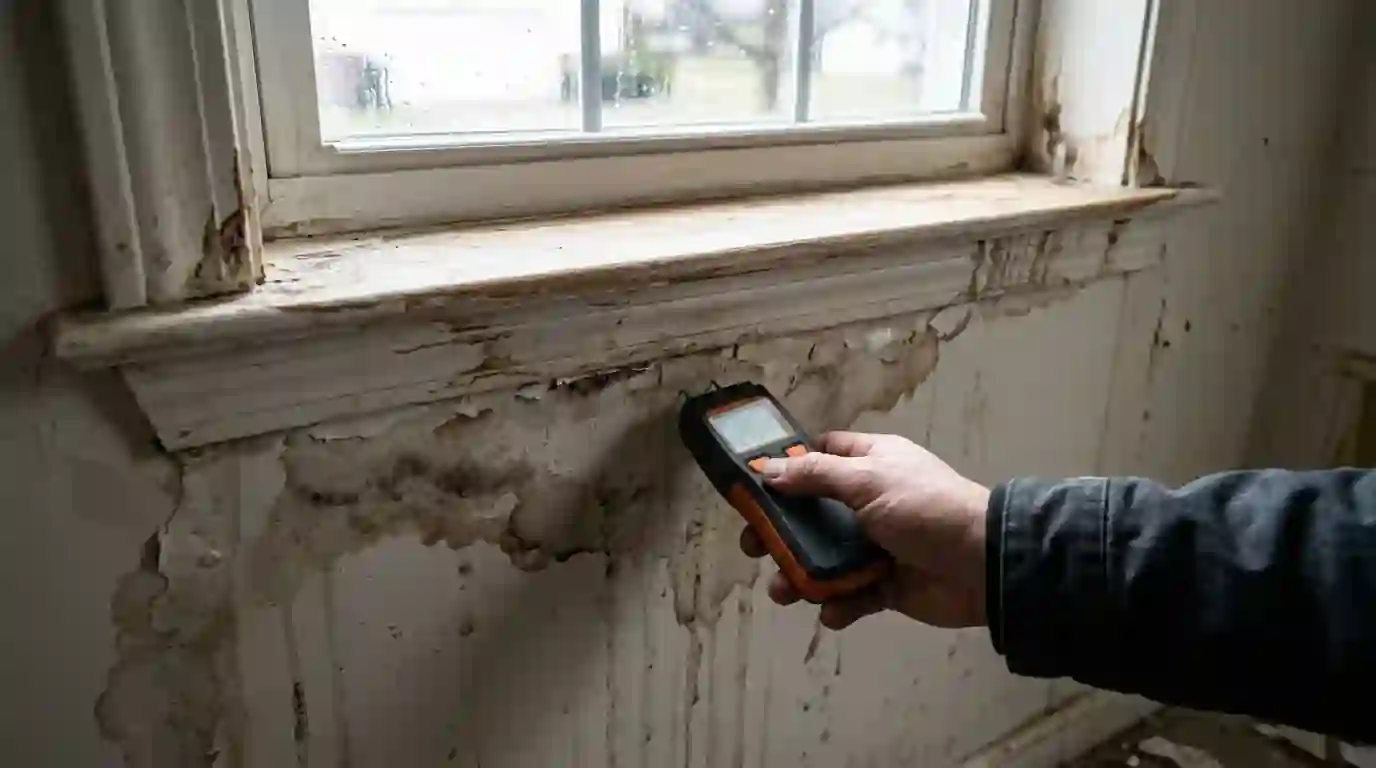
Water at window heads
Streaks or bubbling paint above a window mean wind-driven rain got in.
Shingle debris in the yard
Pieces of shingle or flashing on the ground often mean an opening above.
Sagging ceiling drywall
A bulge in a ceiling is holding water. Stay out from under it.
After you call
What we do after storm damage
- 01
Make safe
We check for sagging ceilings and wet electrical, then cover the opening.
- 02
Extract
Standing water comes out of floors and carpet.
- 03
Remove wet materials
Soaked insulation and drywall that cannot dry come out.
- 04
Dry with readings
Equipment runs until readings reach dry standard.
- 05
Repair inside
Once the roof is fixed, ceilings, walls and floors go back.
Common case
Wind-driven rain leaks
Wind pushes rain sideways under shingles, around windows and through vents that stay dry in ordinary storms. The leak often shows up at a window head or an exterior wall rather than a ceiling.
We read the wall cavity from inside, pull baseboards and insulation where they tested wet and dry the framing before the wall is closed. We also note the entry point for your roofer or window installer so the same spot gets sealed. Otherwise the next storm finds the same gap and the drying starts over.
Common case
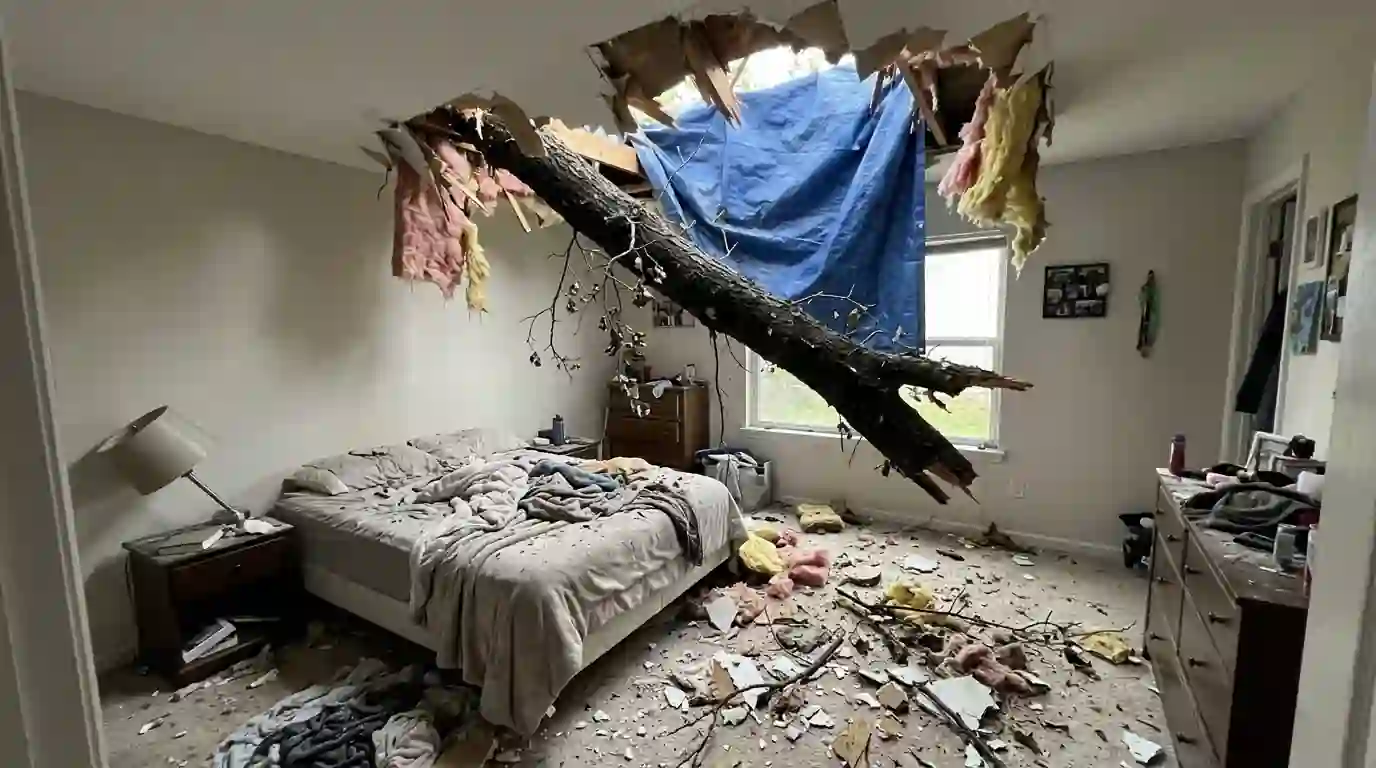
Fallen tree damage
When a limb comes through the roof, rain follows it in. The first job is making the house safe and covering the opening; a tree service removes the heavy wood, and we tarp or board what is left open.
Inside, we remove broken drywall and soaked insulation, extract water and dry the rooms below. Damage to rafters or ceiling joists goes into the repair plan once the roof is closed. Photos of the opening and the limb are taken before anything is moved, because adjusters ask for them.
Common case
Hail and roof leak interiors
Hail rarely leaves a hole on its own, but it cracks shingles and dents flashing so that later storms leak. Those interior stains show up slowly, often weeks after the hail.
We map the wet ceiling and attic, dry or replace what cannot be saved and give your adjuster the interior readings. Attic insulation that got wet stays wet a long time, so we check it even when the ceiling below looks fine. The roof itself stays with a roofer.
In Atlanta
What Helene showed about Atlanta storms
Helene dropped 11.12 inches on Atlanta in 48 hours in September 2024, the most on record for that span. Roads closed in Buckhead as creek water rose, and an oak came down on a Kirkwood home before dawn. In a city with this many large trees, a fallen limb is one of the first things to check after a big storm, along with the attic above any new ceiling stain.
Storm still passing and water coming in? Call now and we'll tell you what to move and when we can cover the opening.
Call (943) 315-6150Cost
What moves the cost of storm damage cleanup
The interior bill depends on how long the opening stayed open.
Size of the opening
A missing shingle leaks less than a limb through the roof.
Hours before cover
Every hour of rain adds water to insulation and ceilings.
Rooms affected
Water that reached two floors doubles the drying.
Insulation and drywall
Soaked attic insulation and ceilings usually come out.
Structural repairs
Broken rafters or joists add carpentry after the roof is fixed.
Fixr puts typical water damage restoration between $1,200 and $5,000 nationally. Storm jobs with structural damage run higher, and we price yours after we see it.
FAQ
Questions people ask about storm damage restoration
If water is coming in, call us to cover the opening and start drying. A roofer makes the permanent repair once the weather allows.
Large limbs and trees need a tree service. We tarp or board the opening once the weight is off and handle the water inside.
Wind and fallen-tree damage are commonly covered; outside floodwater usually needs flood insurance. We document the interior for your adjuster.
We tarp when it is safe to be on the roof. In lightning or high wind, we protect the inside first and cover the roof when conditions allow.
Within a day or two. Wet insulation and drywall start growing mold quickly in warm weather.
Talk to a person now
Storm let water into the house?
Call now. We'll help you protect the rooms below and get the opening covered.
Answered 24/7, holidays included.