Sump failures, seepage and finished basements
Flooded basement cleanup in Atlanta
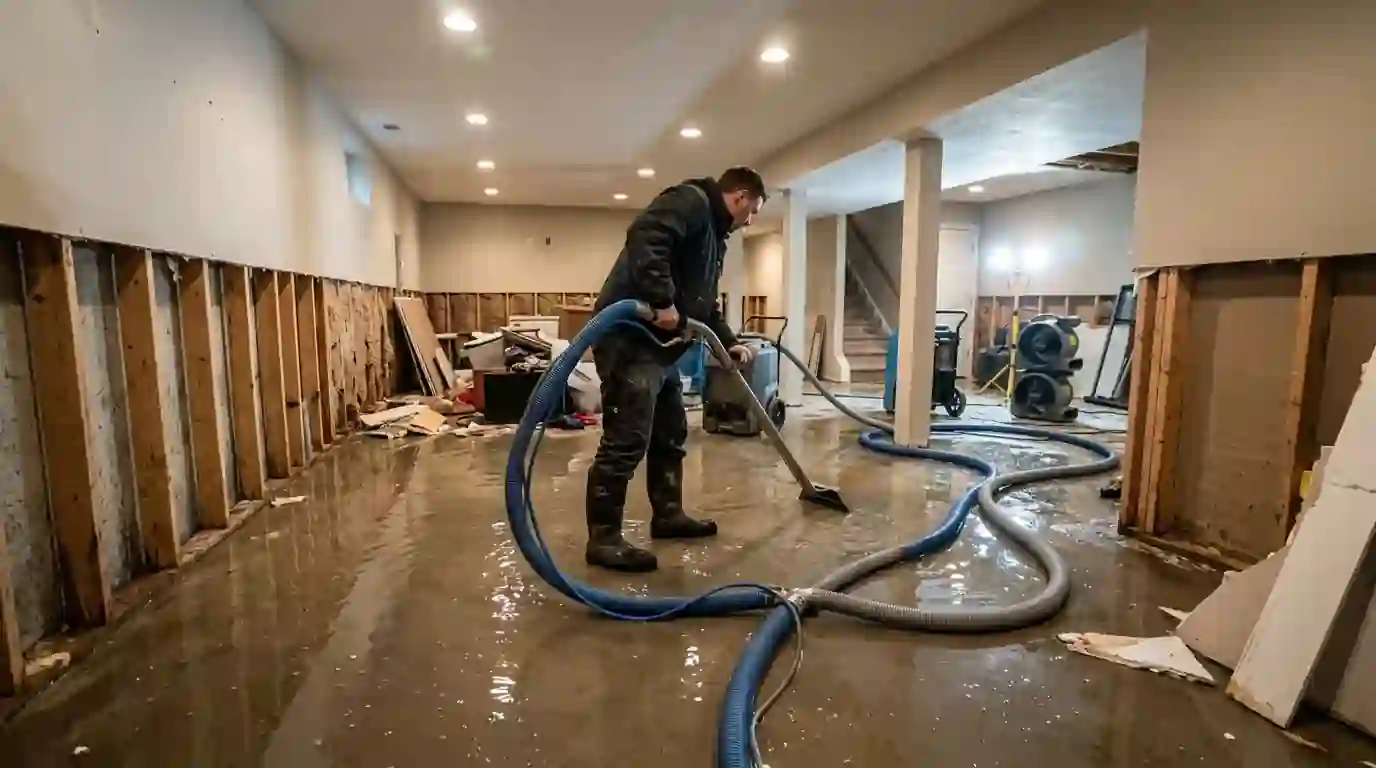
Basements collect water from above and below, and they are the slowest room in the house to dry. We pump out standing water, pull wet carpet and drywall, dry the slab and walls and find out why it came in.
Updated September 2026
- Phones
- Answered 24/7
- Job type
- Water emergencies
- Service office
- Biscayne Dr NW, Atlanta
Short answer
Flooded basement cleanup in Atlanta starts with finding the source, because rain seepage, a failed sump pump and a burst pipe are handled differently, then pumping out the water within a day or two. We remove soaked carpet, pad and lower drywall, dry the slab and walls with dehumidifiers and treat anything floodwater touched.
The job
Why basements flood, and why they dry slowly
A basement sits below grade, so groundwater, rain runoff and anything that leaks upstairs all end up there. Concrete slabs and block walls hold water and release it slowly, and basements have little natural airflow to help.
The source changes the job. Clean water from a burst pipe is dried. Groundwater and storm runoff are treated as contaminated, so porous materials come out. Sewage from a floor drain is black water. We sort that out first, then pump, remove, clean and dry.
Signs to look for
Signs your basement is taking on water
Damp smell below grade
A musty smell in the basement after rain often means seepage.
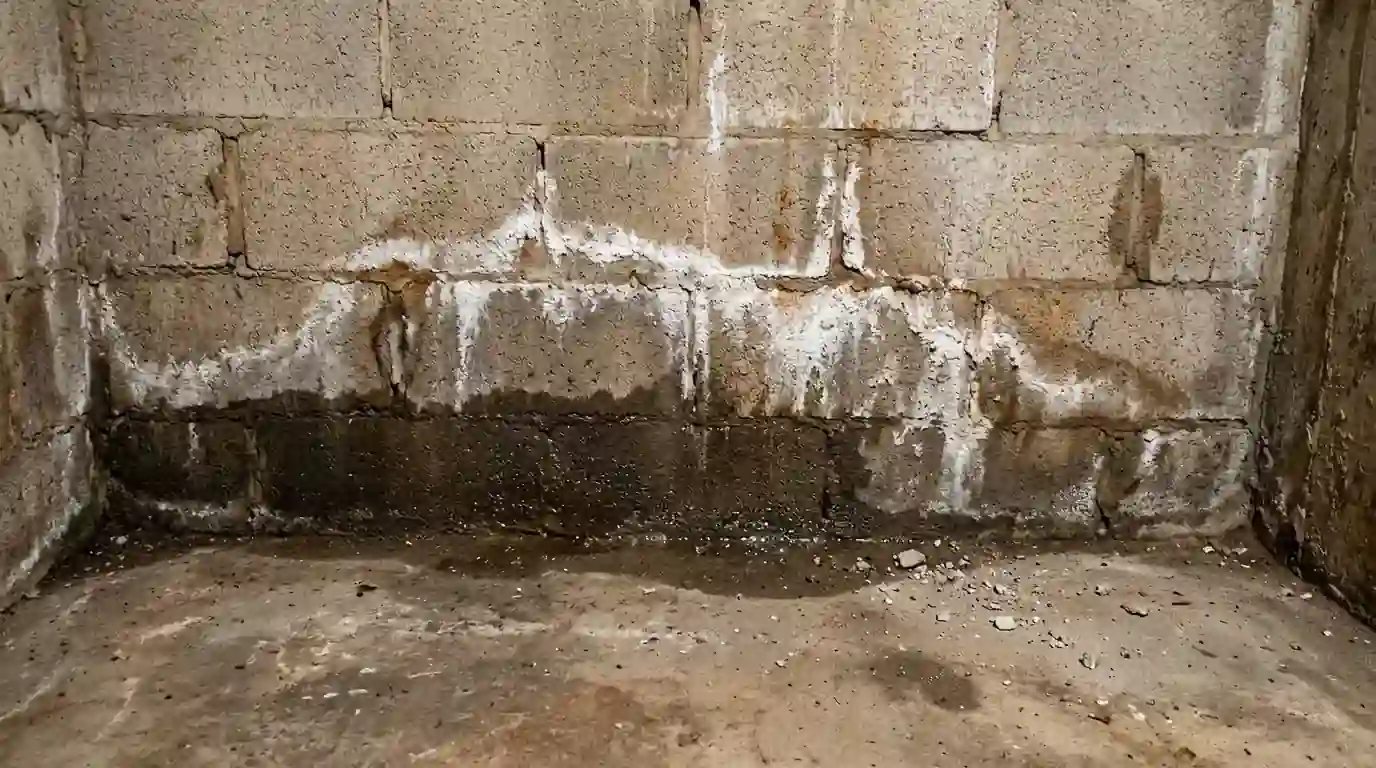
White streaks on block walls
Efflorescence shows water has been moving through the masonry.
A sump that never stops
A pump that runs constantly, or never runs, needs checking before the next storm.
Water at the wall joint
Damp lines where the wall meets the floor mean groundwater pressure.
Lifting or smelly flooring
Flooring that lifts or smells damp is sitting on a wet slab.
After you call
How we clean up a flooded basement
- 01
Make it safe
Power checked and the source identified.
- 02
Pump and extract
Standing water pumped and extracted.
- 03
Remove wet materials
Carpet, pad, drywall and insulation that cannot dry come out.
- 04
Clean and treat
Surfaces floodwater touched are cleaned and treated.
- 05
Dry the slab and walls
Dehumidifiers and readings until dry.
Common case
Sump pump failure
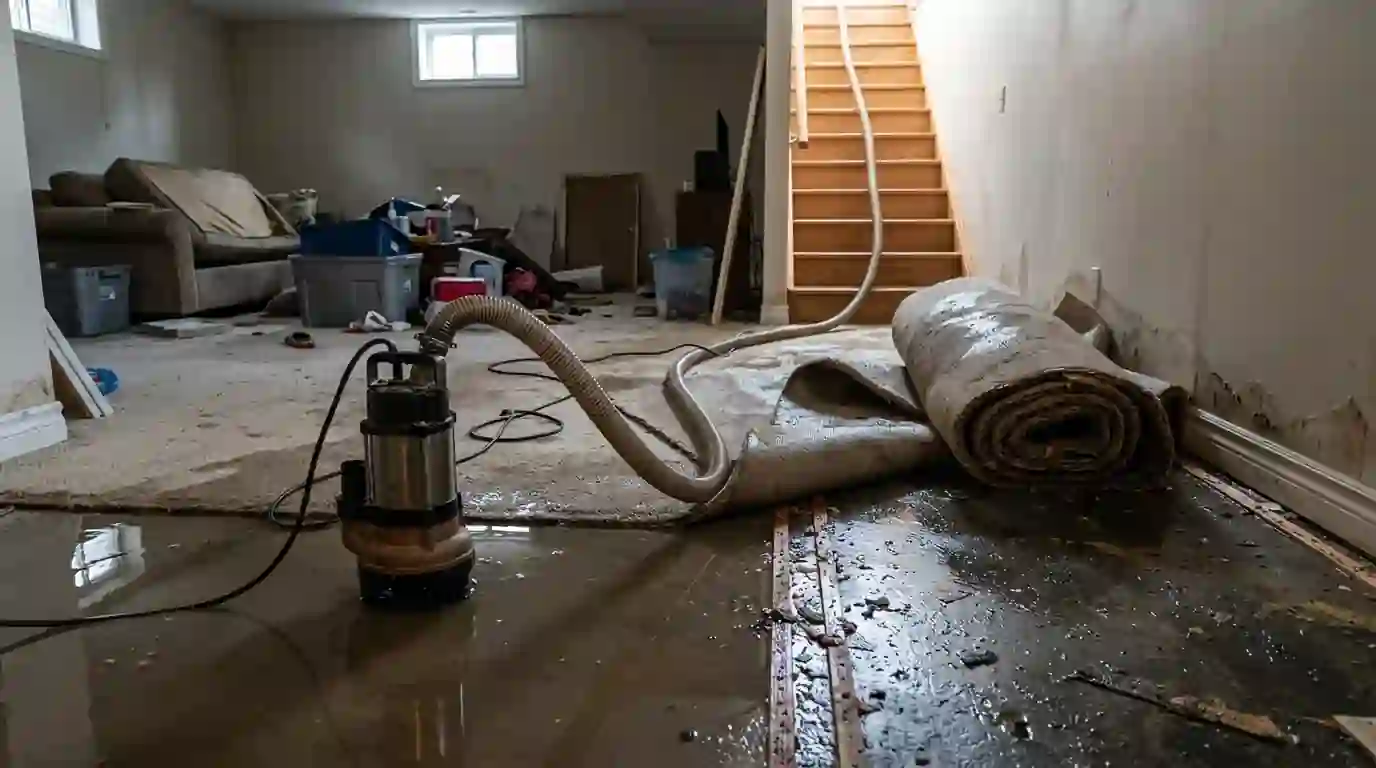
Sump pumps fail from power outages, stuck floats, worn motors or a pit that fills faster than the pump can empty it. The water rises quietly until it spreads across the floor, often during the same storm that caused the outage.
We pump out the water, remove wet carpet and pad and dry the slab and walls. The sump itself is a plumber's job, and a battery backup or a second pump is worth discussing with them. We photograph the pit and pump for your claim, since some policies need a sump endorsement to cover this.
Common case
Groundwater seepage after heavy rain
After days of heavy rain, water can push through block walls, the joint where the wall meets the slab and cracks in the floor. It usually comes in as a thin sheet that keeps returning until the ground dries out.
Seepage water carries soil and whatever runs off the yard, so we clean and treat the surfaces it touched. Gutters, downspouts and grading that send water toward the house are the usual culprits, and fixing them outside often matters more than anything done inside.
Common case
Finished basement drywall and carpet
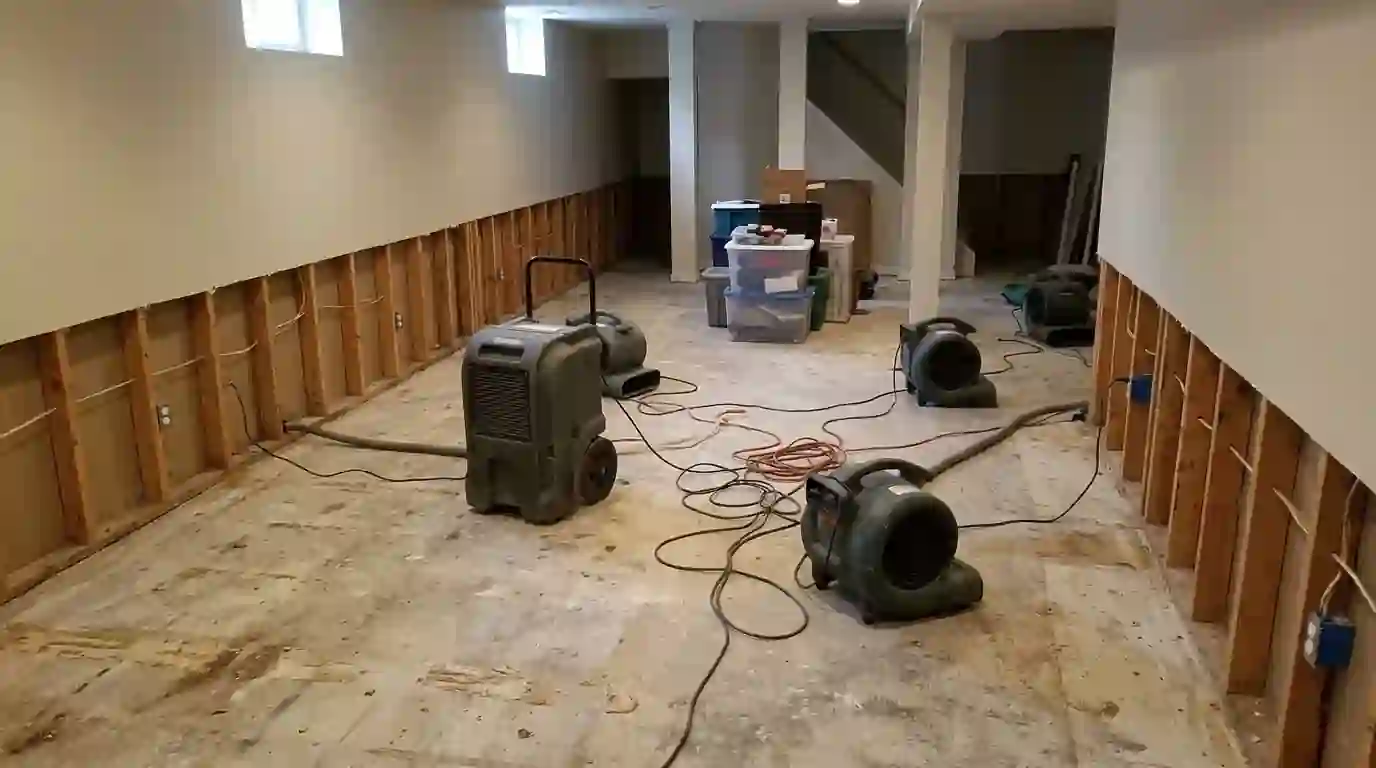
Finished basements lose the most in a flood: carpet and pad, the bottom of the drywall, the insulation behind it, baseboards and furniture. Carpet pad and wet insulation are almost always removed.
We cut the drywall above the water line, remove what cannot dry and dry the framing and slab before anything is rebuilt. If the basement floods regularly, it is worth rebuilding with materials that handle water better, like tile or vinyl flooring and moisture-resistant wall materials, with furniture kept up off the slab.
In Atlanta
Basements near Atlanta-area creeks
Homes near the metro's creeks see water come up fast. The National Weather Service lists backyards off Seale Drive and Gunter Court in Alpharetta under water when Big Creek reaches ten feet, and in East Cobb, forecasters tie Sope Creek's record stage to damage at homes along Indian Hills Court and Lindsey Road. Basements in neighborhoods like those can take on water from the yard even when the house sits above the creek.
Before you start
What you can do now, and what to leave
Safe to do
- Stay out if water is near outlets or the panel
- Turn off power to the basement if the panel is safe to reach
- Move valuables and papers upstairs
- Photograph the water level and the damage
Leave to us
- Wading into water near electrical
- Pumping out groundwater before the soil drains
- Pulling wet carpet over tack strip
- Handling sewage from a floor drain
Cost
What moves the cost of a flooded basement cleanup
Whether the basement is finished and what the water was set most of the cost.
Finished or unfinished
Drywall, carpet and furniture multiply the removal.
Water source
Seepage and floodwater need cleaning; sewage needs more.
Depth and area
More water over more floor means more equipment.
Contents
Stored items need sorting, cleaning or disposal.
Rebuild
Drywall, flooring and trim add to the cleanup cost.
HomeAdvisor puts most water damage jobs between $1,364 and $6,301 in 2025, and Fixr notes a basement sewer backup needing drywall and floor replacement can reach $50,000. We price yours after we see it.
FAQ
Questions people ask about flooded basement cleanup
It can be. Water near outlets or the electrical panel is a shock hazard, and groundwater or sewage carries contaminants.
Saturated soil pushes groundwater through joints and cracks. Gutters and grading often make it worse.
Burst pipes are commonly covered; groundwater and sump failures often need specific coverage.
Rarely after groundwater or floodwater. The pad almost always goes.
Fix gutters and grading, maintain the sump with a backup and consider water-tolerant finishes.
Talk to a person now
Water in the basement right now?
Stay clear of the electrical and call. We'll pump it out and start drying.
Answered 24/7, holidays included.