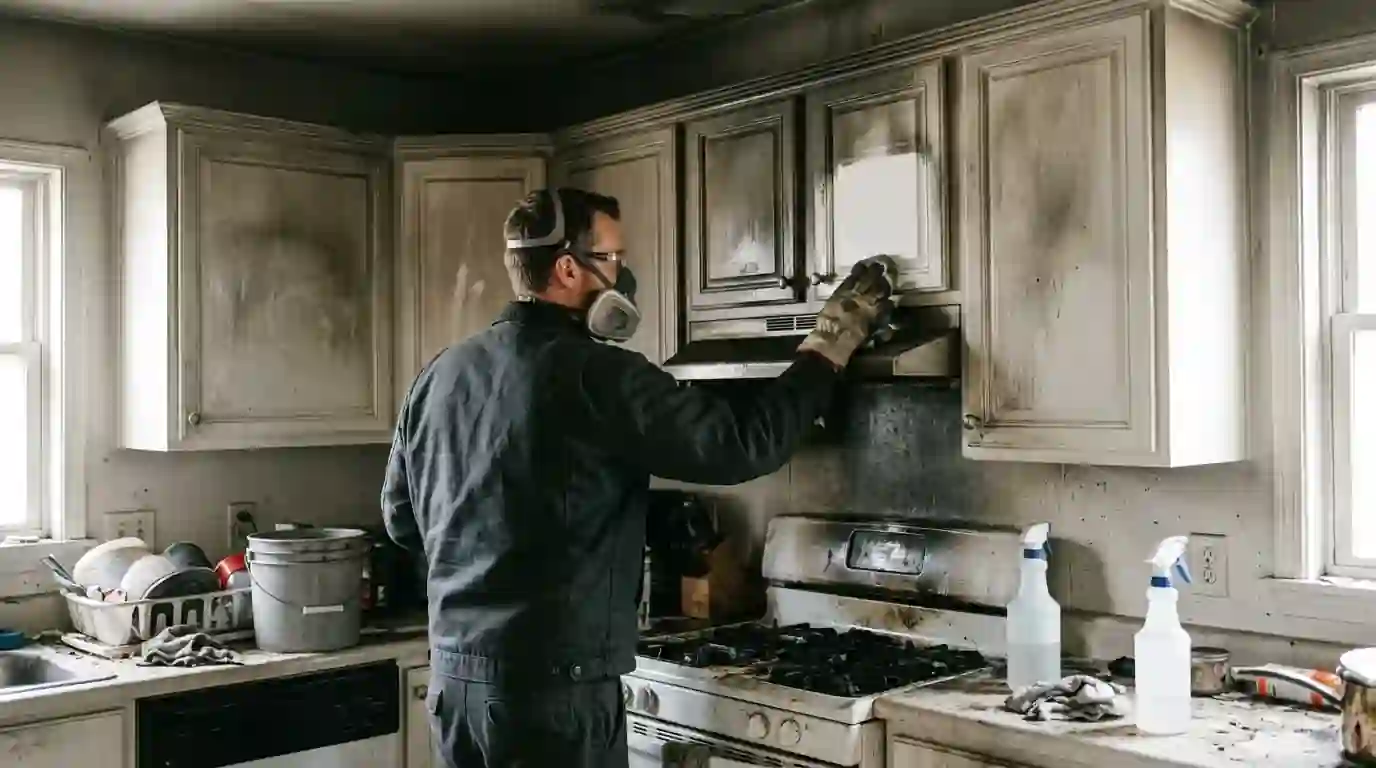
Stovetop, oven and grease fires
Kitchen fire and grease cleanup in Atlanta
A small kitchen fire leaves more behind than the scorch mark. Grease smoke coats every cabinet, and burned food leaves a film you can barely see and can smell for weeks. We clean it off, treat the odor and repair what burned.
Updated September 2026
- Phones
- Answered 24/7
- Job type
- Fire and smoke
- Service office
- Biscayne Dr NW, Atlanta
Short answer
Kitchen fire cleanup in Atlanta should start within a day or two, before grease and protein residue set into cabinet finishes and paint. We ventilate, test which cleaning method each surface needs, clean cabinets, walls and the range hood, and treat the odor burned food leaves behind. Anything charred is removed and rebuilt.
The job
What a kitchen fire leaves on every surface
Most kitchen fires in houses are small: a pan of oil, a forgotten burner, a toaster oven. The flames may be out in a minute, but the smoke is already in the room. Grease smoke leaves a sticky brown film. Burned food, which restorers call protein residue, leaves a nearly invisible yellow film and the smell everyone recognizes.
Each needs a different cleaner. Wiping greasy soot with a wet rag smears it into the paint, and protein residue can yellow cabinets if it sits for days. We test a small area first, clean from the top of the room down and then work out to the rooms the smoke reached.
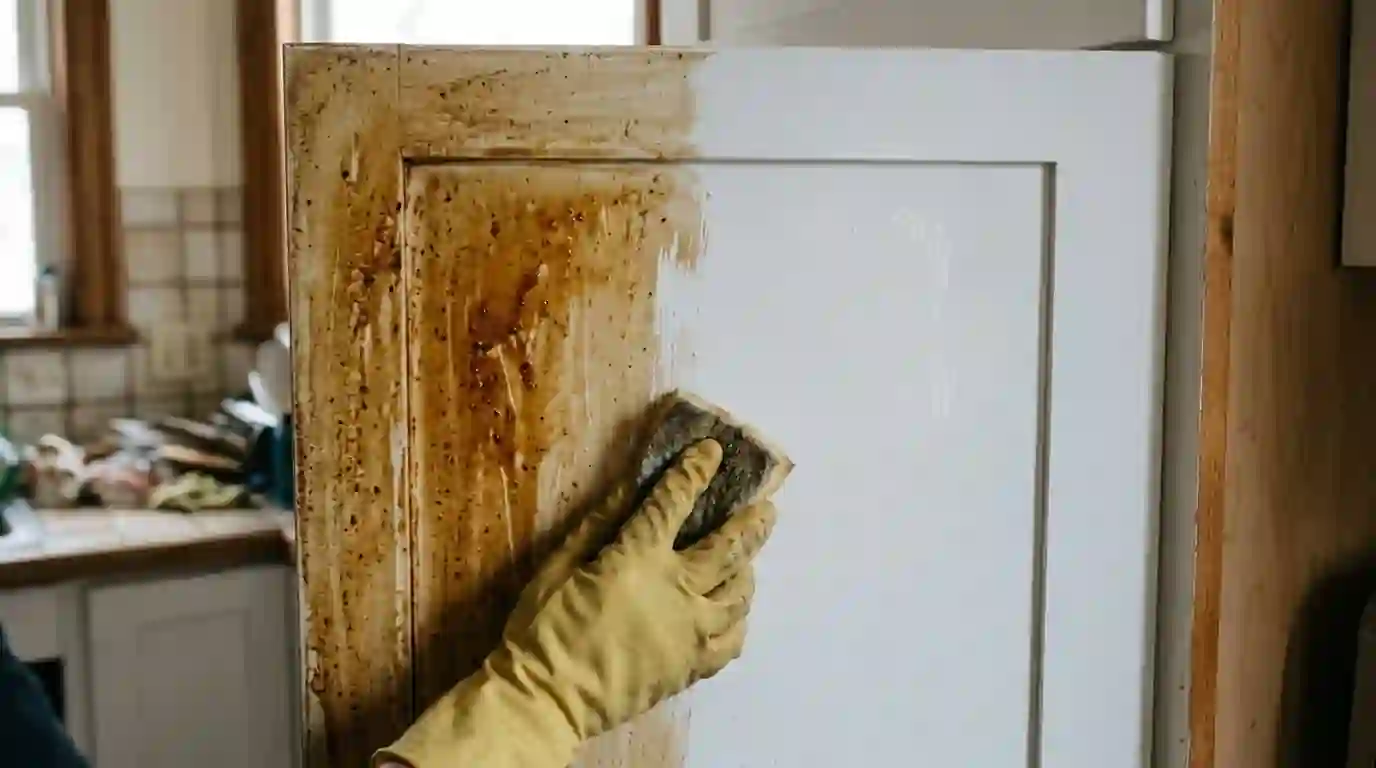
Signs to look for
Signs a kitchen fire left residue behind
Sticky feel on cabinets
A tacky film on door fronts or handles is grease smoke, even when the surface looks clean.
Yellow tint on white paint
A faint yellow cast on trim or cabinets is often protein residue from burned food.
Smell returns with the heat
Odor that comes back when the oven or the HVAC runs means residue is still on surfaces or in the ducts.
Dark line along the ceiling
A shadow where the ceiling meets the wall above the range shows where smoke collected.
Dull film in nearby rooms
A dull film on dining room furniture or hallway walls means smoke spread past the kitchen.
After you call
How we clean up after a kitchen fire
- 01
Make it safe
We check wiring, the range and the hood for heat damage first.
- 02
Test the residue
Test patches show whether it is grease, protein or dry soot.
- 03
Clean top down
Ceilings, walls, then cabinets, so nothing drips on clean surfaces.
- 04
Treat the odor
Once surfaces are clean, the air and soft goods are treated.
- 05
Repair and repaint
Charred pieces are replaced; stained paint is sealed and repainted.
Common case
Grease fires
A grease fire on the stovetop throws heavy, oily smoke that sticks to the underside of upper cabinets, the ceiling above the range and anything metal. It spreads farther than people expect, often into the dining room, the hallway and the bedrooms closest to the kitchen.
We degrease before we deodorize, because odor treatment over a greasy film does not last. Range hood filters and ductwork are cleaned or replaced, and painted surfaces that stay stained after cleaning are sealed with a stain-blocking primer before repainting.
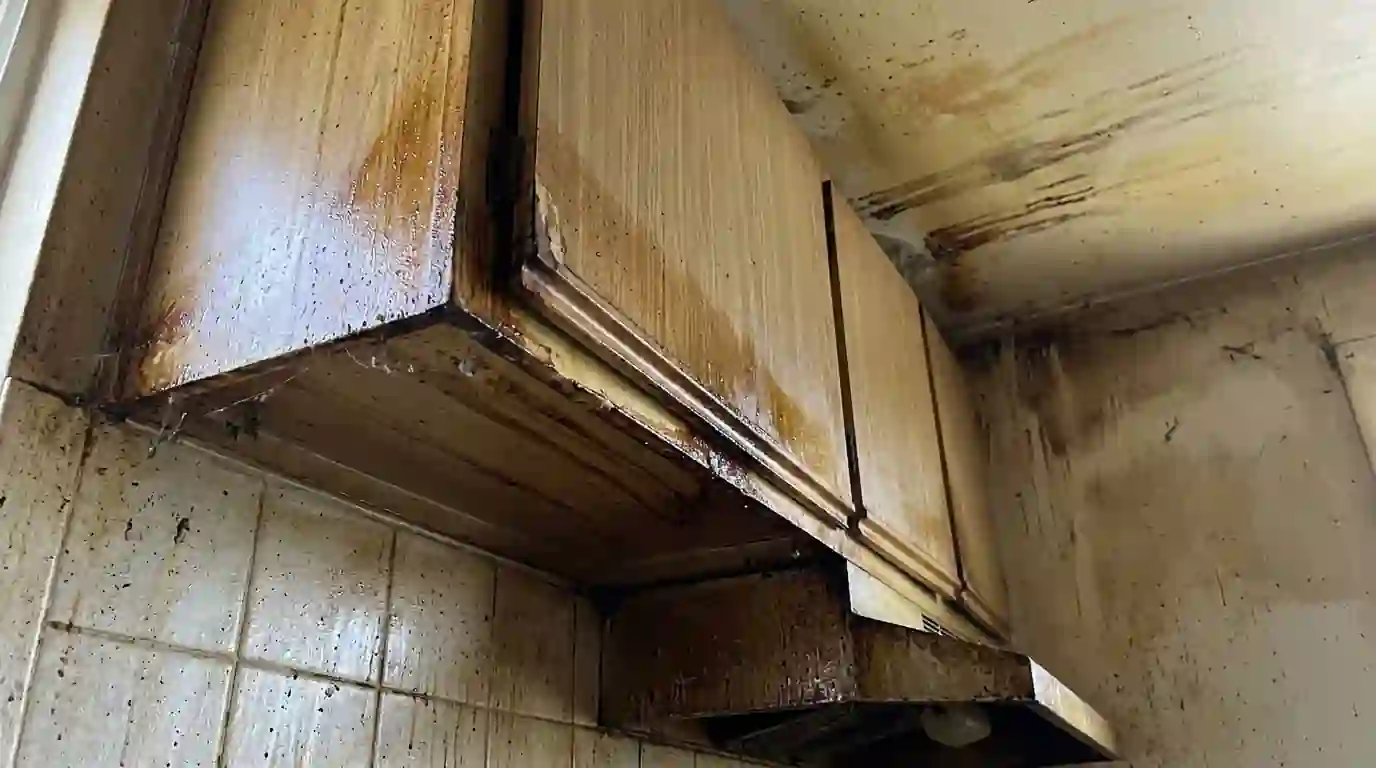
Common case
Protein residue from burned food
Burned meat, beans or a pot left on low for hours leaves protein residue, a thin yellow film with a stubborn, sour smell. The kitchen can look like it barely got dirty while the whole house smells.
Protein residue does not respond well to ordinary household cleaners. We clean it with products made for it, then treat the air and the soft goods. Curtains, upholstery and clothing in nearby rooms often need separate odor treatment because they hold the smell long after the walls are clean.
Common case
Cabinet and range hood damage
Heat does more to cabinets than smoke does. Thermofoil doors peel and bubble, laminate edges lift, and painted wood blisters above the burner. Range hood fans and filters fill with grease and can carry smoke into the attic or out through an exterior vent.
We tell you plainly which cabinet boxes and doors will clean and which will not. Charred or warped pieces come out, and anything structural behind them, like a scorched wall or ceiling, becomes part of the rebuild after the fire.
In Atlanta
Kitchen fires in older Atlanta houses
Older intown kitchens hold smoke differently from new ones. Most houses in Virginia-Highland went up between 1909 and 1926, and many Grant Park bungalows still have original heart pine floors. Plaster walls, old painted trim and unsealed wood are porous, so grease smoke and protein odor sink in instead of sitting on the surface. In those rooms we clean first, then seal and repaint more often than we would in a newer kitchen.
What is included
What a kitchen fire cleanup includes
Scope varies between companies, so here is ours.
- Ventilation and a safety check of the range, outlets and hood wiring before cleaning
- A test patch on each surface to choose the right cleaner
- Cleaning ceilings, walls and cabinet exteriors from the top down
- Cleaning cabinet interiors, shelves and drawers the smoke reached
- Degreasing or replacing range hood filters and cleaning the hood
- Cleaning or disposal of food, dishes and small appliances, with a list for your records
- Odor treatment for the kitchen and any rooms the smoke reached
- A written list of anything charred or warped that needs replacing
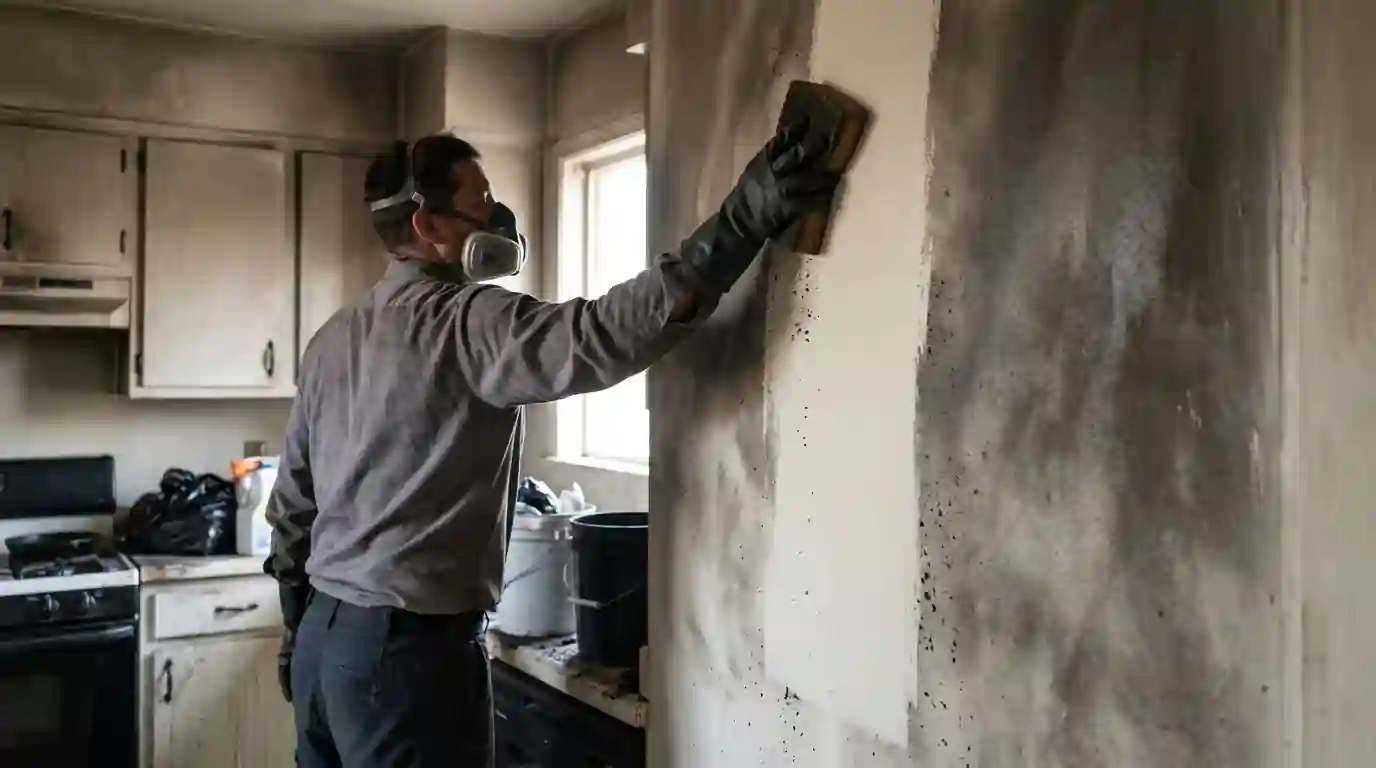
Cost
What moves the cost of a kitchen fire cleanup
How far the smoke traveled matters more than the flame.
Smoke spread
A stovetop fire can still coat the dining room and hallway.
Residue type
Grease and protein need specialty cleaners and more labor than dry soot.
Cabinet material
Painted wood cleans; blistered thermofoil and laminate usually do not.
Hood and ductwork
A hood that pulled smoke into its duct needs that run cleaned or replaced.
Charred structure
Burned drywall, framing or counters move the job into rebuilding.
HomeAdvisor's 2025 data puts smoke damage cleanup at about $200 to $1,200 per room and larger soot jobs at $2,000 to $6,000. We price your kitchen after we see it.
FAQ
Questions people ask about kitchen fire cleanup
Light dry soot sometimes wipes off with a dry sponge. Grease and protein residue usually smear, so test a hidden spot first.
Residue hides inside cabinets, on the hood, in ducts and in fabrics. The smell lasts until those are cleaned and treated.
Painted wood usually cleans. Peeled thermofoil and heat-lifted laminate usually don't. We'll show you which is which.
Sealed cans and jars can often stay once cleaned. Open packages and anything in a cabinet the smoke reached should go.
Sudden kitchen fires are commonly covered. We document the damage with photos and a written scope for your adjuster.
Talk to a person now
Smoke in the kitchen and a smell that will not leave?
Call and we'll walk you through what to wipe, what to leave alone and when we can start.
Answered 24/7, holidays included.