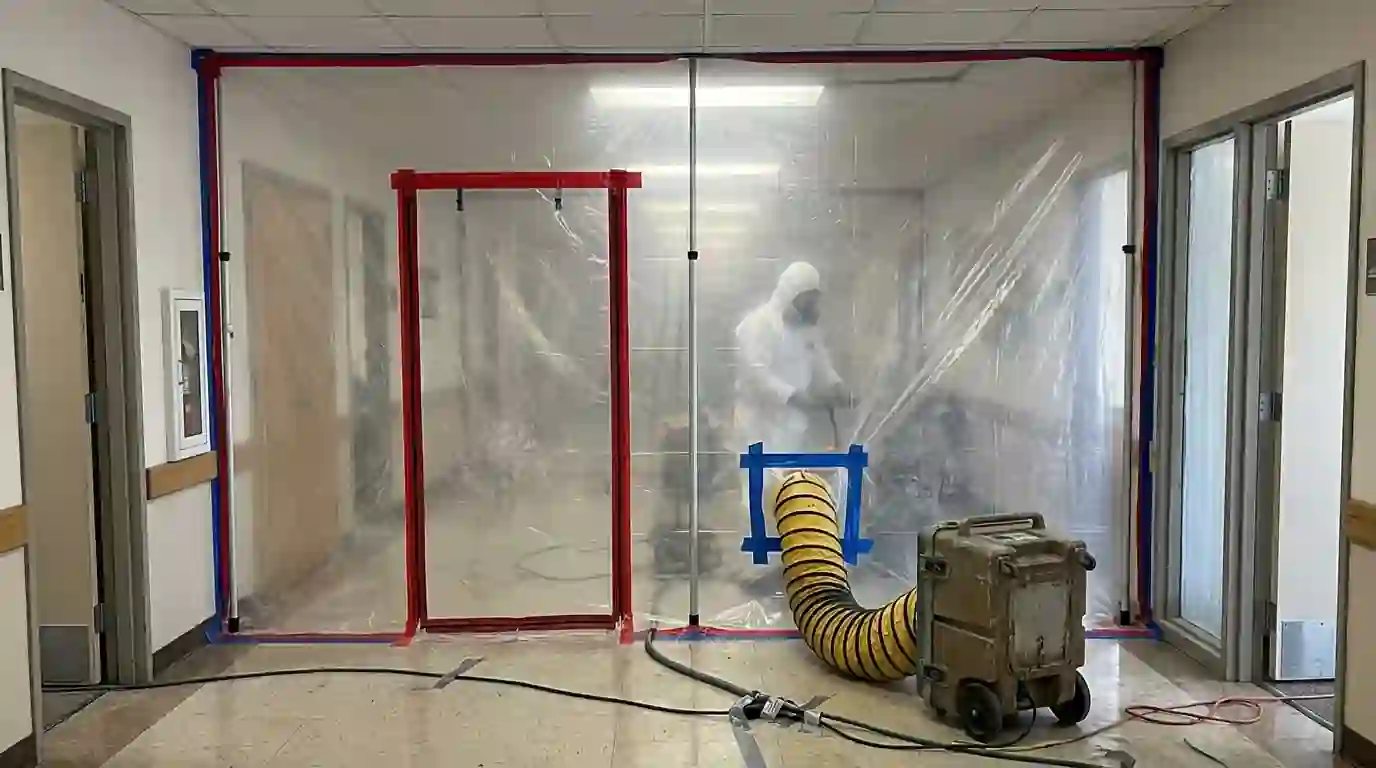
Containment, removal and drying
Mold remediation in Atlanta
Mold is a moisture problem that shows up as a growth problem. We contain the area so spores stay put, remove moldy materials, clean what can be cleaned, dry everything and make sure the water source is fixed.
Updated September 2026
- Phones
- Answered 24/7
- Job type
- Mold, air and contents
- Service office
- Biscayne Dr NW, Atlanta
Short answer
Mold remediation in Atlanta means containing the affected area, removing moldy drywall, insulation and other porous materials, HEPA vacuuming and cleaning what stays and drying the space, which only lasts if the moisture source is fixed. Small patches under about 10 square feet can be homeowner jobs; larger or hidden growth needs containment.
The job
How mold remediation works
Mold needs moisture, food and time. Drywall paper, wood and dust are the food, and a leak or high humidity provides the moisture. Growth can start within a day or two of a leak and spreads through materials you cannot see.
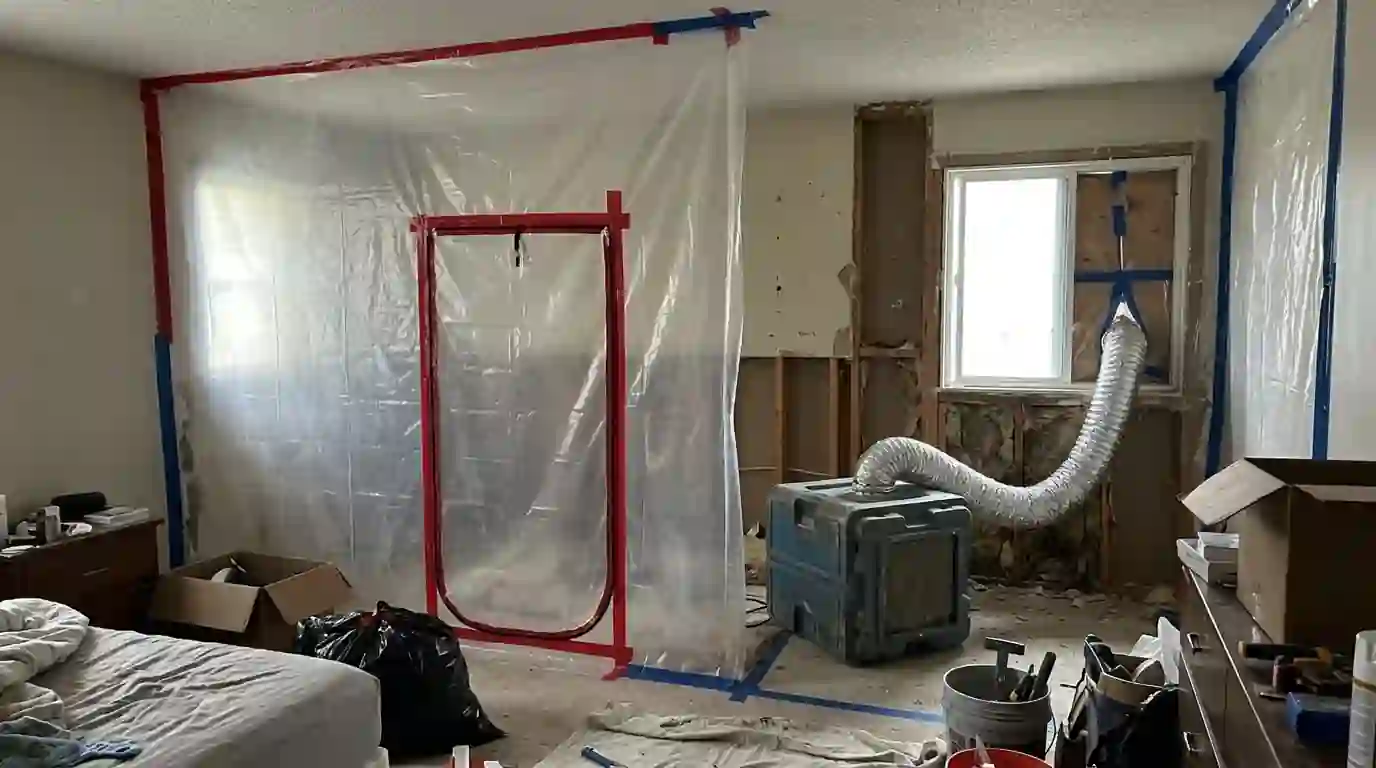
Remediation is removal, not spraying. We set containment with plastic sheeting and negative air so spores do not travel, cut out moldy porous materials, HEPA vacuum and clean what stays and dry the area. The source, whether a leak, condensation or poor ventilation, gets fixed or the mold returns.
Cost
What mold remediation costs
The area affected and what has to come out drive the price.
Area affected
Square footage of growth sets most of the cost.
Location
Attics, crawl spaces and wall cavities are harder to reach.
Materials removed
Drywall, insulation and flooring add removal and rebuild.
Containment
Larger areas need bigger containment and more air filtration.
Source repair
Fixing the leak or ventilation adds to the job.
Fixr's 2025 data puts mold remediation at $1,500 to $9,000 nationally, about $10 to $30 per square foot, while This Old House reports most homeowners pay $1,200 to $3,750. We price yours after an inspection.
Common case
Mold after a leak
Most mold we remove follows a leak nobody caught in time: a slow pipe drip, a toilet seal, a roof leak or an AC overflow. The growth is usually on the back of the drywall, the bottom plate and the insulation, and the front of the wall may look fine.
We open the wall where readings and odor point, remove the moldy materials under containment and dry the cavity before anything is rebuilt. The leak itself goes to the right trade first, and where water is still present, water damage restoration comes before mold removal.
Common case
Bathroom and closet mold
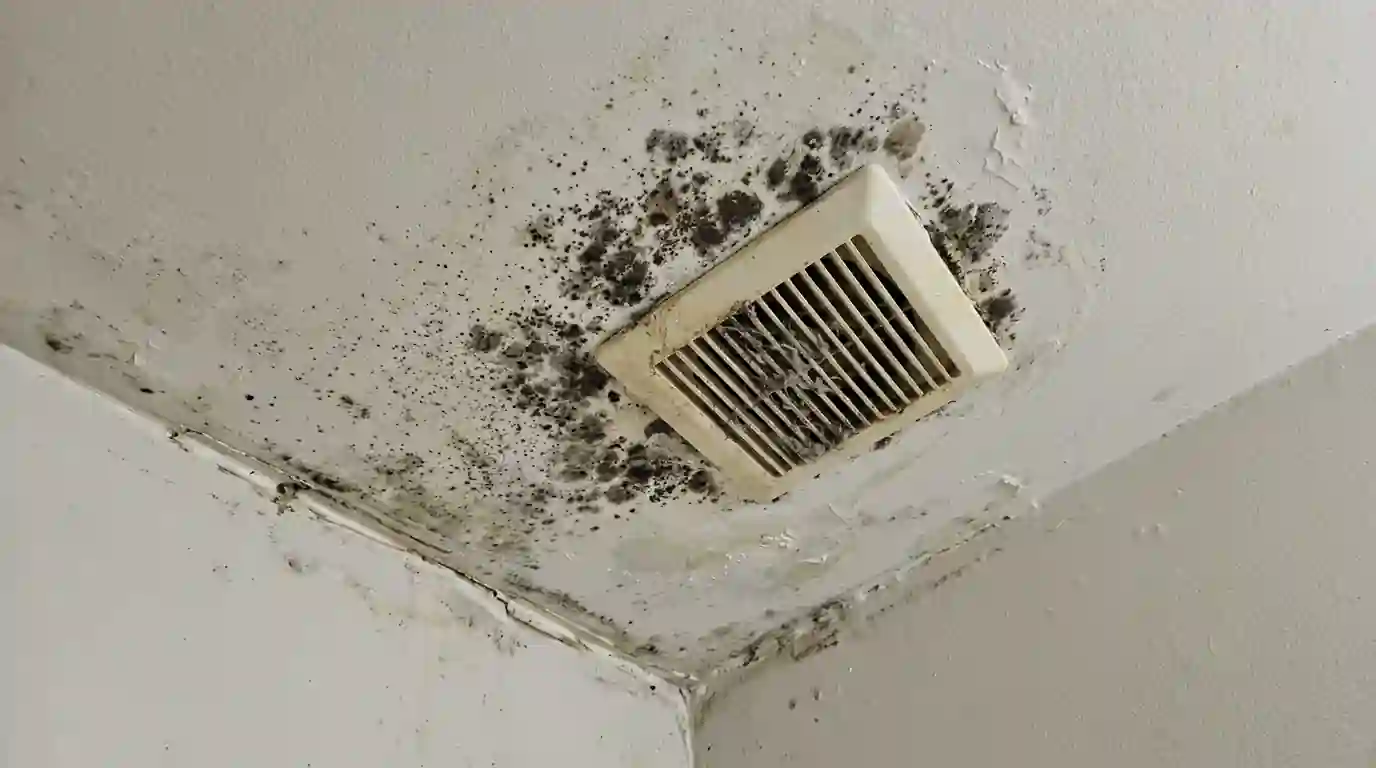
Bathrooms without working exhaust fans and closets on exterior walls grow mold from condensation rather than leaks. It shows up as spotting on ceilings, around windows and on the back walls of closets.
Surface growth on painted, non-porous surfaces can often be cleaned, while growth that has gone into drywall comes out. The fix is airflow and humidity: a bath fan that vents outside and runs long enough, and air moving through closets on cold walls. Paint sold as mold-resistant helps only after the moisture problem is solved.
Common case
Mold behind drywall
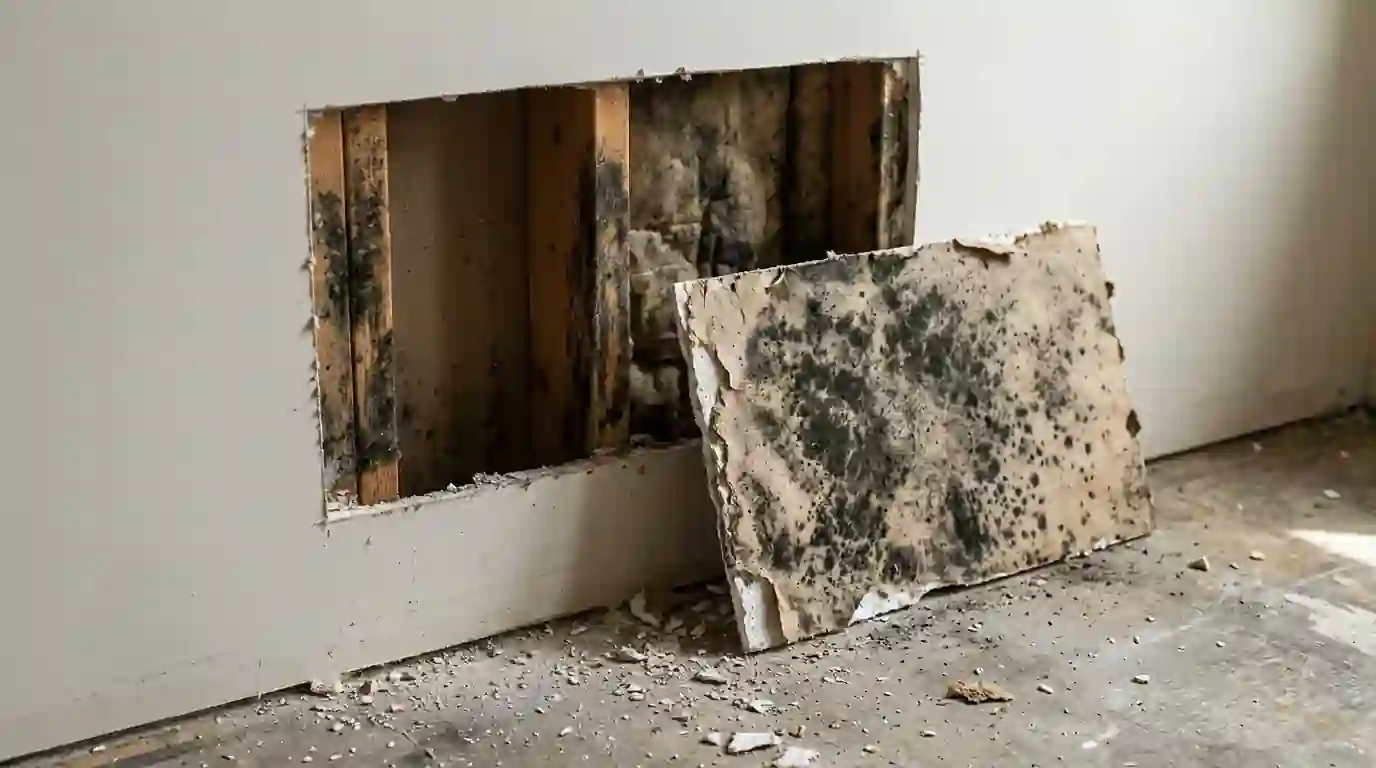
Hidden mold is found by smell, moisture readings and sometimes a small inspection opening. When the back of the drywall is growing, the only reliable fix is to remove it.
We cut out the affected section plus a margin, bag it inside the containment, clean and treat the framing and dry it. Air sampling, if you want it, is a separate step done by an independent assessor, which keeps anyone from grading their own work. The rebuild follows once the cavity reads dry.
What is included
What mold remediation includes
- Moisture readings to find the extent and the source
- Containment with plastic sheeting and a zippered entry
- Negative air with HEPA filtration
- Removal of moldy drywall, insulation and porous materials
- HEPA vacuuming and cleaning of framing and surfaces
- Antimicrobial treatment of cleaned materials
- Drying to normal moisture readings
- Coordination with independent testing if you want it
After you call
How mold remediation runs
- 01
Find the moisture
Readings show the source and how far the damage goes.
- 02
Contain
Plastic containment and negative air keep spores in.
- 03
Remove
Moldy porous materials are cut out and bagged.
- 04
Clean and dry
Framing is HEPA vacuumed, treated and dried.
- 05
Rebuild
New materials go in once the area reads dry.
In Atlanta
Why mold grows so easily in Atlanta
Atlanta sits in a mixed-humid climate, and some years are simply wet: 2009 brought the city 69.43 inches of rain, its second-wettest year on record. An Atlanta building-science consultant found his own condo's AC condensate line clogged with gunk, exactly the kind of slow, quiet leak that feeds mold inside a ceiling. Here, a leak that sits for a couple of days in summer is often enough to start growth.
Signs to look for
Signs of mold in the house
A musty smell
A persistent earthy odor usually means mold somewhere nearby.
Spotting on walls or ceilings
Gray, green or black spots are surface growth, and there may be more behind.
Peeling or bubbling paint
Moisture behind paint often means growth behind it too.
A past leak in the same area
A leak that was not dried properly is the most common cause.
Allergy symptoms at home
Symptoms that ease when you leave the house can point to mold.
FAQ
Questions people ask about mold remediation
Small surface patches on hard surfaces, yes, with gloves and a mask. Larger areas or growth inside walls need containment.
It can bleach surface stains but does not reach into porous materials or fix the moisture. Removal and drying do.
Not always. Visible growth and a known leak are enough to act on. Testing helps when mold is suspected but not found.
Not if the moisture source is fixed and the area is dried properly.
Mold from a sudden covered leak may be; mold from long-term humidity usually is not.
Talk to a person now
Seeing or smelling mold?
Call and we'll find the moisture, contain the area and remove it properly.
Answered 24/7, holidays included.