Leaks, bursts, overflows and flooding
Water damage restoration and cleanup in Atlanta
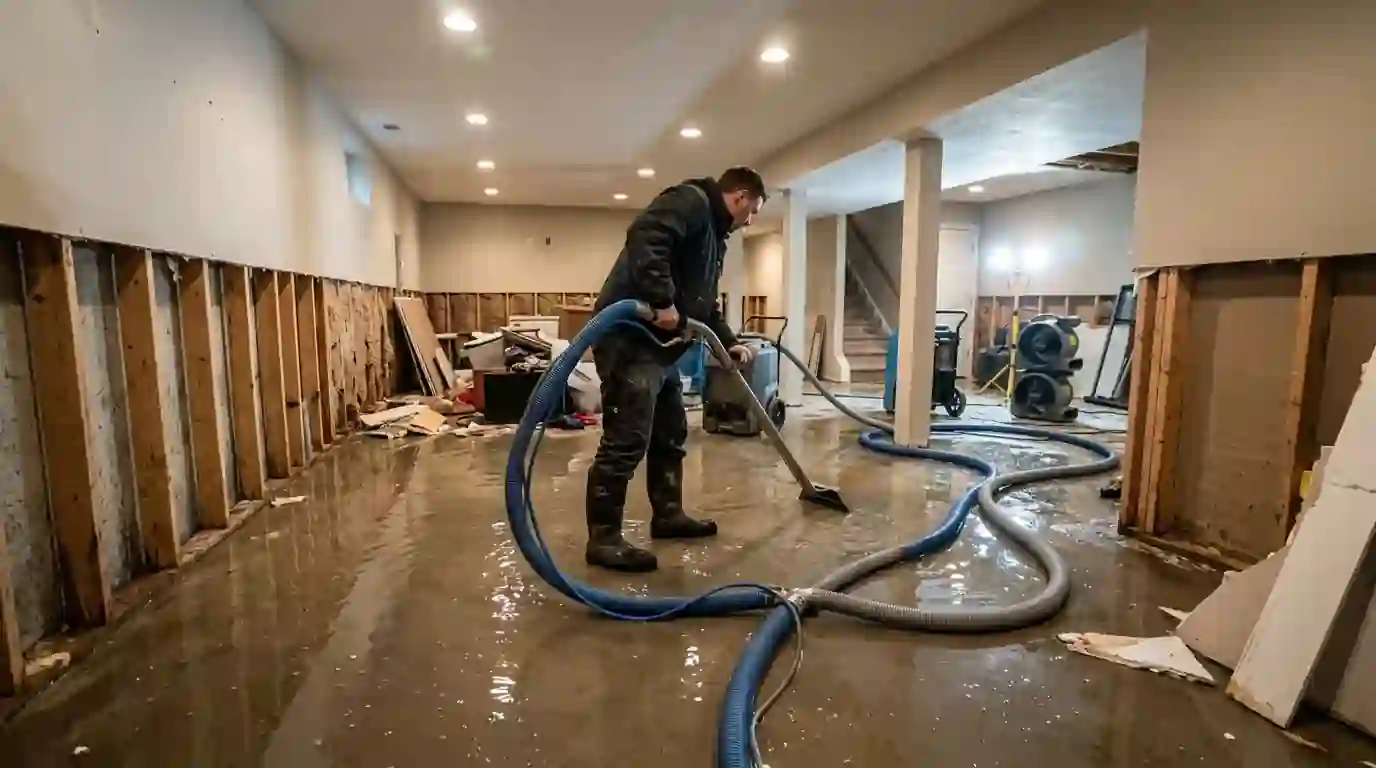
Whatever the source, water damage follows the same rule: the faster it dries, the less has to come out. We find how far it went, pull it out, dry the framing with daily readings and rebuild what could not be saved.
Updated September 2026
- Phones
- Answered 24/7
- Job type
- Water emergencies
- Service office
- Biscayne Dr NW, Atlanta
Short answer
Water damage restoration in Atlanta means extracting standing water and starting structural drying within 24 to 48 hours, then repairing what could not be dried. We map the wet area with meters, remove soaked pad, insulation and drywall, dry the framing to dry standard with daily readings and rebuild once the numbers say dry.
The job
What water damage restoration covers from start to finish
Restoration is two jobs in a row. Mitigation stops the damage from growing: stopping the source, extracting water, removing what cannot dry and running drying equipment. Repair puts the house back: drywall, trim, flooring and paint.
The water source decides a lot. Clean water from a supply line is dried in place where possible. Gray water from appliances and black water from sewage or floodwater change what has to come out. We sort that out on the first visit.
Signs to look for
Signs of water damage you may not have noticed
Stains that grow
A ceiling or wall stain that gets larger means water is still arriving.
Swollen baseboards
Baseboards and door casings that swell or split are wicking water.
Cupped or soft floors
Hardwood that cups or vinyl that lifts is sitting on a wet subfloor.
A musty smell
A damp smell in one area often shows up before anything visible.
A higher water bill
An unexplained jump in usage can mean a hidden leak.
After you call
How water damage restoration runs
- 01
Stop the source
Water off, power off to wet areas, hazards checked.
- 02
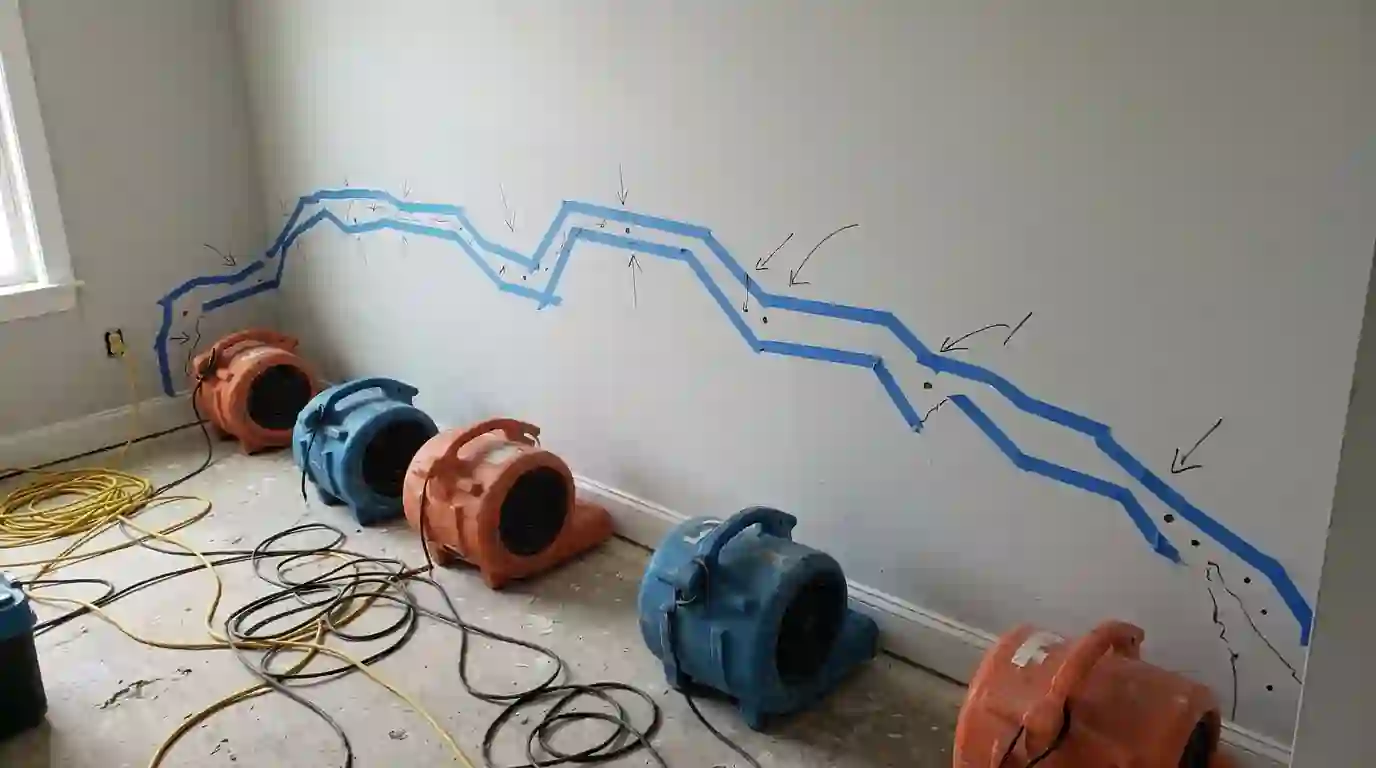
Map the damage
Meters and thermal imaging find where the water went.
- 03
Extract and remove
Water out; unsalvageable materials removed.
- 04
Dry to standard
Equipment runs with daily readings.
- 05
Repair
Drywall, trim, floors and paint put back.
Common case
Clean water losses
Supply lines, broken pipes and overflowing sinks start as clean water, the easiest case to dry. If drying starts within a day or two, most drywall, trim and even carpet can stay, and the job stays small.
We extract the water, pull baseboards to vent the walls, float the carpet or remove the pad and set air movers and dehumidifiers. Readings are taken daily until everything matches a dry reference reading. For frozen and failed pipes specifically, see burst pipe cleanup.
Common case
Gray water losses
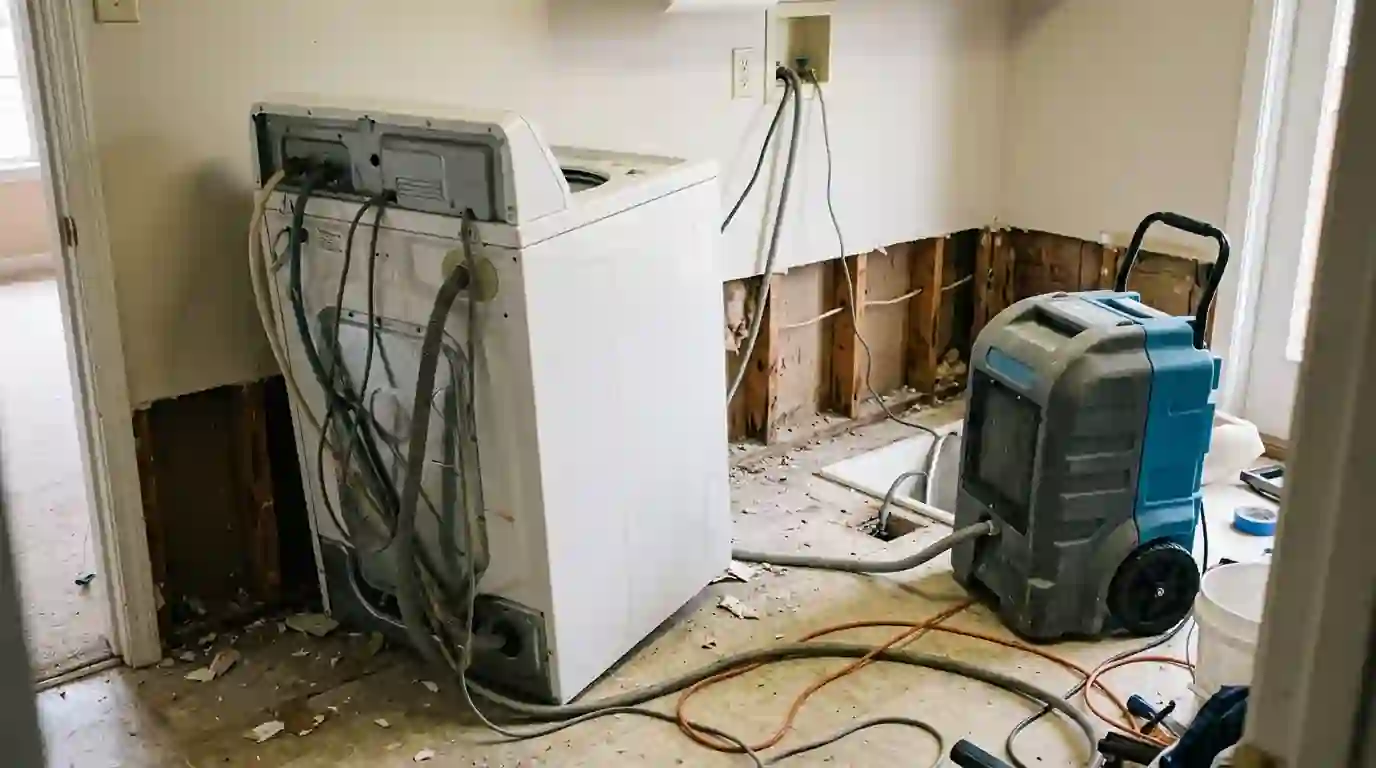
Washer and dishwasher overflows, bowl water from a toilet and clean water that sat too long all count as gray water. It carries contaminants, so porous materials it soaked, like carpet pad and the bottom of drywall, usually come out rather than dry.
Hard surfaces are cleaned and treated with an antimicrobial before drying starts. The drying itself is the same process with more removal up front. The pages on appliance leaks and toilet overflows go deeper into each source.
Common case
Water damage found days later
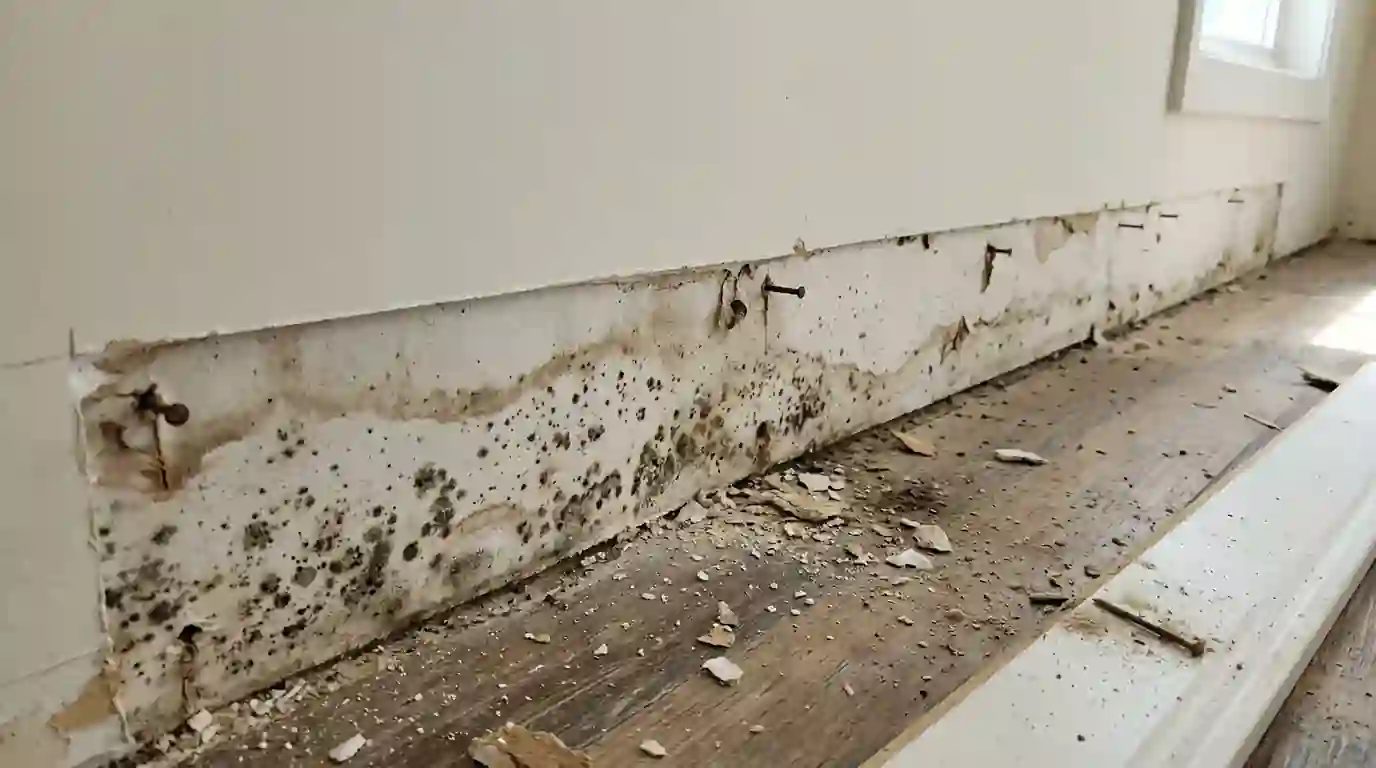
Plenty of water damage is found late: after a trip, behind a cabinet or under a floor. By then materials have soaked through, odor has started and mold may be growing on the backs of drywall and baseboards.
We treat late finds more cautiously. Readings are taken wider, more material is opened to see behind it, and anything with growth is removed under containment before drying begins. Photos of the damage as found help your claim when the start date is uncertain.
Timeline
How long water damage restoration takes
Extraction happens on the first visit. Drying usually runs several days, longer for hardwood, plaster, crawl spaces and anything found late.
Repairs start once the readings say dry. A one-room job can wrap up soon after; larger losses depend on the materials involved and on insurance approval.
In Atlanta
Atlanta has two water seasons
Atlanta gets water damage from two directions. Big rain events stack up, like Helene putting 11.12 inches on the city in 48 hours in 2024. And hard freezes split pipes, as in December 2022, when tens of thousands of callers were trying to reach plumbers and ceilings came down in homes and apartment buildings. The drying is the same either way, but the source changes what has to come out.
Cost
What moves the cost of water damage restoration
How much water, what kind and how long it sat set most of the bill.
Area affected
More square footage means more equipment and labor.
Water category
Gray and black water add cleaning and removal.
Time before drying
Water that sat for days soaks deeper and may mean mold.
Materials
Hardwood, plaster and finished basements cost more to dry or replace.
Repairs
Drywall, flooring and cabinets add to the mitigation cost.
HomeAdvisor puts most water damage jobs between $1,364 and $6,301 in 2025, and Fixr cites a national range of $1,200 to $5,000. We price yours once we see it.
FAQ
Questions people ask about water damage restoration
Within 24 to 48 hours if possible. After that, mold growth and material damage both increase.
Mitigation stops the damage: extraction, removal and drying. Restoration puts things back: drywall, floors and finishes.
Usually not, unless the kitchen, the only bathroom or the electrical service is affected.
Sudden water damage is commonly covered; slow leaks and outside flooding often are not. We document everything for your adjuster.
Surface water, maybe. Water inside walls and under floors needs extraction, dehumidifiers and readings to confirm it is dry.
Talk to a person now
Water damage in the house right now?
Call and we'll help you stop the source and get the drying started.
Answered 24/7, holidays included.