Moisture guide
How fast mold grows after a leak, and what to do about it
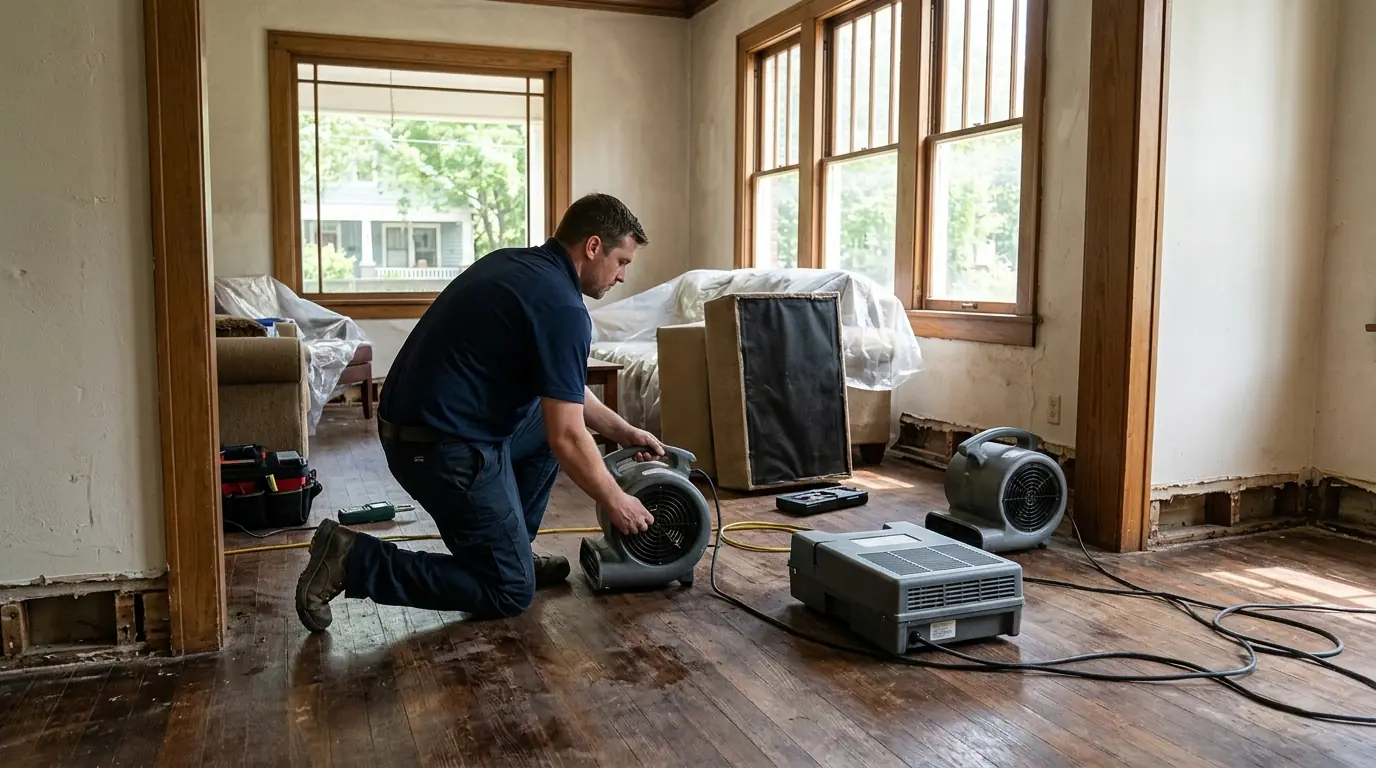
Mold does not need weeks. On wet drywall in warm weather it can start within a day or two. Here is what drives it, where it hides and how to tell whether you need drying, removal or both.
- Written by
- Maxine Colburn
- Role
- Restoration Guides Editor
- Updated
- September 2026
Short answer
Mold can begin growing on wet drywall, wood and carpet within 24 to 48 hours of a leak, especially in warm, humid weather, and drying within that window usually prevents it. If materials stayed wet longer, check behind baseboards and the back of drywall; growth inside walls is removed under containment, not sprayed.
By Maxine Colburn, Restoration Guides EditorUpdated
The 24 to 48 hour window
Mold spores are already in every house. They need three things to grow: moisture, something to feed on and time. Drywall paper, wood, carpet backing and dust are food, and a leak supplies the moisture.
On wet drywall in a warm house, growth can start within a day or two. That is why restoration crews push to start drying the same day: inside that window, drying usually means no mold. Outside it, drying alone may not be enough.
What speeds it up
Some conditions make mold grow faster after a leak:
- Warm temperatures, especially in summer
- High indoor humidity, or the HVAC turned off
- Dirty water from appliances, toilets or floodwater
- Paper-faced drywall, carpet pad and wood that soak up water
- Closed spaces with no airflow: wall cavities, closets and crawl spaces
Where it hides first
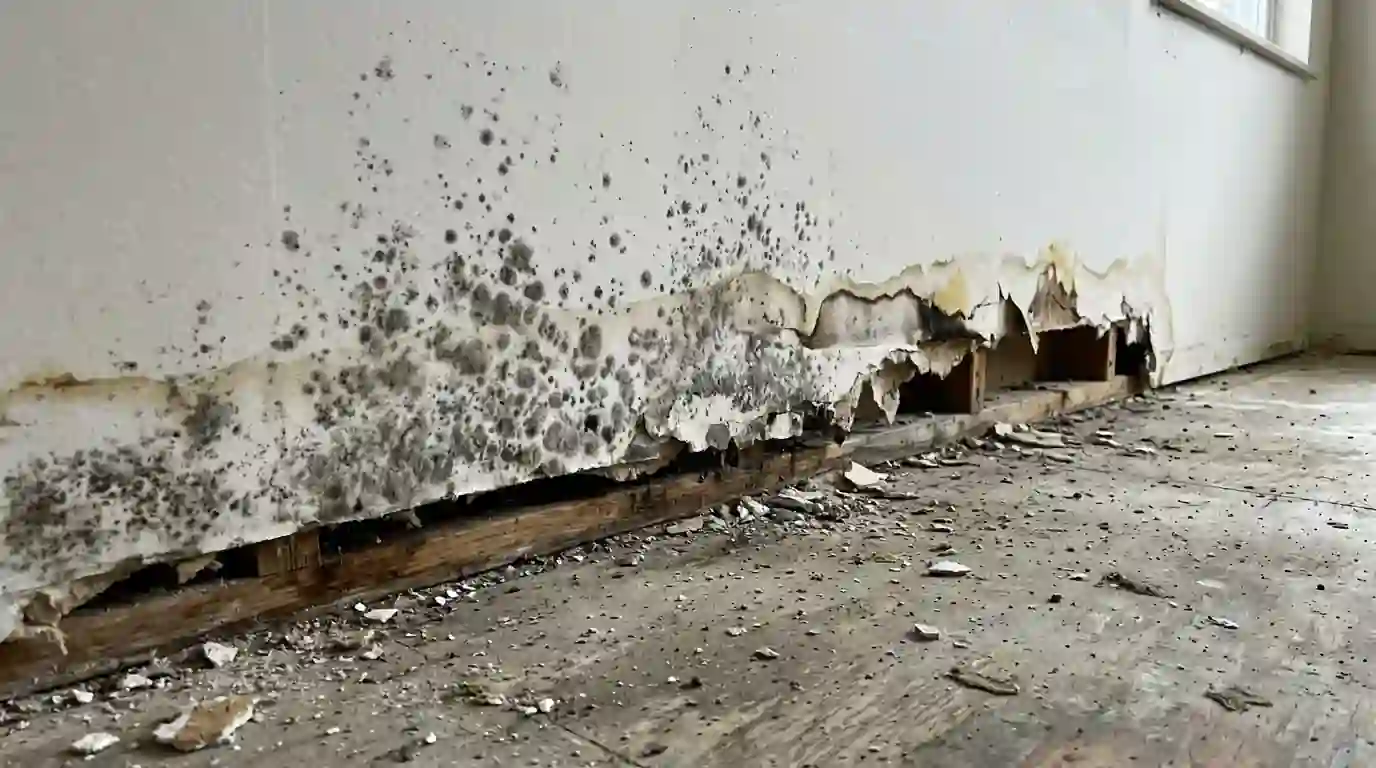
Mold usually starts where water sits and air does not move: the back of drywall, the bottom plate inside the wall, under carpet pad, behind baseboards and inside cabinet bases. The front of a wall can look clean while the back is growing.
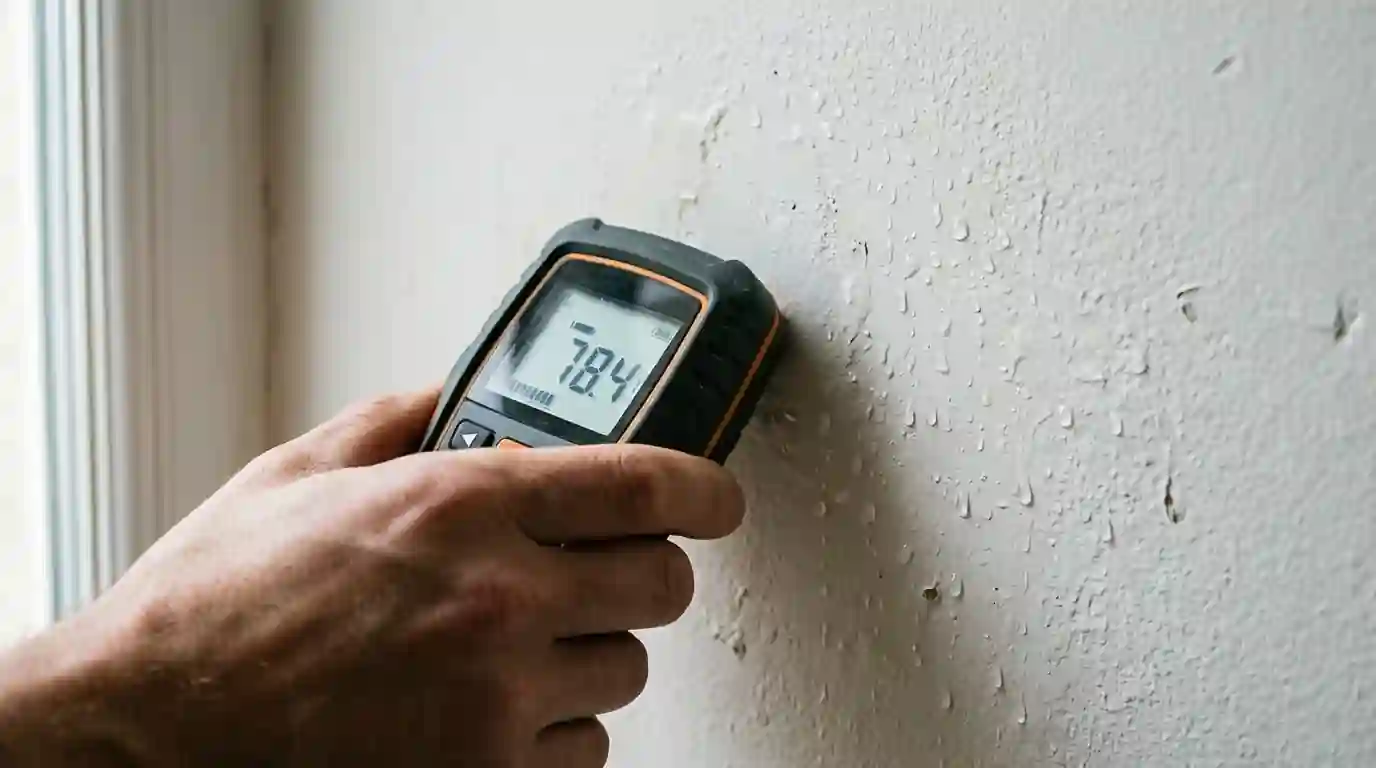
A musty smell is often the first sign. Moisture readings, and sometimes a small inspection opening, show what is happening inside the wall without tearing out more than necessary.
Drying, removal or testing
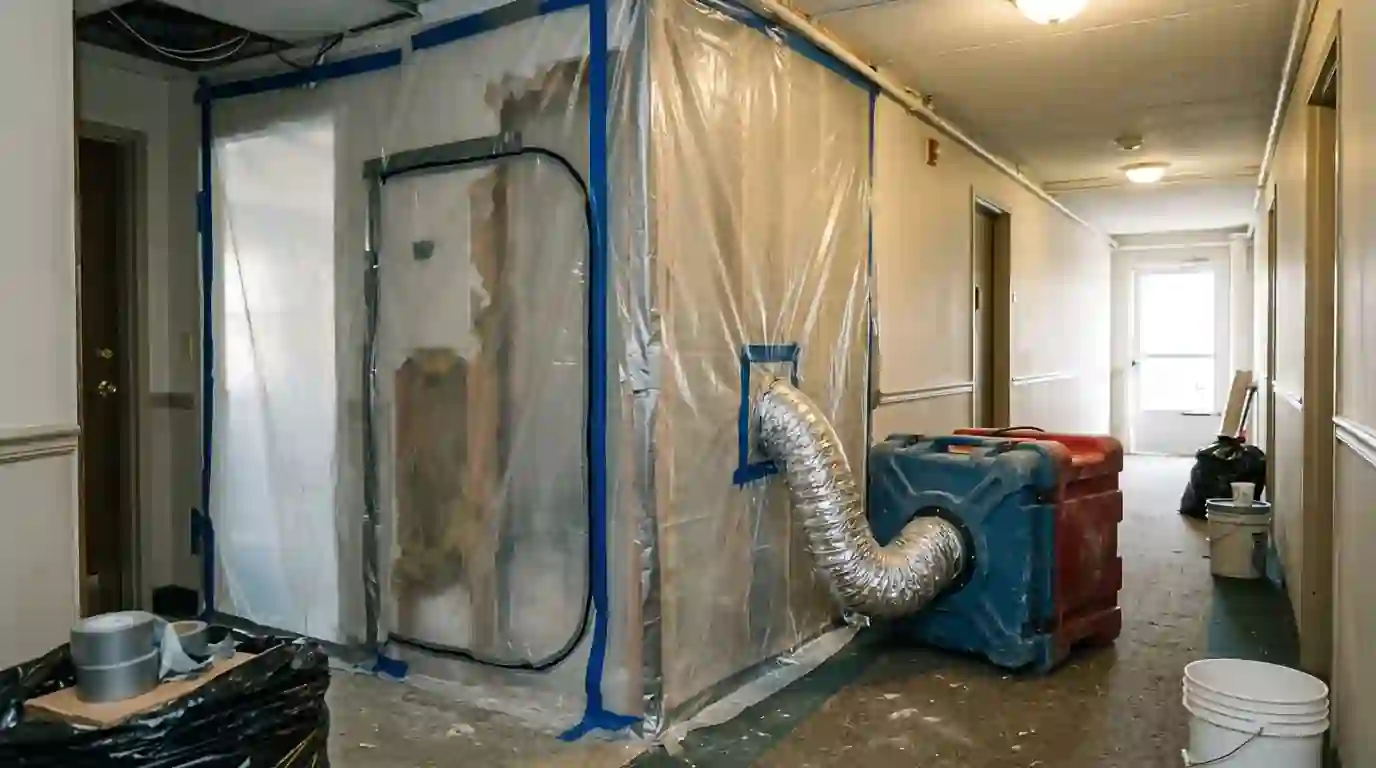
If the leak was found quickly and readings show materials drying, drying is the job. If growth is visible or materials stayed wet for days, the affected drywall, insulation and pad come out under containment, and the framing is cleaned and dried before anything is rebuilt.
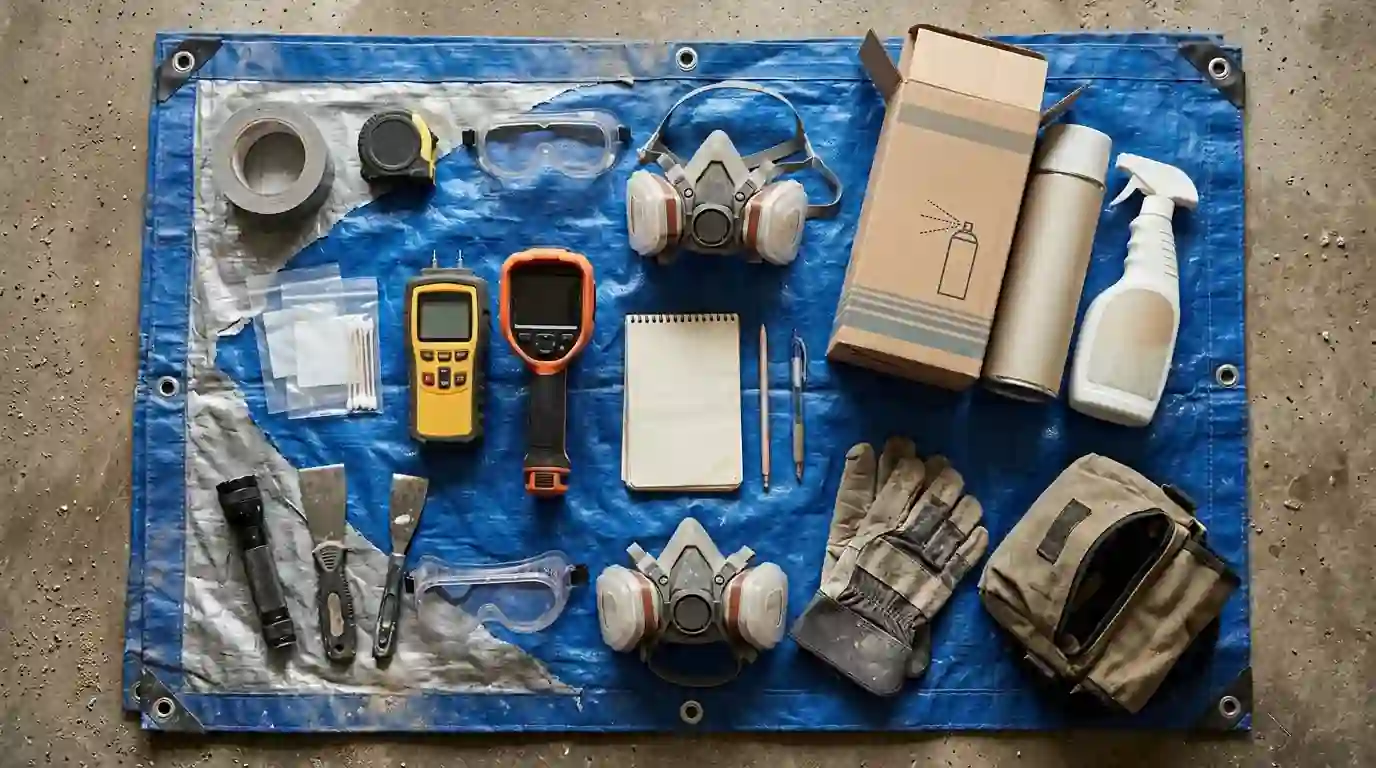
Testing is not always needed. When you can see growth and know the leak, you already know what to do. Air or surface sampling helps when mold is suspected but not found, or when you want independent confirmation after removal. Details are on the mold remediation page.
What not to do
A few common responses make mold worse or spread it:
- Spraying bleach on drywall or wood and calling it done
- Running fans on visible growth, which spreads spores
- Painting over stains without fixing the moisture
- Closing walls before the framing reads dry
FAQ
Common questions
It can start within 24 to 48 hours on wet materials in warm conditions.
No. Leaks that are dried quickly usually do not.
Not if you can see growth and know the cause. Testing helps when mold is suspected but hidden.
Small surface patches can often be cleaned carefully. Larger areas or growth inside walls need containment.
Mold that follows a sudden covered leak may be covered; mold from long-term moisture usually is not.
Talk to a person now
Leak found late and worried about mold?
Call and we'll read the walls and tell you whether it needs drying, removal or both.
Answered 24/7, holidays included.