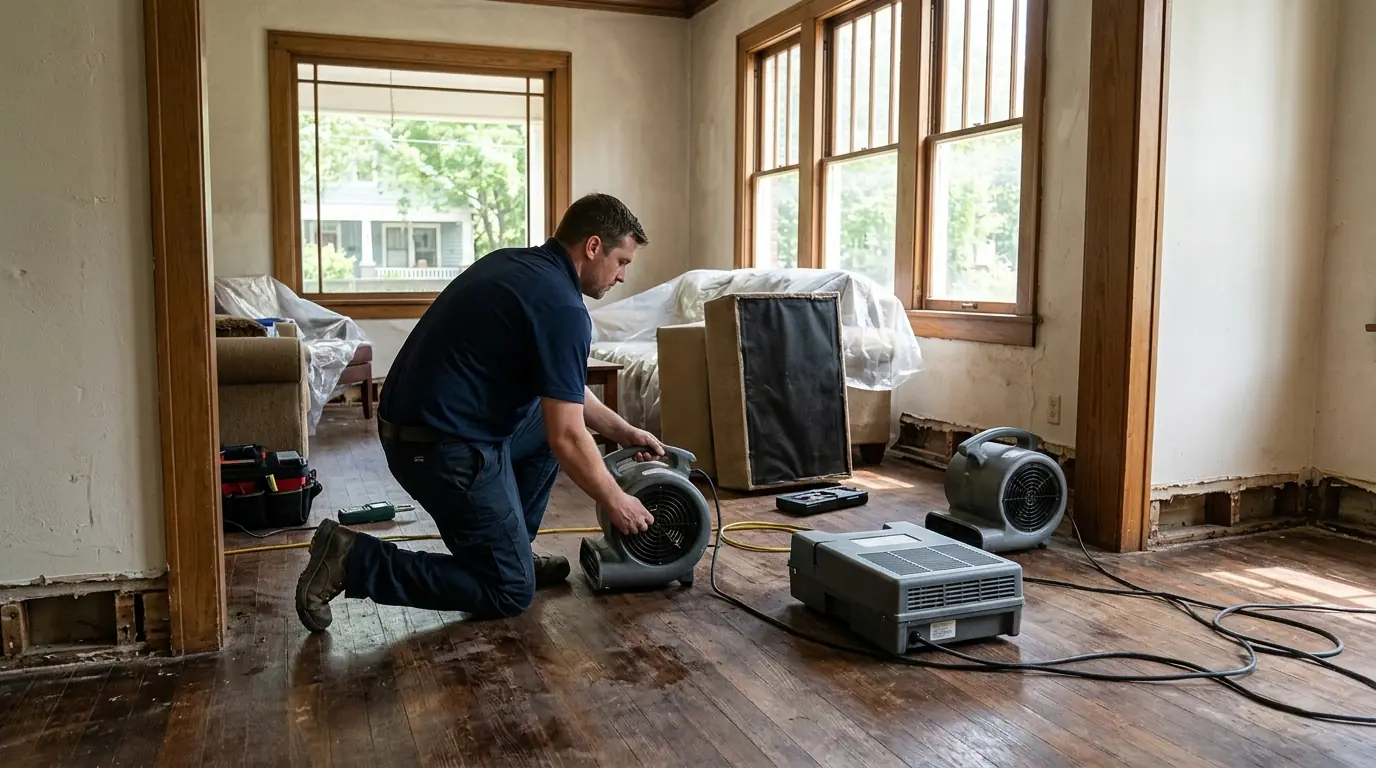
Moisture guide
Water in the crawl space after heavy rain
A little dampness under the house after rain is common. Standing water is not. Here is how to tell the difference, what usually causes it and what fixes it for good.
- Written by
- Maxine Colburn
- Role
- Restoration Guides Editor
- Updated
- September 2026
Short answer
Standing water in a crawl space after heavy rain usually comes from gutters and downspouts dumping at the foundation, a yard that slopes toward the house or groundwater rising through the soil. It should be pumped out and dried within a few days, before joists, subfloor and insulation start to rot or grow mold, and the drainage outside should be fixed.
By Maxine Colburn, Restoration Guides EditorUpdated
Damp or wet: when to worry
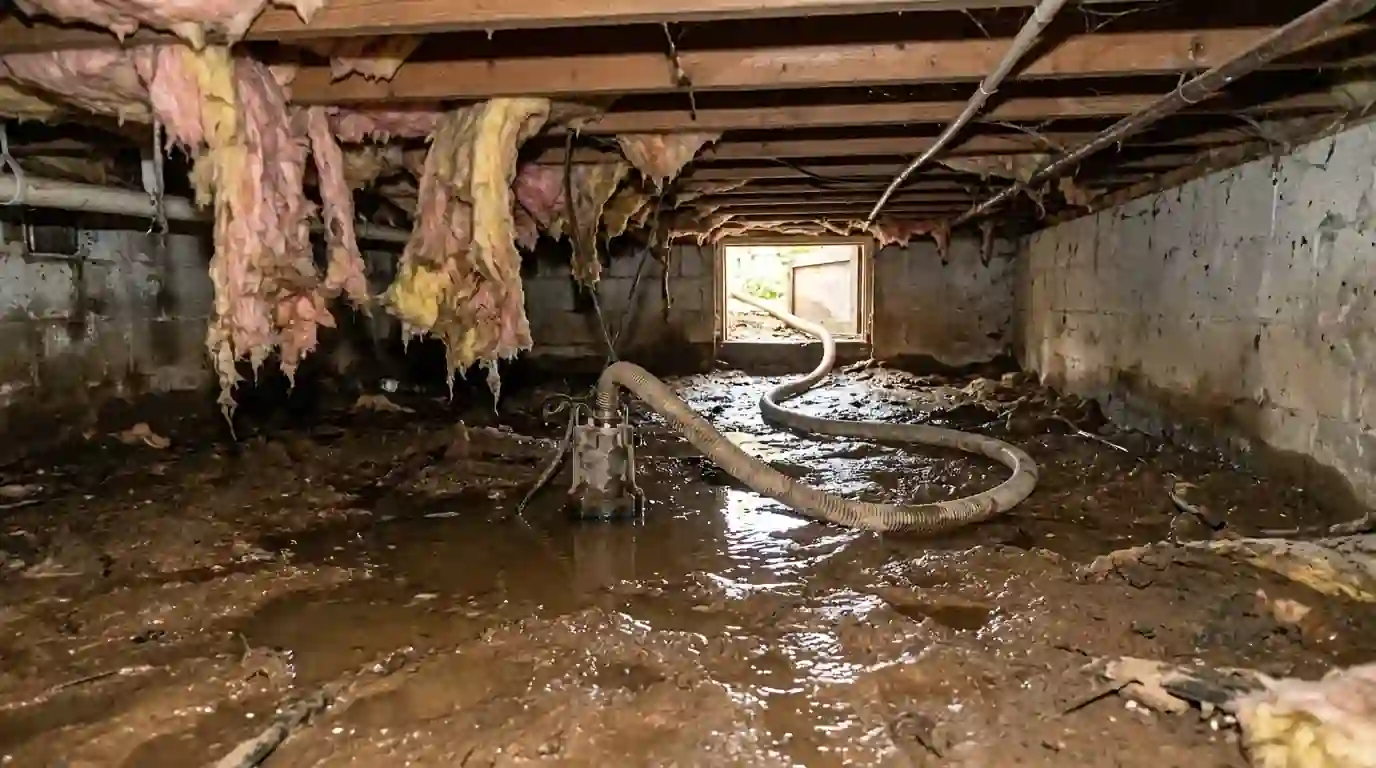
Most crawl spaces get a little damp after a long storm, and the soil surface may look dark for a day or two. That is normal. Standing water, wet insulation hanging from the joists, a musty smell rising into the house or water sitting on top of the vapor barrier are not, and they mean water is getting in faster than it can leave.
If you can, look with a flashlight from the access door rather than crawling in. Standing water near wiring or a sump pump is a reason to stay out.
Where the water comes from
Rainwater usually gets under a house in one of a handful of ways:
- Gutters that overflow, or downspouts that dump right at the foundation
- Soil or pavement that slopes toward the house instead of away
- Groundwater that rises through the soil after days of rain
- A plumbing leak under the house that happens to show up after a storm
- Foundation vents or access doors below grade that let surface water in
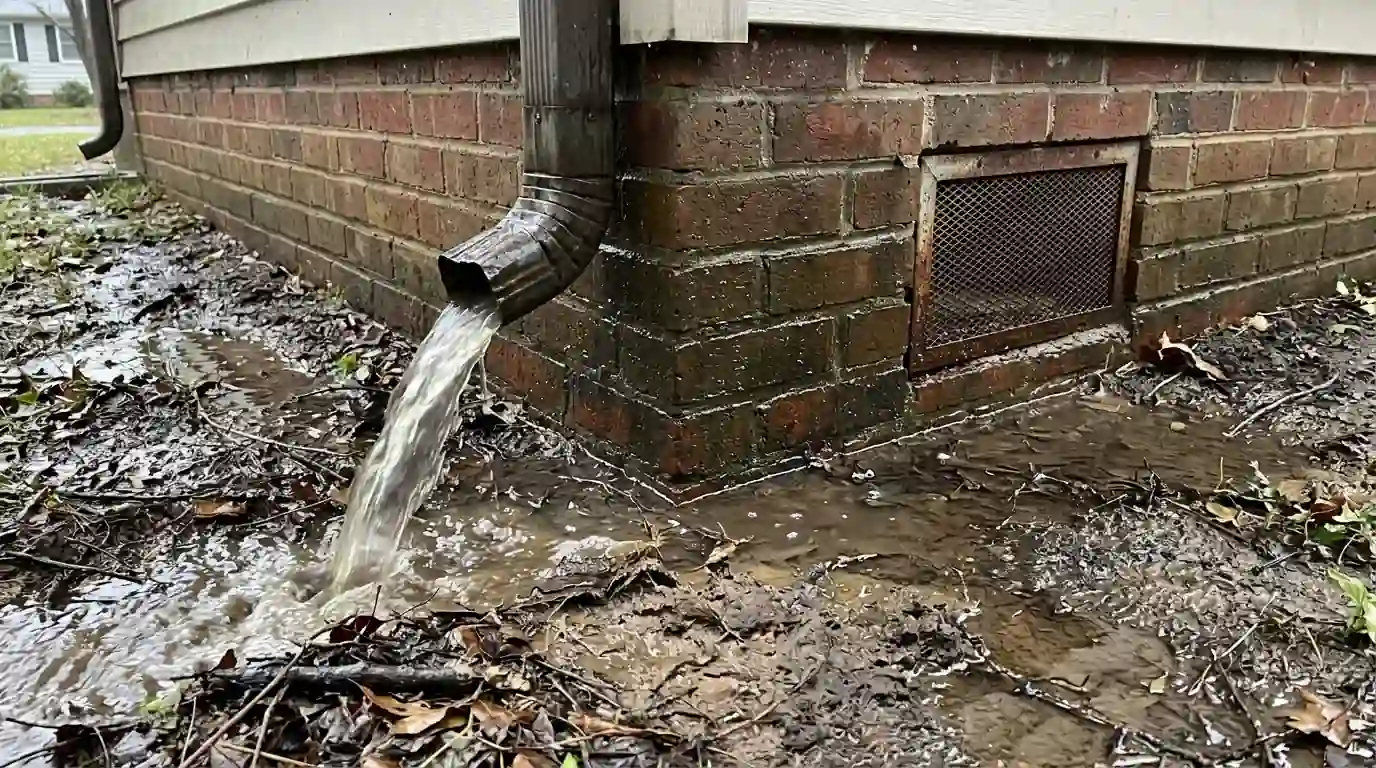
Why clay soil makes it worse around Atlanta
Much of the Atlanta area sits on red clay that swells when wet and drains slowly. Water that reaches the foundation tends to stay there rather than soaking away, and a crawl space over that clay can stay humid for days after the rain stops.
The region also gets steady rain through most of the year, so the soil rarely has a long dry spell. That is why fixing where the water goes outside matters more than anything done inside.
What to do about it
Pump out standing water, pull wet insulation and dry the framing with dehumidifiers under the house. Then fix the drainage: clean the gutters, extend downspouts well away from the foundation and regrade soil so it slopes away from the house.
If water keeps coming back even with good drainage, a new vapor barrier, a crawl space sump or a sealed crawl space with a dehumidifier may be worth it. The crawl space water damage page walks through the cleanup, and crawl space mold removal covers what happens if growth has started.
What to check after every big storm
A few minutes after each big storm can catch a problem early:
- Look in the crawl space with a flashlight for standing water
- Check that downspouts are attached and draining away from the house
- Sniff for a musty smell near floor vents and closets
- Watch for new soft spots or bounce in the floors
FAQ
Common questions
A damp soil surface after a storm can be. Standing water, wet insulation or a musty smell upstairs is not.
Usually not quickly enough. Crawl spaces have little airflow, so moisture lingers and feeds mold.
Not always. Fix gutters and grading first, and consider sealing the space if it stays damp every summer.
Yes. Air from the crawl space rises into the living areas, carrying moisture and odor.
Groundwater and seepage usually are not; a burst pipe under the house commonly is.
Talk to a person now
Water under the house after the storm?
Call and we'll pump it out, dry the framing and find where it is getting in.
Answered 24/7, holidays included.