Condo and high-rise guide
A leak from the condo above: who does what
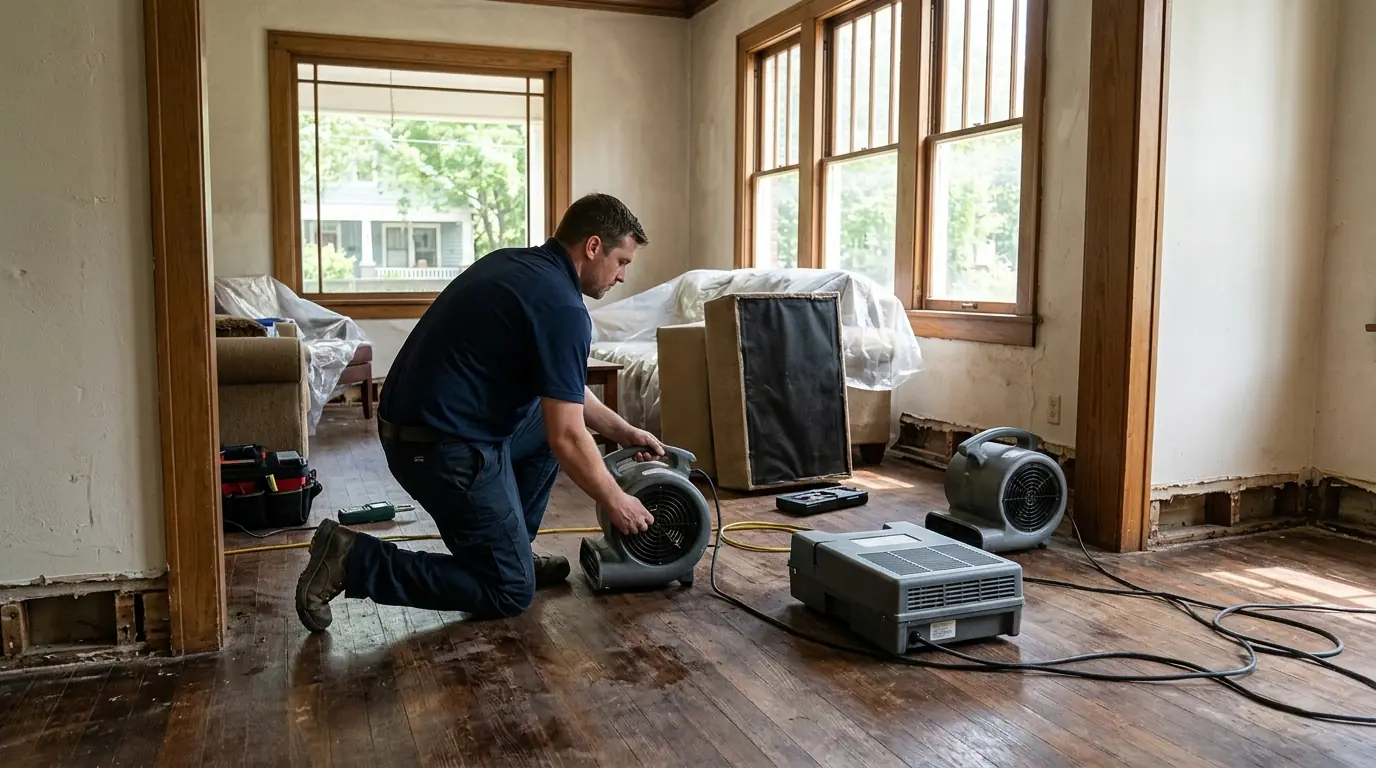
When water comes through your ceiling from the unit above, three or four parties get involved at once. Here is who usually handles what, and how to keep the drying moving while they sort out the rest.
- Written by
- Maxine Colburn
- Role
- Restoration Guides Editor
- Updated
- September 2026
Short answer
When a leak comes from the condo above, get the source unit's water shut off first, usually through management or the building engineer, then document the damage in your unit and start drying. Who pays depends on the cause, the association's governing documents and each owner's policy, so one shared record of readings and photos keeps everyone working from the same facts.
By Maxine Colburn, Restoration Guides EditorUpdated
First, stop the water at its source
Water from above keeps coming until someone shuts it off in the unit where it starts. If you know the owner upstairs, knock or call. If not, call building management or the concierge right away; most buildings have a way to reach the building engineer, who can shut a unit valve or a riser.
While you wait, protect your unit: turn off power to circuits where water is coming through fixtures, move belongings out from under the leak and put buckets down. Stay out from under any sagging ceiling.
Who usually handles what
The details depend on your building, but the roles usually split like this:
| Party | Usually responsible for |
|---|---|
| Owner or resident above | Stopping the leak in their unit and fixing what failed |
| Building management | Access, shutoffs, common areas and notifying other owners |
| Association (HOA) | Common elements and the parts of the structure named in the governing documents |
| Your insurer | Your interior and contents, depending on your policy |
| Restoration crew | Extraction, drying and documentation in each affected unit |
Why one shared record matters
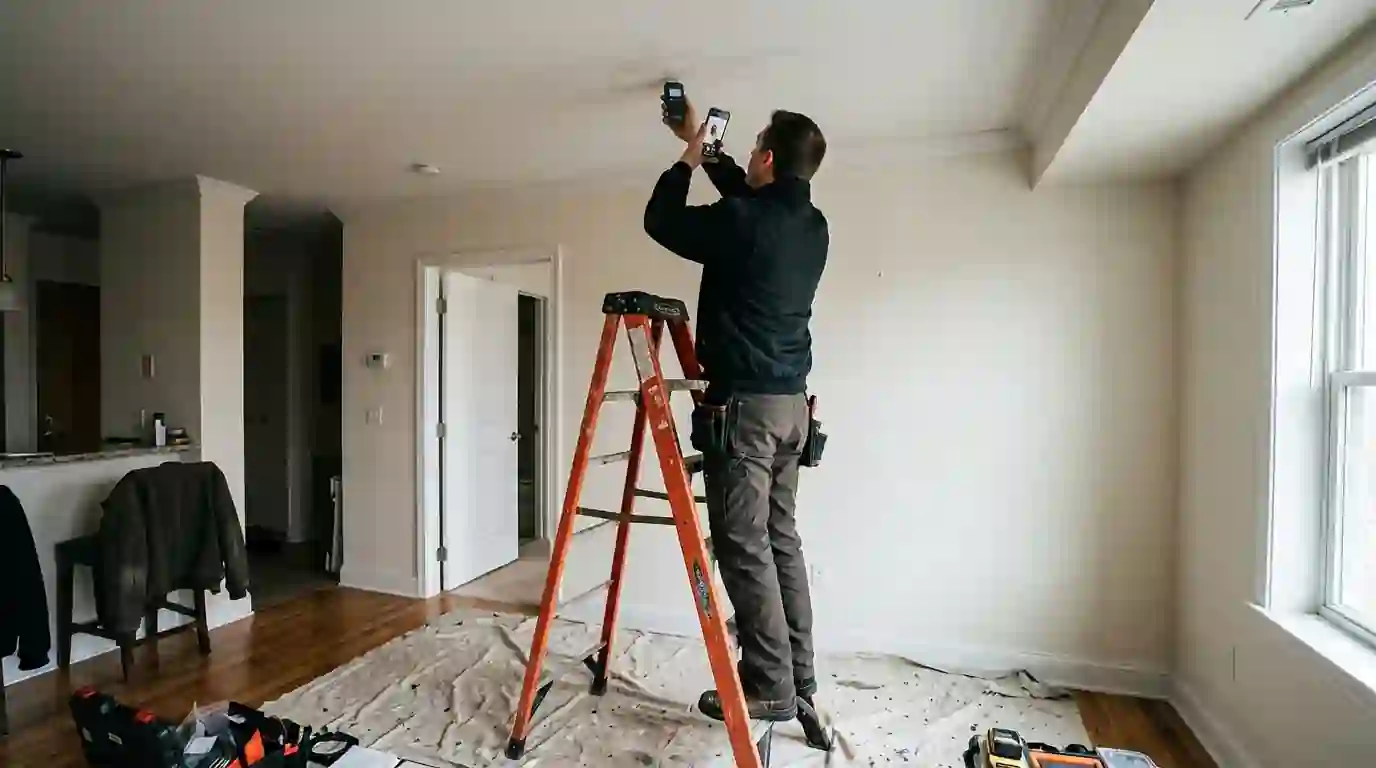
Condo leaks stall when everyone has different information. The owner above may say the water was minor while the unit below has a soaked ceiling and wet insulation, and adjusters for two or three policies may each ask for photos and readings.
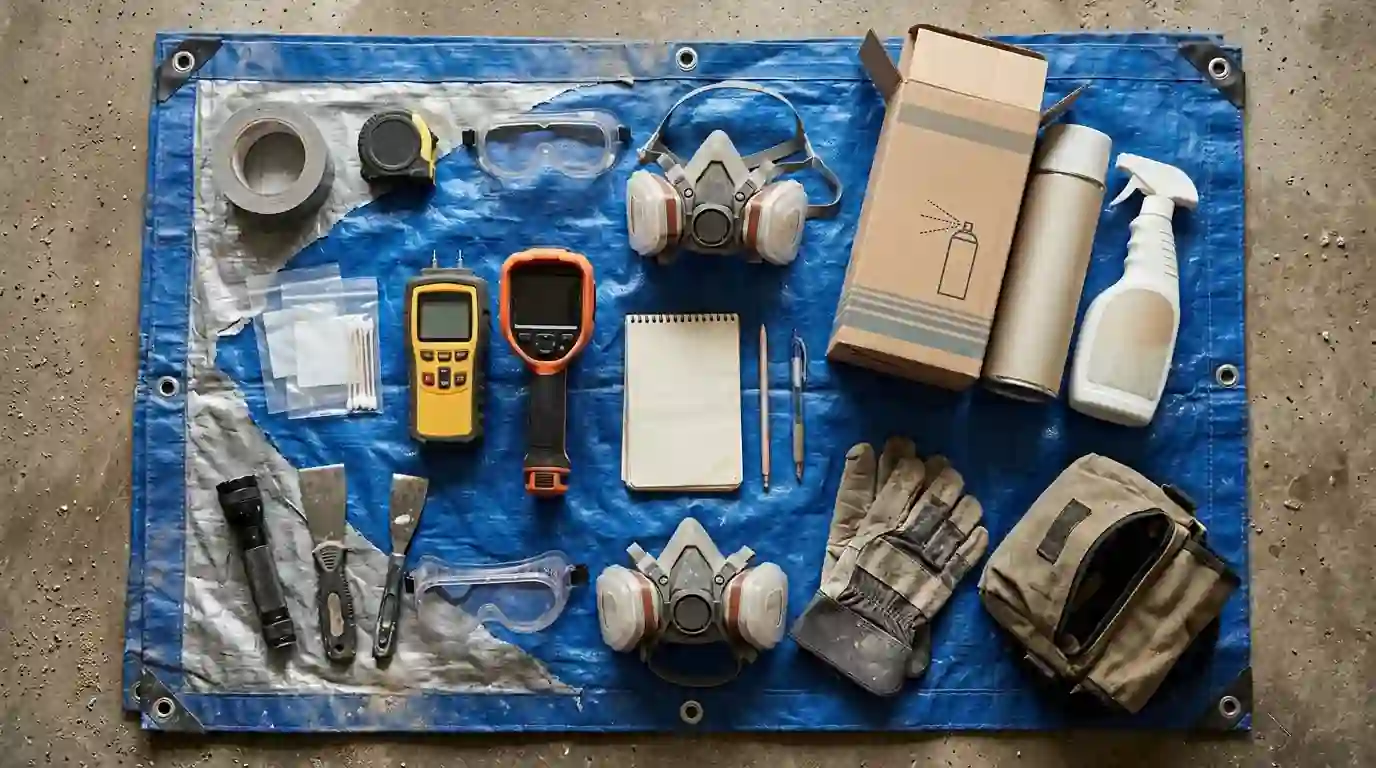
The fix is one set of moisture readings and photos, taken unit by unit, with the source documented. We record each affected unit separately and share the same readings with everyone who needs them, so the paperwork does not hold up the drying. More on that is on the condo and high-rise water damage page.
Your governing documents and your policy
Your association's declaration and bylaws say where the association's responsibility ends and yours begins, often at the unfinished drywall or the interior surfaces. A condo unit-owner policy, often called an HO-6, covers what is yours inside that line, subject to its terms.
Read the governing documents and your policy, or ask your agent, rather than assuming. We document the damage either way; the coverage decisions belong to the insurers.
Do not wait on the paperwork to start drying
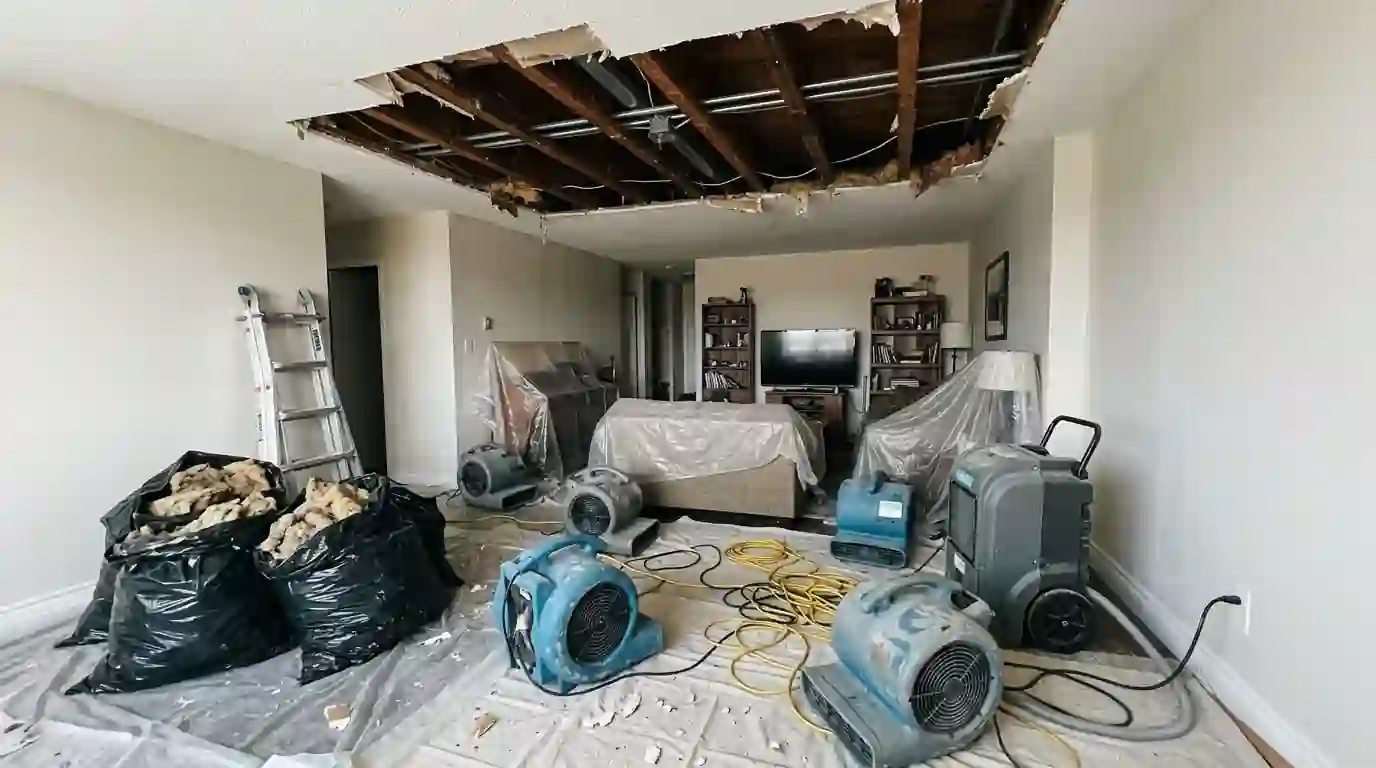
The most expensive mistake in a condo leak is letting a wet ceiling sit while owners and insurers work out who pays. Drywall and insulation that stay wet for a few days start to grow mold, and then the bill grows for everyone.
Start extraction and drying in your unit, keep the records and let the responsibility question follow. Most policies expect you to prevent further damage.
FAQ
Common questions
Only with the owner's permission or through management. Call management or the concierge first.
It depends on the cause, your governing documents and the policies involved. We document the damage for all of them.
Talk to your agent. Many owners report it to their own insurer while the source owner's coverage is sorted out.
Repeated leaks usually mean the source was not fully fixed. Document each one and tell management in writing.
Yes, and it usually should. Preventing further damage is expected under most policies.
Talk to a person now
Water coming from the unit above?
Call now. We'll help you reach management, stop the source and start drying your unit.
Answered 24/7, holidays included.